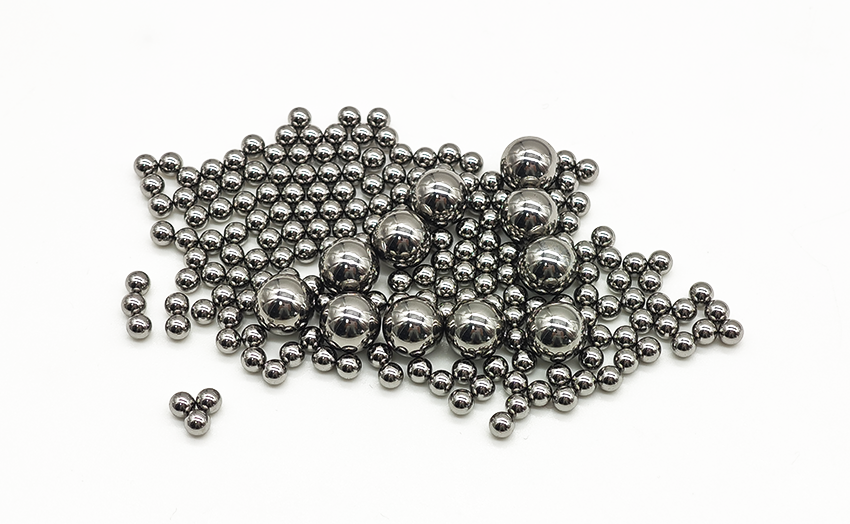
Comparisons with Steel Ball Bearings
While tungsten carbide balls are renowned for their hardness and durability,it is important to consider how they compare with steel ball bearings,which are also widely used in various applications.
Material Composition and Hardness
Steel ball bearings are typically made from high-carbon chromium steel.While steel balls are extremely hard and wear-resistant,they are not as hard as tungsten carbide balls.The hardness of steel balls makes them suitable for many applications,but tungsten carbide balls offer superior wear resistance and longevity,especially in extreme conditions.
Load-Bearing Capacity
Both steel and tungsten carbide balls can handle high loads,but tungsten carbide balls have a higher compressive strength,making them more suitable for applications involving extreme stress and pressure.This characteristic is particularly advantageous in heavy machinery and high-performance industrial applications.
Corrosion Resistance
Steel ball bearings can be susceptible to corrosion if not properly treated or if used in corrosive environments.Tungsten carbide balls,on the other hand,exhibit excellent corrosion resistance,making them ideal for use in aggressive chemical environments and applications where long-term exposure to corrosive substances is a concern.
Thermal Stability
Tungsten carbide balls can withstand higher temperatures without losing their hardness or structural integrity,whereas steel balls may lose hardness and wear resistance at elevated temperatures.This makes tungsten carbide balls more suitable for applications involving high heat,such as in certain manufacturing processes or high-speed machinery.
Cost Considerations
Steel ball bearings are generally more cost-effective than tungsten carbide balls,making them a popular choice for a wide range of applications where extreme hardness and wear resistance are not as critical.However,the higher initial cost of tungsten carbide balls can be offset by their longer lifespan and reduced maintenance requirements in demanding environments.
Conclusion
Both tungsten carbide balls and steel ball bearings have their unique advantages and applications.The choice between the two depends on the specific requirements of the application,including load,environmental conditions,temperature,and budget considerations.Understanding the properties and benefits of each material allows engineers and manufacturers to make informed decisions,ensuring optimal performance and durability of their products and machinery.