We are pleased to announce that our team will participate in the 140th China Import and Export Fair (Canton Fair), held in Guangzhou, China.

Industrial steel balls are widely used in bearings, automotive components, valves, machinery, linear motion systems, precision equipment, and industrial transmission systems. For these applications, dimensional accuracy, roundness, surface finish, and consistency are critical to reliable performance.

Compare zirconia balls and silicon carbide balls by hardness, wear resistance, toughness, thermal performance, corrosion resistance, and industrial applications. Find the right ceramic ball for your application.

Learn how the steel ball cold heading process works, from precision blank preparation and die forming to flash removal, grinding, heat treatment, and final inspection.

Discover the key factors affecting steel ball rotational accuracy, including roundness, diameter variation, waviness, surface roughness, material, heat treatment, and grinding processes.

Choosing the right ceramic ball can help manufacturers achieve the performance, reliability, and service life required by modern high-speed equipment.
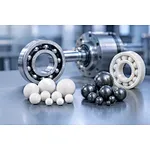
Discover the advantages of ceramic balls for food processing equipment, including corrosion resistance, wear resistance, low friction and high-speed performance. Learn how to choose zirconia, alumina and silicon nitride ceramic balls for food machinery.

What parameters should you confirm before ordering custom precision steel balls? Learn about material, diameter, tolerance, hardness, surface finish, application, inspection, and packaging requirements.

Discover why customized steel balls are becoming increasingly important in industrial manufacturing. Learn about custom sizes, materials, precision, hardness, surface treatment, OEM production, and more.

Carbon steel balls may be small components, but they play an important role in many hardware products.\nFrom drawer slides and casters to locks, hinges, conveyor equipment, bicycle components, and mechanical assemblies, carbon steel balls provide a practical combination of mechanical performance, wear resistance, manufacturing flexibility, and cost efficiency.