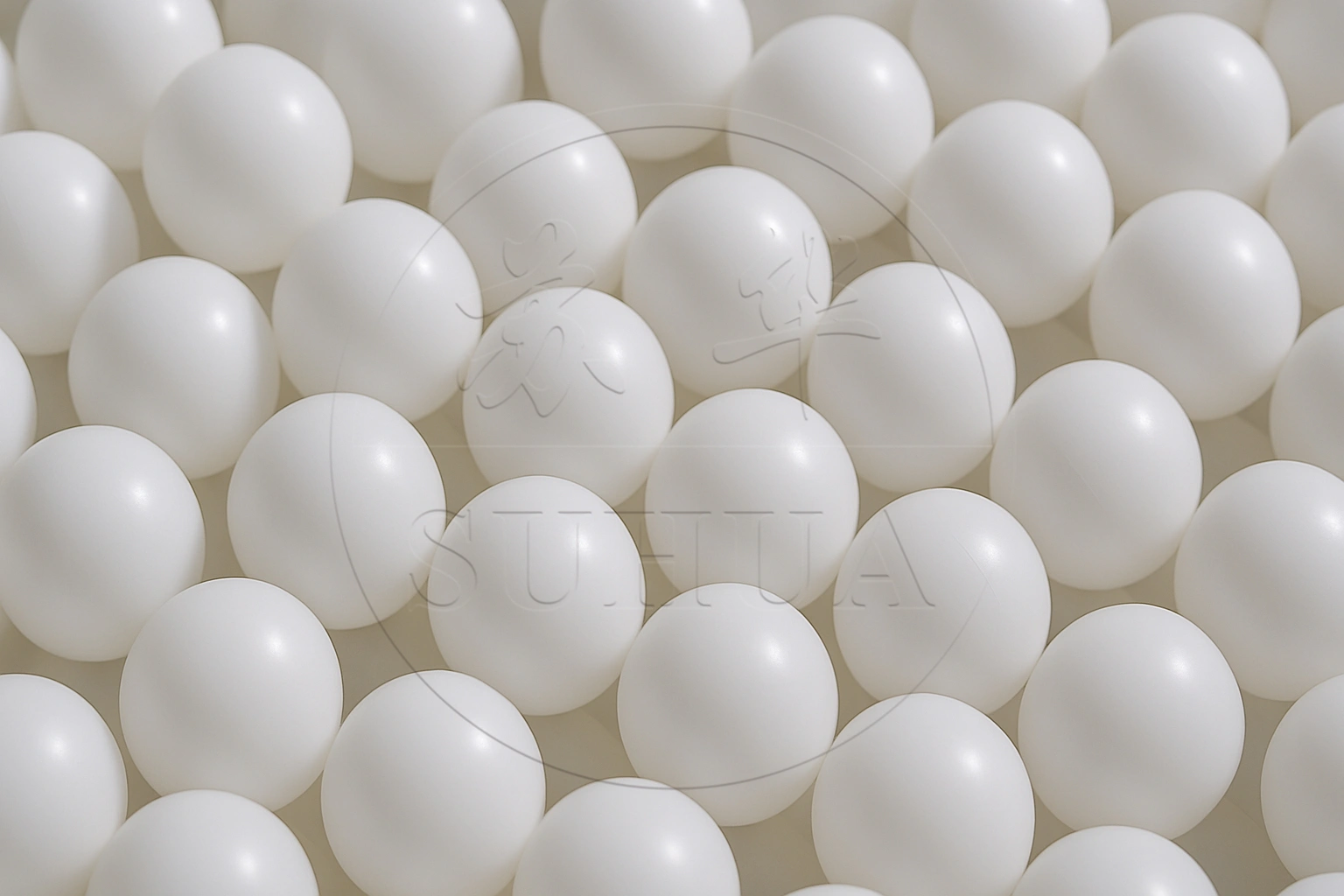
In modern industrial manufacturing, thermal conductivity is a critical parameter that directly influences the efficiency, stability, and lifespan of equipment. Whether in the heat dissipation systems of electronic devices or in thermal management of high-temperature machinery, the choice of material plays a decisive role. Among the most widely used ball materials, ceramic balls and metal balls stand out. But which performs better in terms of thermal conductivity?
1. Thermal Properties of Metal Balls
Metals possess abundant free electrons in their lattice structure, which makes them excellent thermal conductors.
-
Copper Balls, Aluminum Balls: Copper (≈ 400 W/m·K) and aluminum (≈ 230 W/m·K) are among the best conductors, widely applied in heat exchangers and electronic cooling.
-
Steel Balls (Stainless Steel, Bearing Steel): With thermal conductivity ranging from 15–50 W/m·K, steel balls are lower in performance compared to copper or aluminum, but still higher than most ceramics.
Conclusion: Metal balls, especially copper and aluminum, are superior in thermal conduction and remain the first choice for efficient heat transfer applications.
2. Thermal Characteristics of Ceramic Balls
Ceramics rely mainly on lattice vibration to conduct heat due to the lack of free electrons, resulting in generally lower thermal conductivity. However, different ceramic types show significant variations:
-
Alumina (Al₂O₃) Balls: 20–30 W/m·K, relatively good among ceramics.
-
Zirconia (ZrO₂) Balls: Very low, around 2–3 W/m·K.
-
Silicon Nitride (Si₃N₄) Balls: Up to 30 W/m·K, comparable to some steels.
Conclusion: While ceramics are generally weaker in thermal conductivity, advanced ceramics like silicon nitride show promising performance for specialized applications.
3. Comparative Analysis
| Property | Metal Balls | Ceramic Balls |
|---|---|---|
| Thermal Conductivity | Excellent (Cu, Al are top-tier) | Generally low, some exceptions |
| High-Temperature Resistance | Susceptible to oxidation/softening | Outstanding, >1000℃ stability |
| Corrosion Resistance | Vulnerable to acids/alkalis | Excellent, ideal for harsh environments |
| Electrical Insulation | Conductive | Fully insulating |
| Density | Relatively high | Lightweight |
| Mechanical Strength | High toughness, strong load capacity | High hardness, low expansion, long service life |
Conclusion: Metals dominate in thermal conductivity, while ceramics excel in high-temperature, corrosion-resistant, and insulating conditions.
4. Typical Applications
-
Metal Balls
-
Cooling Systems: PC motherboards, LED modules, power electronics.
-
Motors & Rotors: Enhanced heat transfer through copper/aluminum balls.
-
Heat Exchangers: Steel balls used in fluid-based heat transfer.
-
-
Ceramic Balls
-
High-Speed Bearings: Silicon nitride balls reduce heat accumulation.
-
Chemical Industry: Zirconia balls resistant to acid and alkali corrosion.
-
Aerospace: Lightweight and heat-resistant for extreme conditions.
-
Electrical Systems: Insulating ceramics in sensitive circuits.
-
5. Material Selection Guidance
-
For maximum thermal conductivity → Choose copper or aluminum balls.
-
For high temperature and electrical insulation → Ceramic balls (e.g., silicon nitride, zirconia) are ideal.
-
For balanced performance → Steel balls or alumina ceramics provide a compromise.
By carefully selecting materials based on application needs, enterprises can enhance product reliability, reduce maintenance costs, and stay competitive.