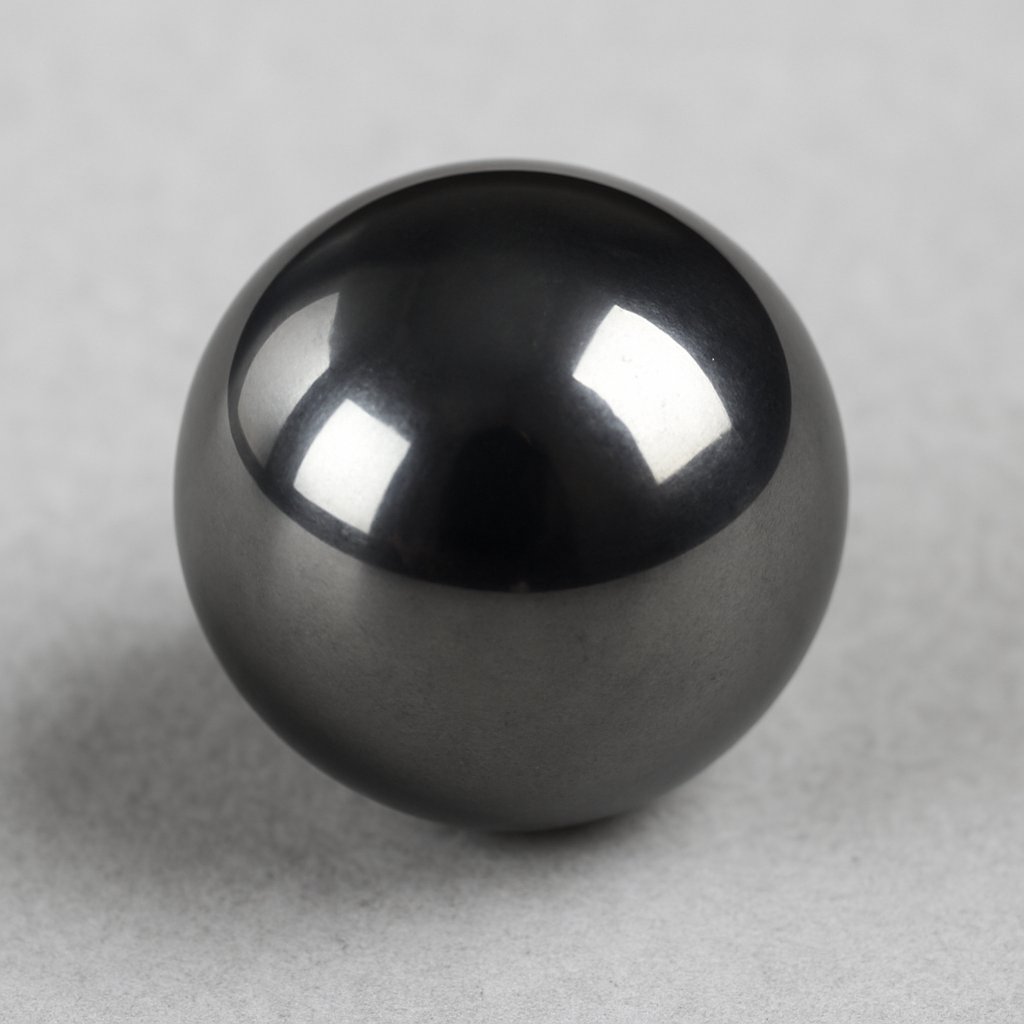
Steel balls play an indispensable role in industrial manufacturing, machinery, automotive components, and precision instruments. Among them, stainless steel balls and carbon steel balls are two of the most commonly used materials. Although they belong to the same family, they differ greatly in composition, performance, application, and cost. Understanding these differences helps businesses choose the right material for better efficiency and value.
1. Material Composition
-
Stainless Steel Balls are alloyed mainly with chromium (Cr) and nickel (Ni). Common types include 304, 316, 420, and 440C. These elements provide strong corrosion and oxidation resistance, making them suitable for humid, acidic, or high-temperature environments.
-
Carbon Steel Balls, on the other hand, use carbon as the primary strengthening element. Grades such as AISI1010, AISI1045, and AISI1085 offer high hardness and excellent wear resistance after heat treatment, though they tend to rust easily without protective coating.
2. Performance Comparison
| Property | Stainless Steel Ball | Carbon Steel Ball |
|---|---|---|
| Hardness | Moderate to high (up to HRC58+) | High (up to HRC60+ after heat treatment) |
| Corrosion Resistance | Excellent | Poor (prone to rust) |
| Wear Resistance | Good | Excellent |
| Impact Strength | Moderate | High |
| Service Life | Long, especially in humid/corrosive environments | Stable in dry environments |
| Cost | Higher | Lower, cost-effective |
3. Application Fields
-
Stainless Steel Balls are widely used in industries requiring high cleanliness and corrosion resistance, such as:
-
Medical devices
-
Food machinery
-
Chemical pumps and valves
-
Marine and outdoor equipment
-
Precision instruments and high-end bearings
-
-
Carbon Steel Balls are preferred for general-purpose mechanical and cost-sensitive applications, including:
-
Bicycles, pulleys, and furniture slides
-
Bearings and motors
-
Toys, chains, and hardware tools
-
4. Material Selection Tips
-
For corrosion resistance and shiny appearance → Choose stainless steel balls, ideal for humid or chemical environments.
-
For durability and cost efficiency → Choose carbon steel balls, best for dry and clean mechanical systems.
-
For a balance between hardness and rust resistance → Consider high-chromium stainless steel (440C) or nickel-plated carbon steel balls.
5. Conclusion
In the steel ball industry, stainless steel and carbon steel each offer distinct advantages. Stainless steel balls stand for durability and corrosion resistance, while carbon steel balls represent affordability and toughness.
As a professional B2B manufacturer and trader, we provide a wide range of steel ball materials and offer customized solutions for different industries — ensuring every product operates with maximum efficiency and reliability.