What Is Steel Ball Size Consistency?
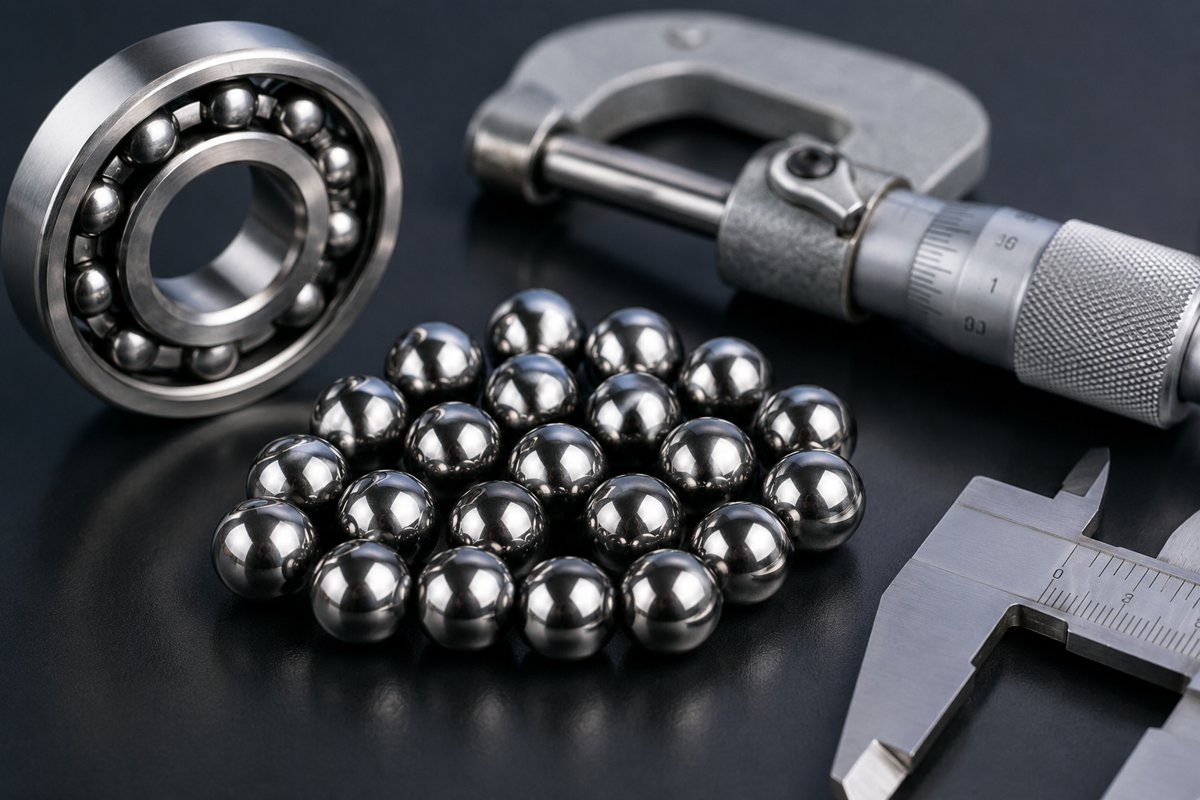
Steel ball size consistency refers to the degree of dimensional uniformity among steel balls within the same production batch.
Key measurement parameters include:
- Ball diameter tolerance
- Lot diameter variation
- Sphericity (roundness)
- Surface roughness
- Precision grade (G100, G40, G25, G10, G5, G3)
The smaller the dimensional deviation, the more consistent the steel balls are. High-quality precision steel balls are manufactured with micron-level tolerances to meet demanding industrial requirements.
Consistent dimensions ensure balanced load distribution and stable mechanical performance throughout the equipment's service life.
Improved Bearing Accuracy and Stability
Bearings are among the most common applications for steel balls.
Inside a bearing, each ball shares the load while minimizing friction between moving components. If steel balls vary in size, the load is distributed unevenly, creating excessive stress on specific contact points.
Potential consequences include:
- Uneven load distribution
- Increased friction
- Raceway damage
- Reduced rotational accuracy
- Premature bearing failure
High-precision steel balls ensure that every ball contacts the raceway evenly, resulting in:
- Smooth rotation
- Better running accuracy
- Reduced friction
- Longer bearing life
- Improved equipment reliability
This is why premium bearings typically utilize G10, G5, or even G3 precision-grade steel balls.
Reduced Vibration and Noise
Equipment vibration and operating noise are often linked to steel ball quality.
When steel balls have inconsistent diameters, they create irregular rolling patterns inside bearings and moving assemblies. These irregularities generate vibration and periodic impacts during operation.
As a result:
- Noise levels increase
- Mechanical vibration becomes stronger
- Equipment stability decreases
- Wear accelerates
This issue is particularly important in:
- High-speed electric motors
- CNC machine tools
- Medical devices
- Precision instruments
- Automation equipment
Using highly consistent steel balls helps manufacturers achieve quieter and smoother equipment operation.
Extended Equipment Service Life
Dimensional inconsistency can lead to localized overloading inside bearings and mechanical systems.
Over time, excessive stress may cause:
- Surface fatigue
- Pitting corrosion
- Raceway spalling
- Abnormal wear
- Unexpected equipment downtime
Precision steel balls distribute loads more evenly, minimizing contact stress and reducing wear on critical components.
Benefits include:
- Longer bearing life
- Reduced maintenance frequency
- Lower operating costs
- Improved equipment reliability
For industrial users, these advantages translate directly into increased productivity and lower total ownership costs.
Better Performance in High-Speed Applications
As industries continue to pursue higher efficiency, many machines operate at increasingly high rotational speeds.
Examples include:
- CNC machining centers
- Electric vehicle motors
- Aerospace equipment
- High-speed pumps
- Precision spindles
At high speeds, even minor dimensional variations can create significant dynamic imbalances.
Potential problems include:
- Increased centrifugal force
- Excessive heat generation
- Lubrication failure
- Reduced operational stability
Steel balls with superior size consistency help maintain balance and minimize vibration, ensuring reliable performance under demanding operating conditions.
Enhanced Product Quality and Assembly Consistency
For OEM manufacturers, component consistency is essential for maintaining product quality.
High-precision steel balls help:
- Improve assembly accuracy
- Reduce dimensional variation
- Increase production efficiency
- Lower rejection rates
- Enhance customer satisfaction
In competitive global markets, consistent component quality often determines the overall reliability and reputation of industrial products.
How to Select a Reliable Precision Steel Ball Supplier
When sourcing steel balls, buyers should evaluate suppliers based on several key factors.
1. Material Quality
Premium raw materials provide superior hardness, wear resistance, and dimensional stability.
Common materials include:
- AISI 52100 Chrome Steel Balls
- AISI 420 Stainless Steel Balls
- AISI 440C Stainless Steel Balls
- AISI 304 Stainless Steel Balls
- Ceramic Balls
2. Advanced Manufacturing Process
A professional manufacturer should employ:
- Cold heading
- Heat treatment
- Grinding
- Lapping
- Polishing
- Precision sorting
These processes ensure exceptional dimensional consistency and surface quality.
3. Comprehensive Quality Control
Reliable suppliers typically utilize:
- Laser diameter measuring systems
- Roundness testers
- Surface roughness testers
- Hardness testing equipment
- Automated sorting machines
Strict inspection procedures guarantee compliance with international quality standards.
Why Choose Huarui Steel Ball?
Huarui Steel Ball specializes in the manufacturing of high-precision steel balls, stainless steel balls, bearing steel balls, ceramic balls, and customized ball solutions for global industries.
Our advantages include:
Advanced automated production lines
Strict quality management system
Micron-level dimensional inspection
Rich international export experience
OEM and custom manufacturing support
Stable quality and reliable delivery
By maintaining exceptional size consistency and precision standards, we help customers improve equipment performance, reduce maintenance costs, and enhance product competitiveness.