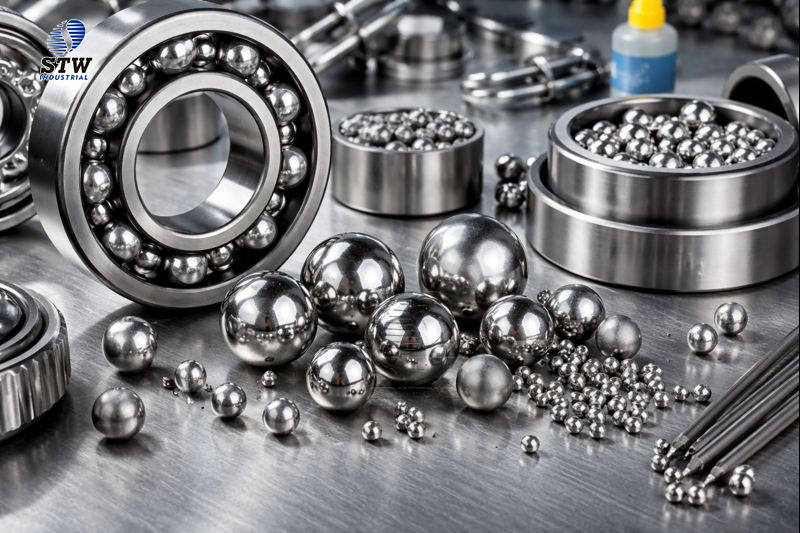
Steel balls are critical components widely used in bearings, precision machinery, valve systems, and industrial transmission equipment. Their operational stability directly affects equipment performance and service life. However, accidental damage—such as premature cracking, surface flaking, or abnormal wear—still occurs in many applications, leading to increased maintenance costs and unplanned downtime.
This article outlines practical and effective strategies to reduce accidental damage to steel balls during operation, helping industrial users improve reliability and extend component lifespan.
1. Select the Appropriate Steel Ball Material
Material mismatch is one of the primary causes of unexpected steel ball failure. Different applications require different mechanical and chemical properties:
-
Bearing steel balls (AISI 52100 / GCr15): Designed for high-load and high-speed applications, offering excellent hardness and fatigue resistance
-
Stainless steel balls (304, 316, 440C): Suitable for corrosive, humid, or hygienic environments
-
Carbon steel balls: Commonly used for low-speed, low-load, or non-precision applications
Evaluating operating conditions such as load, rotational speed, temperature, and environmental exposure is essential to prevent cracking or spalling caused by insufficient material performance.
2. Control Operating and Storage Environments
Environmental factors have a significant impact on steel ball performance and durability:
-
Excessive humidity may cause corrosion, leading to fatigue crack initiation
-
Dust or foreign particles increase friction and surface damage
-
Temperature fluctuations can affect material stability and lubricant performance
Maintaining a clean, dry, and temperature-controlled environment, along with proper sealing and protective measures, helps minimize environmental risks.
3. Ensure Proper Installation and Assembly
Improper installation is a frequent source of accidental steel ball damage, including:
-
Excessive impact during assembly
-
Incorrect clearance between the steel ball and raceway
-
Contamination introduced during installation
Using professional tooling and standardized assembly procedures ensures uniform load distribution and prevents localized stress concentration, reducing early-stage failure.
4. Apply Correct Lubrication Practices
Inadequate or incorrect lubrication significantly accelerates wear and fatigue damage. Proper lubrication helps to:
-
Reduce rolling and sliding friction
-
Minimize surface wear and heat generation
-
Inhibit micro-crack propagation
Lubricants should be selected based on operating speed, load, and temperature, with regular inspection and replacement schedules to maintain optimal performance.
5. Implement Regular Inspection and Replacement Programs
Even under optimal conditions, steel balls have a finite fatigue life. Routine inspection allows early detection of potential issues, such as:
-
Surface spalling, cracks, or abnormal wear patterns
-
Dimensional deviation or loss of roundness
-
Abnormal noise or vibration during operation
Timely replacement of damaged steel balls prevents minor defects from escalating into major system failures.
6. Partner with a Reliable Steel Ball Manufacturer
Quality consistency at the source plays a critical role in reducing accidental damage. A professional steel ball supplier typically provides:
-
Strict raw material traceability
-
Advanced heat treatment and precision grinding processes
-
Comprehensive inspection of size, hardness, microstructure, and fatigue life
Consistent manufacturing quality significantly reduces unpredictable performance risks in real-world applications.