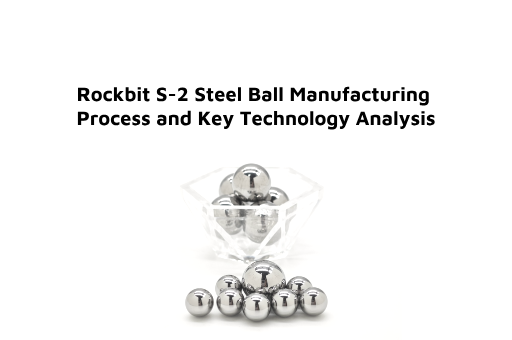
Rockbit S-2 steel balls are a high-performance material primarily used in oil drilling equipment, renowned for their superior hardness and wear resistance. To understand their advantages, it is essential to compare their performance against other commonly used steel ball materials, such as 52100 chrome steel, carbon steel, and stainless steel.
1. Hardness and Wear Resistance
Rockbit S-2 steel balls are engineered to withstand extreme conditions, offering exceptional hardness, typically ranging from 60 to 65 HRC. In comparison, 52100 chrome steel balls, widely used in precision bearings, have a hardness around 60 HRC. While both types provide high hardness, Rockbit S-2 excels in its ability to retain hardness under high-stress conditions due to its unique alloy composition.
Carbon steel balls, though cost-effective, typically fall short in terms of hardness and corrosion resistance, making them unsuitable for demanding applications like oil drilling. Stainless steel balls, particularly those made from grades like 304 or 440C, provide good corrosion resistance but tend to lack the wear resistance and hardness levels necessary for heavy-duty applications such as those involving drilling fluids or high-pressure environments.
2. Corrosion and Oxidation Resistance
Stainless steel balls, particularly those made from 440C, provide excellent resistance to corrosion and oxidation. However, when comparing this to Rockbit S-2, which is optimized for wear resistance rather than corrosion resistance, the S-2 steel balls may not perform as well in highly corrosive environments.
3. Impact Resistance and Durability
In high-impact environments like oil drilling, the toughness of the material plays a crucial role. Rockbit S-2 steel balls are designed to absorb shocks and resist deformation even under significant mechanical stress. While stainless steel balls offer good durability in moderate conditions, they tend to perform less effectively under the intense conditions found in drilling equipment.
4. Cost-Effectiveness
While Rockbit S-2 steel balls come at a premium due to their superior performance characteristics, their durability and long lifespan in high-stress applications make them a more cost-effective choice in the long run. Carbon steel balls are less expensive but require more frequent replacements, leading to higher maintenance costs over time. Stainless steel balls, while providing corrosion resistance, do not match the wear resistance of Rockbit S-2 steel balls in high-stress applications.
5. Applications and Performance in Drilling Equipment
Rockbit S-2 steel balls are ideal for use in rotary bits, drill bits, and other oilfield equipment due to their outstanding wear resistance and ability to maintain integrity under high temperatures and pressures. Other steel balls, like stainless steel or carbon steel, are typically not suited for the rigorous conditions of oil drilling, making Rockbit S-2 the preferred choice for these high-demand applications.
Conclusion
When comparing Rockbit S-2 steel balls to other steel balls like 52100 chrome steel, carbon steel, and stainless steel, the key advantages of Rockbit S-2 lie in its unparalleled hardness, wear resistance, and performance in high-stress, high-temperature environments. For applications such as oil drilling, Rockbit S-2 offers superior reliability, making it a top choice for demanding industries.