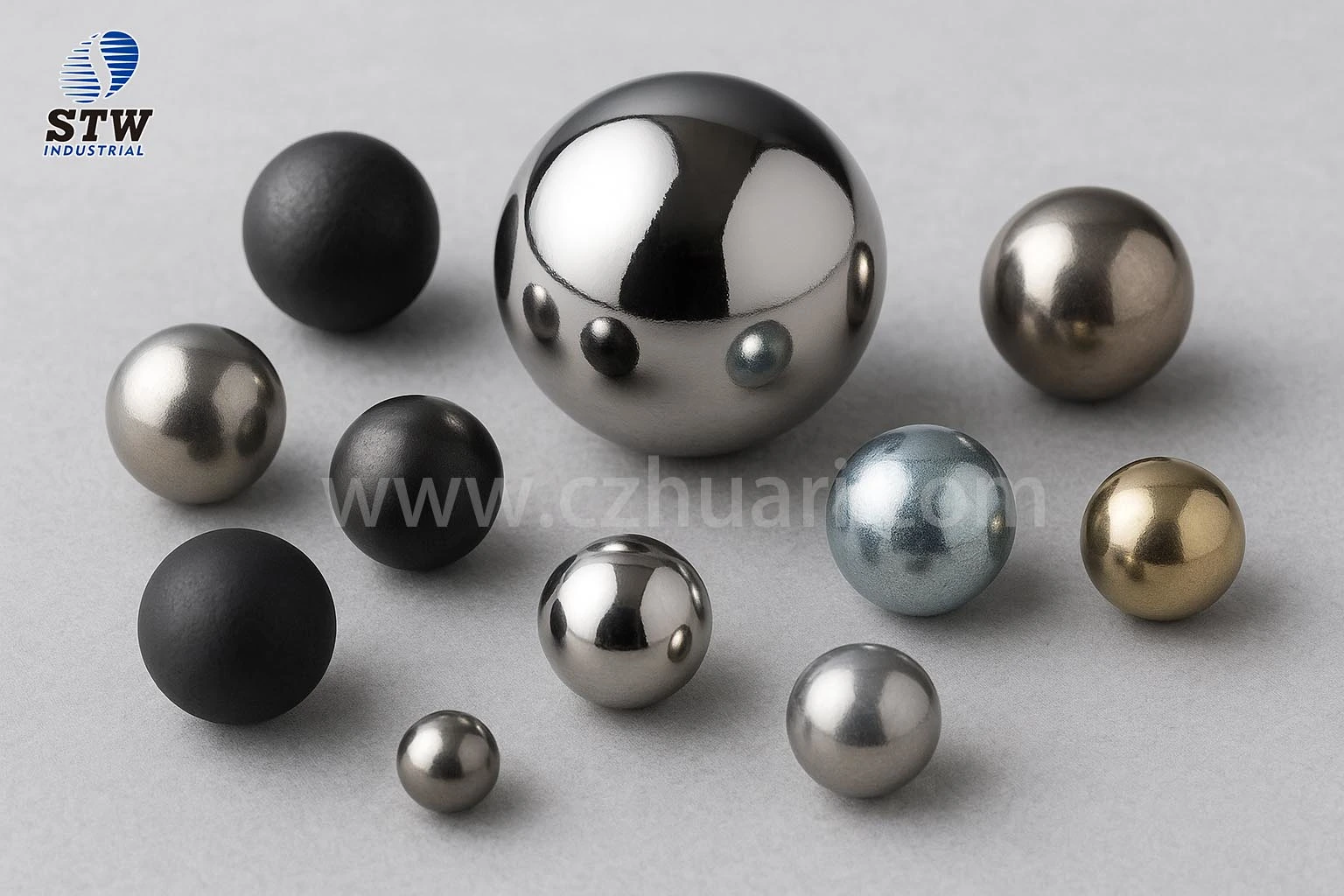
In industries such as bearings, automotive components, precision machinery, valves, and industrial transmission systems, steel balls may be small components, but they play a critical role in overall performance, durability, and reliability.
In real-world procurement, many buyers focus primarily on price or material type, while overlooking essential technical parameters. This often results in inconsistent quality, abnormal wear, shortened service life, or even system failure.
As a professional B2B steel ball manufacturer and integrated trading supplier, we recommend confirming the following six key parameters before placing any steel ball order.
1. Material Grade
Material selection is the foundation of steel ball performance. Different applications require different mechanical and chemical properties.
Common steel ball materials include:
-
Bearing Steel (GCr15 / AISI 52100) – High hardness and excellent wear resistance, ideal for high-load and high-speed applications
-
Stainless Steel (304 / 316 / 420 / 440C) – Superior corrosion resistance for humid or chemically aggressive environments
-
Carbon Steel (Low / Medium Carbon) – Cost-effective option for decorative, counterweight, or non-precision uses
Procurement Tip: Always match the material to the operating environment and performance requirements to avoid hidden risks.
2. Diameter and Tolerance
Steel ball diameter must be not only accurate, but also highly consistent.
Key factors include:
-
Nominal diameter (e.g. 6 mm, 1/4 inch)
-
Actual diameter tolerance (± microns)
-
Compliance with international standards (ISO, DIN, ASTM)
In precision bearings and motion systems, micron-level deviations can lead to vibration, noise, and reduced service life.
Procurement Tip: Request dimensional inspection reports or batch consistency documentation from your supplier.
3. Precision Grade
Steel ball grade defines its roundness, diameter variation, and surface finish quality.
Typical grades include:
-
G10 / G16 – High-precision bearings, medical and aerospace applications
-
G25 / G40 – Industrial bearings and general machinery
-
G100 / G200 – Low-precision or non-critical applications
Higher grades require more advanced processing and stricter quality control.
Procurement Tip: Select the grade that meets your actual application needs rather than over-specifying.
4. Hardness
Hardness directly affects wear resistance, load capacity, and fatigue life.
-
Bearing steel balls typically range from HRC 60–66
-
Stainless steel hardness varies significantly by grade
-
Improper hardness can cause premature wear or surface damage
Procurement Tip: Confirm that standardized heat treatment is applied and request hardness test data.
5. Surface Roughness
Surface quality is often underestimated, yet it has a direct impact on:
-
Friction coefficient
-
Noise level
-
Wear behavior with mating components
High-quality steel balls feature:
-
Smooth, defect-free surfaces
-
Low Ra values (measured in microns)
Procurement Tip: Ask about grinding and polishing processes, and request samples when necessary.
6. Application Conditions and Special Requirements
Different industries introduce specific technical and compliance requirements, such as:
-
Rust prevention methods and cleaning standards
-
Food-grade, medical, or chemical industry compliance
-
Special coatings, vacuum packaging, or customized inspections
Procurement Tip: Clearly communicate the application scenario at the quotation stage to avoid delays or rework later.
Conclusion: Parameter Confirmation Is the Foundation of Reliable Supply
In B2B procurement, steel balls are not generic components but precision parts that require accurate parameter matching.
By confirming these six key parameters in advance, buyers can significantly reduce sourcing risks, improve batch consistency, and build long-term supply stability.
If you are looking for a reliable steel ball manufacturer with consistent quality and engineering support, we are ready to provide professional selection guidance and customized solutions based on your application needs.