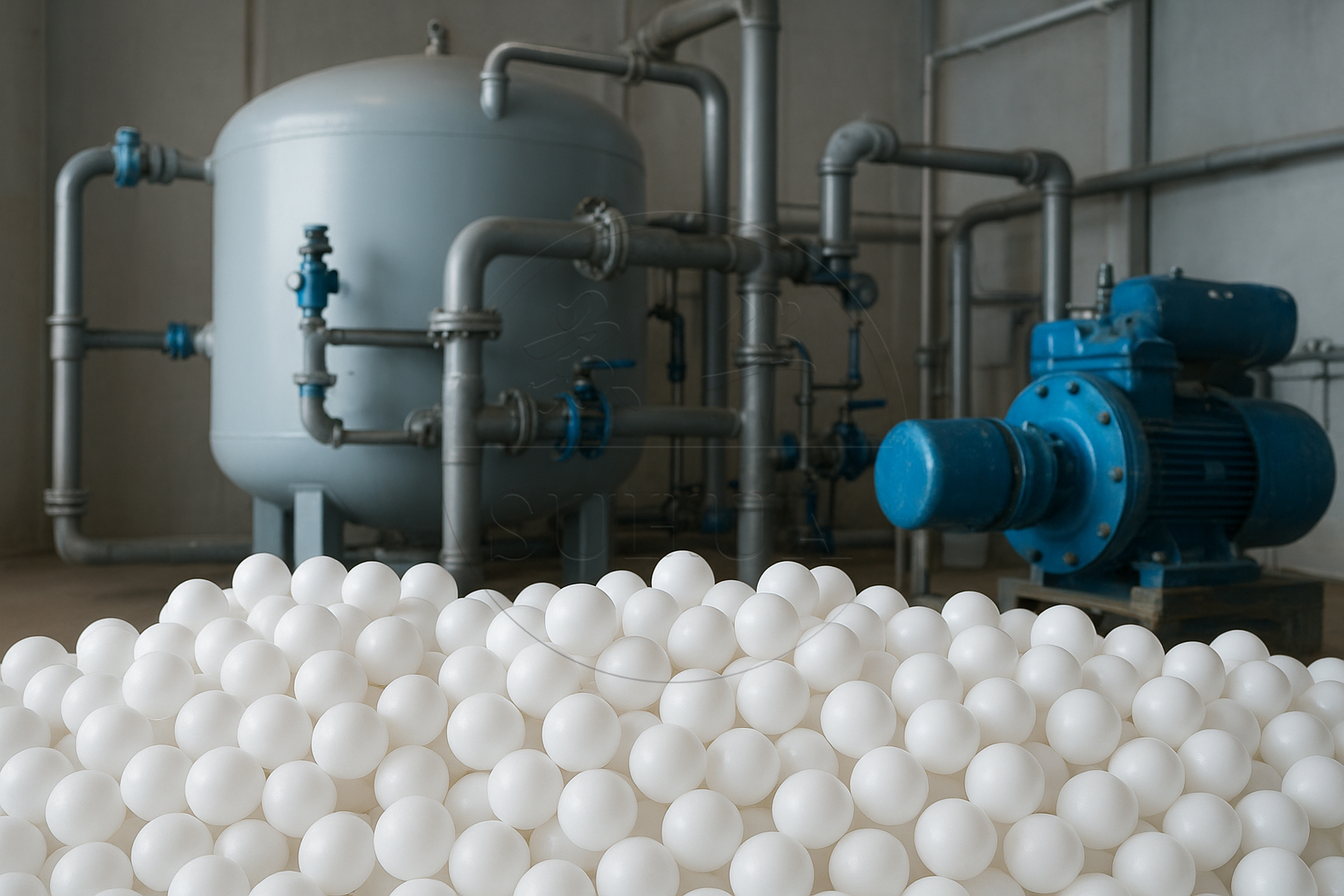
In the complex systems of water treatment, plastic balls may appear insignificant, but they play a vital role in ensuring equipment stability, efficiency, and longevity. With features such as lightweight structure, corrosion resistance, low cost, and versatility, plastic balls have become indispensable in modern water treatment applications.
1. Material Properties and Selection
Plastic balls are available in multiple materials, each suitable for different environments:
-
Polypropylene (PP): Lightweight, acid-alkali resistant, suitable for sewage treatment.
-
Polyoxymethylene (POM): High mechanical strength and wear resistance, ideal for valve sealing.
-
Polytetrafluoroethylene (PTFE): Excellent resistance to high temperature and strong corrosion, commonly used in seawater desalination.
-
Polyethylene (PE): Low cost and strong buoyancy, often used in float level control.
Engineers select plastic balls based on water quality, pressure, temperature, and equipment function.
2. Key Functions in Water Treatment Equipment
-
Valve Control and Sealing
Plastic balls ensure reliable opening and sealing in check valves, float valves, and ball valves, preventing water backflow and leakage. -
Liquid Level Control
By utilizing buoyancy, plastic balls enable automatic liquid level regulation, widely applied in water tanks, reservoirs, and cooling systems. -
Filter Media and Packing
As random packing in bio-towers and deodorization systems, plastic balls enhance turbulence and improve gas-liquid exchange efficiency, while remaining easy to clean. -
Energy Saving and Noise Reduction
In high-flow systems, plastic balls absorb impact force and reduce operational noise, extending equipment service life.
3. Industry Applications
-
Municipal Water Supply and Sewage Treatment
-
Industrial Cooling Systems
-
Seawater Desalination Projects
-
Chemical and Food-Grade Water Treatment
4. Value and Advantages
-
Prolongs equipment lifespan by reducing wear and corrosion.
-
Improves system efficiency and stability.
-
Lowers operational and maintenance costs.
-
Supports sustainable and environmentally friendly practices.
5. Future Development
With growing emphasis on sustainability, plastic balls are evolving in three directions:
-
Advanced Composite Materials: Improved temperature and corrosion resistance.
-
High Precision Manufacturing: Better performance in demanding water systems.
-
Eco-Friendly Materials: Biodegradable and recyclable options to meet green industry standards.
Conclusion
Though small in size, plastic balls are essential to the stable and efficient operation of water treatment equipment. From valve sealing and liquid level control to filtration and energy conservation, they solve critical challenges across the industry. With material science and sustainability driving innovation, plastic balls will continue to expand their role in the water treatment sector.