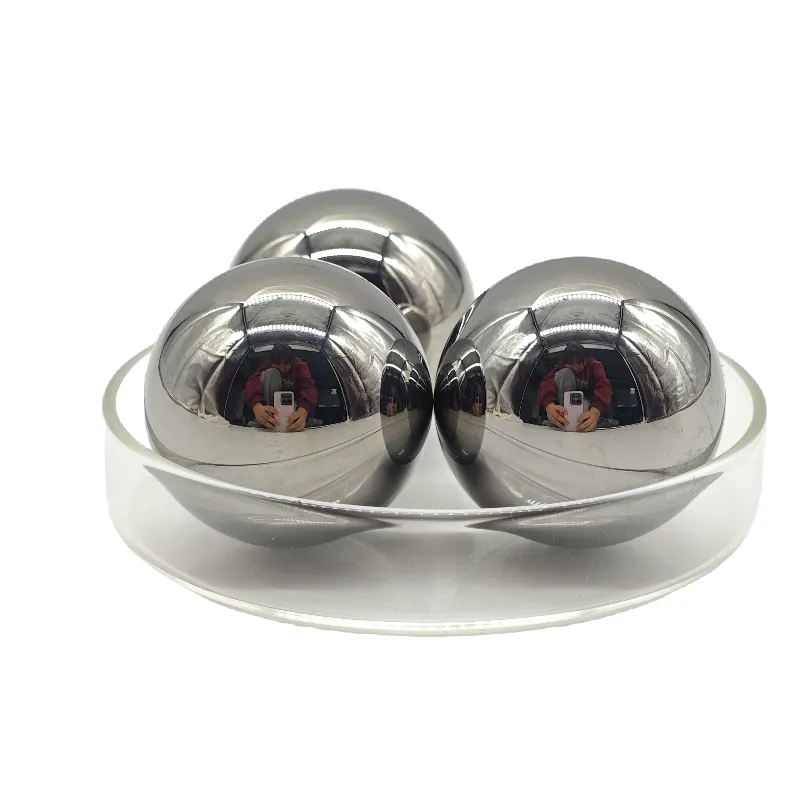
As the world transitions toward carbon neutrality and sustainable energy, the photovoltaic (PV) industry has become a pillar of renewable energy development. According to the International Energy Agency (IEA), global PV installations are expected to grow rapidly in the next decade. This expansion not only requires innovations in solar cell technology but also demands higher-quality and more reliable components across the supply chain. High-precision spheres, though small, are emerging as essential elements that support the stability and efficiency of PV manufacturing and operation.
1. Background and Challenges of the PV Industry
-
Pursuit of Higher Efficiency
The competitiveness of PV power generation depends on improving conversion efficiency and lowering costs. Beyond cell structure innovation, the precision and reliability of equipment play an equally vital role. -
Operation in Harsh Environments
PV power plants are often built in deserts, highlands, or coastal areas, where equipment must withstand extreme temperatures, sand, dust, and humidity. Corrosion-resistant and durable components are indispensable. -
Intelligent and Large-Scale Trends
With the adoption of solar tracking systems, automated production, and energy storage integration, the demand for high-precision motion components such as spheres is rapidly increasing.
2. Applications of High-Precision Spheres in the PV Industry
-
PV Manufacturing Equipment
Silicon wafer cutting, grinding, polishing, and inspection equipment rely on precision steel balls and ceramic balls to ensure low-friction, stable, and accurate motion.-
Ceramic balls: Wear-resistant, low thermal expansion, ideal for precision machinery.
-
Bearing steel balls: High hardness and strength, suitable for high-speed rotation.
-
-
Solar Tracking Systems
Single-axis and dual-axis tracking systems adjust solar panels to follow the sun, maximizing efficiency. Stainless steel balls and hardened steel balls are used in bearings to maintain smooth rotation under wind, sand, and temperature changes. -
Inverters and Cooling Systems
Inverters and storage systems require efficient cooling. Copper balls and aluminum balls provide excellent conductivity and thermal performance to enhance system stability. -
Energy Storage Facilities
With the rise of PV+storage solutions, conductive and corrosion-resistant spheres, such as copper balls, are increasingly applied in battery components and connectors.
3. Core Requirements of the PV Industry for High-Precision Spheres
-
Micron-level dimensional accuracy to ensure stability in transmission and positioning.
-
Wear resistance for long-term, high-speed operation in equipment and tracking systems.
-
Corrosion resistance to withstand outdoor environments like humidity, salt spray, and sand.
-
Lightweight yet strong options such as aluminum balls for structural and cooling needs.
-
Material diversity to meet specific demands with stainless steel, ceramic, copper, aluminum, and plastic spheres.
4. Material Advantages in PV Applications
-
Stainless steel balls: Corrosion-resistant, ideal for tracking systems and inverters.
-
Bearing steel balls: High precision and hardness, used in cutting and grinding equipment.
-
Ceramic balls: Lightweight, high-temperature resistant, and wear-proof.
-
Copper balls: Excellent conductivity for storage and electrical applications.
-
Aluminum balls: Lightweight with good heat dissipation.
-
Plastic balls: Insulating and corrosion-resistant for specialized needs.
5. Our Advantages as a Supplier
As a professional B2B manufacturer and trading-integrated supplier, we offer:
-
Wide material coverage: Stainless steel, bearing steel, carbon steel, ceramic, copper, aluminum, tungsten carbide, and plastic spheres.
-
Advanced precision processing: Strict control of roundness and diameter tolerance to meet micron-level demands.
-
Quality assurance: From raw materials to final inspection, ensuring consistency and reliability.
-
Customized solutions: Tailored material, precision, and surface treatments for diverse PV applications.