1. Excellent Corrosion Resistance
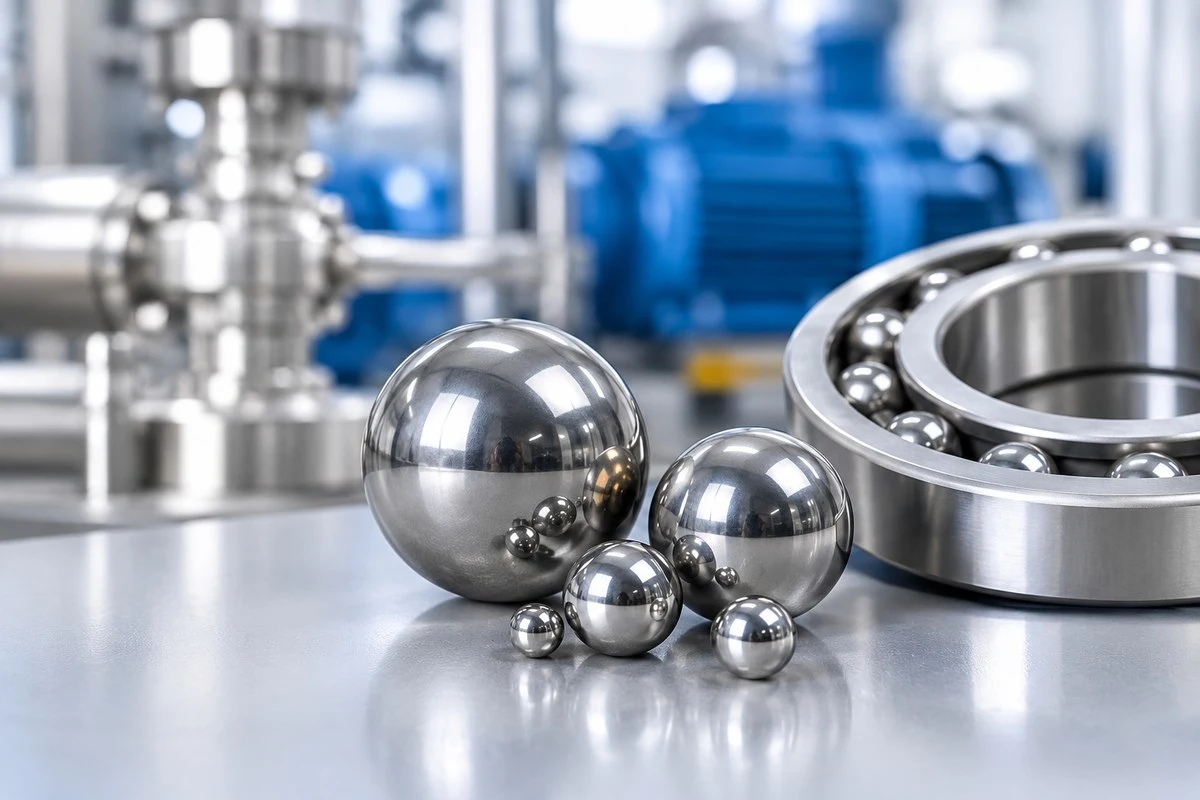
One of the main reasons stainless steel balls are suitable for different industrial environments is their corrosion resistance. Stainless steel contains chromium, which forms a protective oxide layer on the surface. This layer helps prevent rust and reduces the risk of corrosion under suitable operating conditions.
Compared with ordinary carbon steel balls, stainless steel balls are better suited for applications exposed to moisture, water, and certain corrosive substances. They are commonly used in pumps, valves, fluid systems, food processing equipment, and other machinery where corrosion resistance is an important consideration.
Different stainless steel grades offer different levels of corrosion resistance. Selecting the right grade according to the working environment can help improve product performance and service life.
2. Adaptability to Different Operating Conditions
Industrial environments can vary significantly in temperature, humidity, pressure, and operating speed. Stainless steel balls are available in different grades and manufacturing specifications, allowing buyers to select suitable products for different applications.
Depending on the material grade and processing conditions, stainless steel balls can be used in equipment exposed to moisture, frequent contact with liquids, continuous operation, and various mechanical loads.
This adaptability makes stainless steel balls a flexible component for equipment manufacturers who need reliable performance across different working conditions.
3. Good Mechanical Strength and Wear Resistance
Stainless steel balls are manufactured through processes such as forming, heat treatment when applicable, grinding, and polishing. These processes help achieve the required hardness, dimensional accuracy, and surface finish.
For applications involving rolling, movement, positioning, or mechanical contact, the ball's hardness and surface quality can directly influence operational efficiency and component durability.
Certain stainless steel grades, such as 440C, can achieve relatively high hardness through heat treatment, making them suitable for applications requiring improved wear resistance and mechanical performance.
Choosing the appropriate material and manufacturing process is essential for achieving the desired balance between corrosion resistance, hardness, and service life.
4. Suitable for a Wide Range of Industries
Stainless steel balls are used across many industries because their properties can meet different application requirements.
Automotive Industry: Stainless steel balls can be used in selected automotive components, precision mechanisms, and fluid control systems where corrosion resistance and consistent quality are required.
Pump and Valve Industry: They are suitable for certain pump, valve, and flow control applications involving liquids and demanding operating conditions.
Food Processing Equipment: Stainless steel balls may be used in equipment where corrosion resistance, cleanliness, and ease of maintenance are important, depending on the material grade and applicable hygiene requirements.
Medical and Precision Equipment: Certain stainless steel balls are used in precision instruments and specialized equipment where dimensional accuracy and surface quality are essential.
Industrial Machinery: Stainless steel balls are widely applied in mechanical assemblies, movement systems, and other industrial components requiring stable and consistent performance.
5. Reduced Maintenance Requirements
Corrosion and premature wear can lead to equipment downtime, replacement costs, and additional maintenance work. By selecting stainless steel balls with suitable material properties, manufacturers can reduce certain risks associated with rust and environmental exposure.
In many applications, stainless steel balls help maintain more stable operation and reduce the need for frequent component replacement. This can contribute to improved equipment reliability and lower long-term operating costs.
For industrial buyers, evaluating the total cost of use rather than only the initial purchase price is an important part of material selection.
6. Multiple Material Grades for Different Requirements
Not all industrial environments require the same type of stainless steel ball. Different material grades provide different combinations of corrosion resistance, hardness, magnetic properties, and mechanical performance.
Common stainless steel ball materials include:
-
304 Stainless Steel Balls: Suitable for general corrosion-resistant applications, moisture exposure, and various industrial components.
-
316 Stainless Steel Balls: Offer improved corrosion resistance in certain chemical and chloride-containing environments compared with 304, although suitability depends on the actual exposure conditions.
-
420 Stainless Steel Balls: Can be heat-treated to improve hardness and wear resistance for selected mechanical applications.
-
440C Stainless Steel Balls: Known for their ability to achieve high hardness and wear resistance after heat treatment, suitable for precision and demanding mechanical applications.
Understanding the differences between these grades helps buyers choose a material that better matches their application requirements, operating environment, and budget.
7. Flexible Specifications for Industrial Buyers
In addition to material selection, stainless steel balls are available in a wide range of diameters, tolerances, surface finishes, and packaging options.
For B2B purchasing, product consistency is particularly important. Buyers may need specific ball diameters, different precision grades, customized packaging, or stable supply for ongoing production.
A reliable supplier should be able to provide clear material specifications, quality inspection procedures, and product options according to the customer's requirements.
Conclusion
Stainless steel balls are suitable for different industrial environments because of their corrosion resistance, mechanical strength, wear resistance, and versatility. With various material grades, sizes, and precision levels available, they can meet the requirements of a wide range of industrial applications.
Choosing the right stainless steel ball is essential for improving equipment reliability, reducing maintenance requirements, and maintaining consistent performance. Material selection, manufacturing quality, dimensional accuracy, and surface finish should all be considered when sourcing stainless steel balls for industrial use.
HUARI specializes in the manufacturing and supply of industrial balls, offering a wide range of materials, specifications, and solutions for different customer requirements. With a focus on product quality, manufacturing consistency, and reliable supply, HUARI supports industrial buyers, distributors, and manufacturers worldwide.
Whether you are looking for stainless steel balls for pumps, valves, machinery, automotive components, or precision applications, HUARI is committed to providing reliable products and professional support for your sourcing needs.
Contact HUARI today to learn more about our stainless steel balls and customized solutions for your industrial applications.