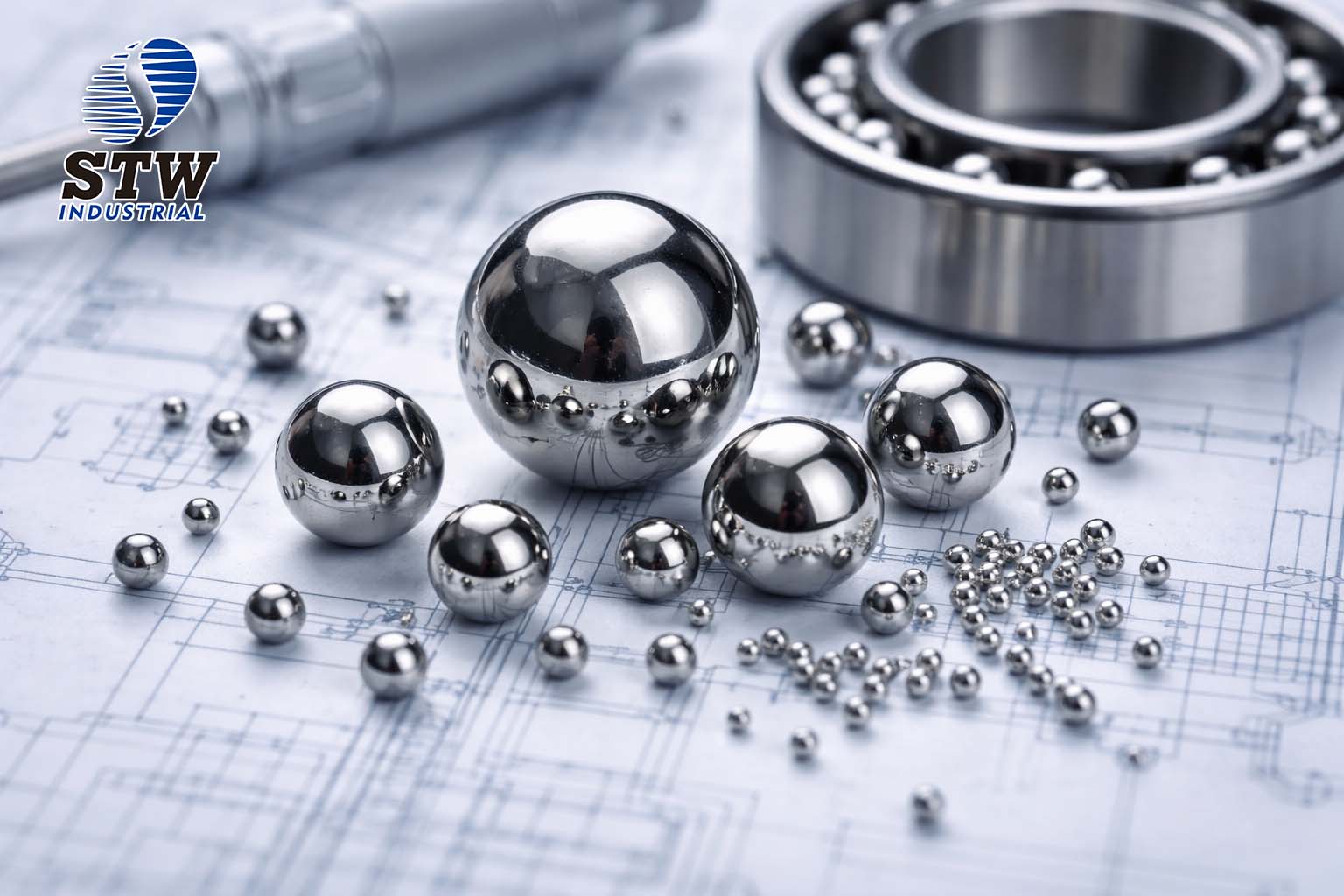
In the field of precision engineering, even the smallest component can significantly influence overall performance. Micro steel balls, typically ranging from 0.5 mm to 6 mm in diameter, play a critical role in ensuring accuracy, smooth motion, and durability in high-precision instruments. Their exceptional hardness, dimensional accuracy, and surface finish make them indispensable in advanced industrial and technological applications.
What Are Micro Steel Balls?
Micro steel balls are ultra-small spherical components manufactured with tight tolerances, often reaching G10–G100 precision grades. They are commonly made from materials such as:
-
Chrome steel (AISI 52100)
-
Stainless steel (AISI 304 / 316)
-
Carbon steel
These materials provide a balance of hardness, corrosion resistance, and wear resistance depending on the application environment.
Key Properties for Precision Applications
1. High Dimensional Accuracy
Micro steel balls are produced with extremely low roundness deviation and tight diameter tolerances, ensuring consistent performance in precision assemblies.
2. Superior Surface Finish
Polished to mirror-like surfaces, these balls reduce friction and wear, which is crucial in sensitive instruments.
3. High Hardness and Wear Resistance
Through advanced heat treatment processes, micro steel balls achieve excellent hardness (typically HRC 58–66), extending service life even under high-load conditions.
4. Corrosion Resistance Options
Stainless steel variants provide excellent resistance to moisture, chemicals, and harsh environments.
Major Applications in Precision Instruments
1. Bearings in Miniature Devices
Micro steel balls are widely used in miniature and ultra-precision bearings, ensuring smooth rotation with minimal friction. These are essential in:
-
Medical devices
-
Dental equipment
-
Micro-motors
2. Measuring and Calibration Instruments
Precision balls are used as reference points or contact elements in:
-
Coordinate Measuring Machines (CMM)
-
Dial indicators
-
Micrometers
Their high roundness ensures accurate measurement results.
3. Aerospace and Defense Components
In aerospace systems, micro steel balls contribute to high-reliability mechanisms such as:
-
Guidance systems
-
Control units
-
Sensor assemblies
Their durability under extreme conditions is critical.
4. Electronics and Micro-Mechanical Systems
Micro steel balls are used in:
-
Connectors and switches
-
Micro-electromechanical systems (MEMS)
-
Precision positioning devices
They enable stable electrical contact and precise movement.
5. Valve and Flow Control Systems
In miniature valves, micro balls act as sealing elements to control fluid or gas flow with high precision.
Manufacturing Process Overview
The production of micro steel balls involves several critical steps:
-
Cold heading – forming rough spherical shapes
-
Flashing – removing excess material
-
Heat treatment – enhancing hardness and strength
-
Grinding and lapping – achieving precise size and roundness
-
Polishing and inspection – ensuring surface finish and quality compliance
Advanced quality control systems guarantee consistency for high-end applications.
Why Choose High-Quality Micro Steel Balls?
Selecting premium-grade micro steel balls ensures:
-
Improved instrument accuracy
-
Reduced maintenance costs
-
Longer service life
-
Enhanced operational reliability
For precision instruments, substandard components can lead to measurement errors or system failure, making quality a non-negotiable factor.
Customization and OEM Capabilities
Professional manufacturers offer customized solutions, including:
-
Non-standard sizes
-
Special materials
-
Surface coatings (e.g., anti-rust, lubrication coatings)
-
Strict tolerance control
OEM services ensure compatibility with specific industrial requirements.
Conclusion
Micro steel balls are fundamental components in precision instruments, enabling accuracy, reliability, and efficiency across multiple industries. As technology continues to advance, the demand for higher precision and miniaturization will further expand their applications.
Choosing the right supplier with advanced manufacturing capabilities and strict quality control is essential to achieving optimal performance in your precision systems.