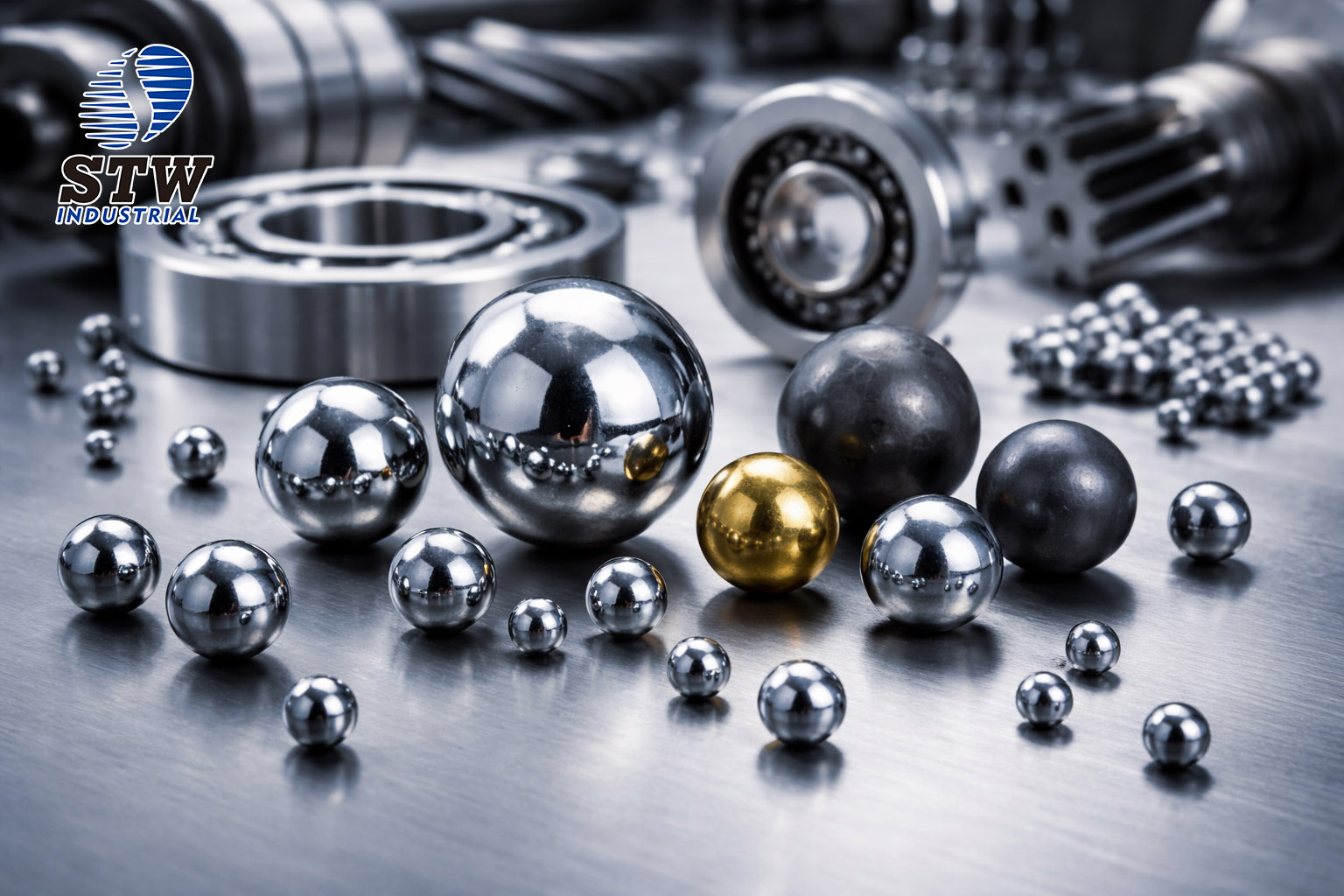
Steel balls may appear to be simple components, but in industrial applications, they play a critical role in determining performance, durability, and operational stability. Whether used in bearings, valves, grinding systems, or automotive assemblies, selecting the wrong specifications can lead to premature failure and increased maintenance costs.
This guide outlines the essential technical parameters every buyer should evaluate when sourcing steel balls, helping you make informed and cost-effective procurement decisions.
1. Material Composition of Steel Balls
Material selection is the foundation of steel ball performance. Different materials offer distinct mechanical and chemical properties.
Common Materials Include:
- High Carbon Chromium Steel (AISI 52100)
high hardness and excellent wear resistance, ideal for precision bearings. - Stainless Steel (AISI 304 / 316)
Offers strong corrosion resistance, suitable for food processing, medical devices, and marine environments. - Low Carbon Steel
Cost-effective, typically used for non-load-bearing or decorative applications. - Alloy Steel / Tool Steel
Designed for high-temperature or high-impact environments.
SEO Tip: Keywords – steel ball material types, bearing steel balls, stainless steel balls supplier
2. Hardness (HRC) and Mechanical Strength
Hardness is a critical parameter that determines wear resistance and load capacity. It is typically measured on the Rockwell Hardness Scale (HRC).
Typical Hardness Ranges:
- Bearing steel balls: 60–66 HRC
- Stainless steel balls: 20–40 HRC
- Low carbon steel balls: Below 30 HRC
Why It Matters:
- Too soft → Rapid wear
- Too hard → Increased brittleness and risk of cracking
Always request hardness test reports and heat treatment specifications from suppliers.
3. Precision Grades (Accuracy Standards)
Steel balls are manufactured according to international precision standards such as ISO 3290, defining tolerance and geometric accuracy.
Common Grades:
- G10 / G16 – High precision (aerospace, precision bearings)
- G25 / G40 – Standard industrial applications
- G100+ – Low precision (grinding or non-critical uses)
Key Parameters:
- Diameter tolerance
- Sphericity (roundness)
- Surface roughness
Higher precision improves performance but increases cost—choose based on application requirements.
4. Surface Finish and Quality
Surface quality directly affects friction, noise, and fatigue life.
Key Indicators:
- Surface roughness (Ra value)
- Absence of defects (scratches, pits, cracks)
- Surface coatings (nickel plating, zinc coating)
Impact:
- Smoother surfaces → Lower friction & longer service life
- Surface defects → Potential failure initiation points
For high-end applications, request microscopic surface inspection reports.
5. Size Accuracy and Tolerance Control
Steel balls are available in a wide size range:
- Miniature balls: < 0.5 mm
- Standard sizes: 1 mm – 50 mm
- Large balls: > 50 mm
Critical Factors:
- Diameter consistency
- Batch uniformity
Risks of Poor Tolerance:
- Equipment vibration
- Increased noise
- Reduced operational stability
Ensure suppliers maintain strict dimensional control across batches.
6. Heat Treatment Process
Heat treatment significantly influences the internal microstructure and overall performance of steel balls.
Common Processes:
- Quenching
- Tempering
- Case hardening
Benefits:
- Improved hardness and wear resistance
- Enhanced fatigue strength
- Balanced toughness
High-quality steel balls typically feature:
- Uniform martensitic structure
- Minimal or no decarburization layer
7. Application-Specific Requirements
Different industries demand different performance characteristics.
| Application | Key Requirements |
|---|---|
| Bearings | High precision, high hardness |
| Valves | Corrosion resistance, sealing performance |
| Grinding | High density, wear resistance |
| Automotive | Fatigue resistance, consistency |
Key Insight: There is no “best” steel ball—only the most suitable one for your application.
8. Certification and Quality Assurance
Reliable suppliers should provide comprehensive documentation:
- Material certificates (Mill Test Certificate)
- Hardness test reports
- Dimensional inspection reports
- Third-party inspection (e.g., SGS)
Additional Value:
- ISO 9001 certification
- Full batch traceability
This ensures consistent quality and reduces procurement risk.
Why Choosing the Right Steel Ball Supplier Matters
Beyond specifications, supplier capability is equally important. A professional manufacturer ensures:
- Stable raw material sourcing
- Advanced production equipment
- Strict quality control systems
- Customization capability
Partnering with an experienced steel ball supplier can significantly improve product reliability and long-term cost efficiency.
Conclusion
Understanding the key technical parameters of steel balls—such as material composition, hardness, precision grade, surface finish, and heat treatment—is essential for making informed purchasing decisions.
By aligning these parameters with your application requirements and working with a qualified supplier, you can optimize performance, extend service life, and reduce overall operational costs.