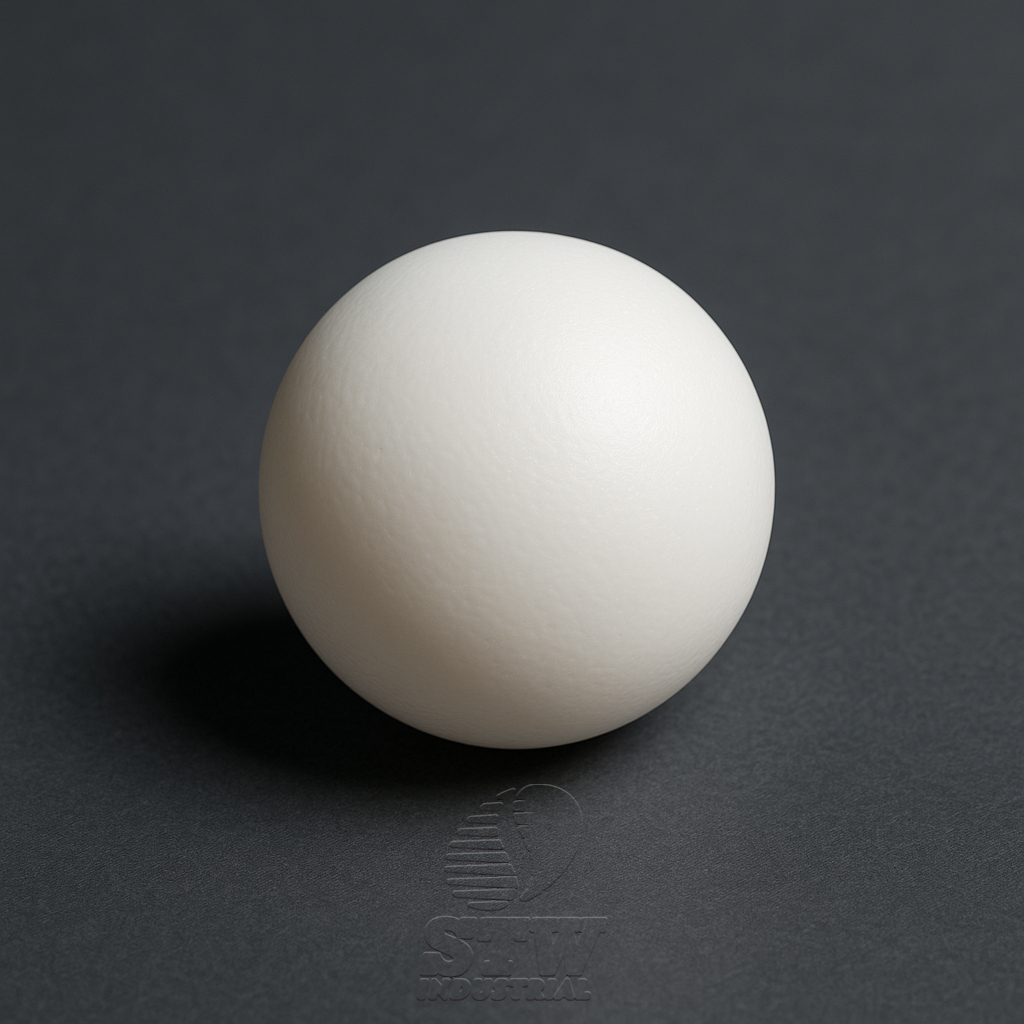
In industrial production, machinery, fluid control systems, and precision instruments, plastic balls are playing an increasingly vital role. One question often arises:
“How much impact can a small plastic ball handle?”
This is not just a technical query — it directly relates to product performance, safety, and lifespan.
1. Plastic Balls Are Not as Fragile as They Seem
When people hear "plastic ball," they often imagine something lightweight and fragile. But industrial-grade plastic balls are engineered from high-performance polymers, far beyond ordinary household plastics. Common materials include:
-
POM (Acetal/Delrin): High stiffness and excellent impact resistance.
-
PTFE (Teflon): Great chemical resistance, low friction, and moderate impact performance.
-
PP (Polypropylene): Resilient and chemical-resistant, widely used in valves.
-
PEEK: Extremely strong and resistant to high temperatures.
-
Nylon (PA6, PA66): Excellent balance of strength and toughness, ideal for dynamic loads.
2. Key Factors Affecting Impact Resistance
To answer how much impact a plastic ball can withstand, we need to consider several technical parameters:
Material Properties
Each type of plastic has different impact strength. For example, a POM ball can have impact resistance up to 20–25 kJ/m², while PTFE might rate closer to 10 kJ/m².
Diameter and Wall Thickness
Generally, larger balls can withstand greater absolute force, but thicker walls enhance structural integrity for smaller balls.
Environmental Conditions
Temperature, humidity, and exposure to chemicals significantly affect impact resistance. Some plastics soften under heat, reducing durability.
Type and Speed of Impact
Free-fall impacts, mechanical strikes, or rolling collisions all deliver force differently. Standardized tests like drop hammer impact or Charpy impact are commonly used.
3. Real-World Performance
Let’s consider a 12.7mm POM plastic ball under normal conditions. It can typically absorb over 25N·m of impact without cracking — strong enough for use in:
-
Bearings
-
Linear guides
-
Check valves
-
Pumps and precision instruments
In many cases, plastic balls replace metal balls in low-load applications to reduce weight, minimize noise, and improve wear resistance.
4. Why Choose Us?
As a professional B2B manufacturer and trading-integrated supplier of ball products, we offer a wide range of plastic balls with:
-
Sizes ranging from 2mm to 50mm
-
Materials tailored to application needs
-
Tolerances as tight as ±0.01mm
-
100% quality control before shipment
We don’t just deliver products — we provide technical support, material consultation, and custom development services to help you find the right plastic ball for your application.
Final Thoughts
A small plastic ball is a quiet powerhouse in modern machinery.
When selected properly, it offers not only lightweight and cost efficiency but also reliable impact resistance and performance under pressure.
Looking for high-quality plastic balls or custom solutions?
Contact us today — let’s build your precision together.