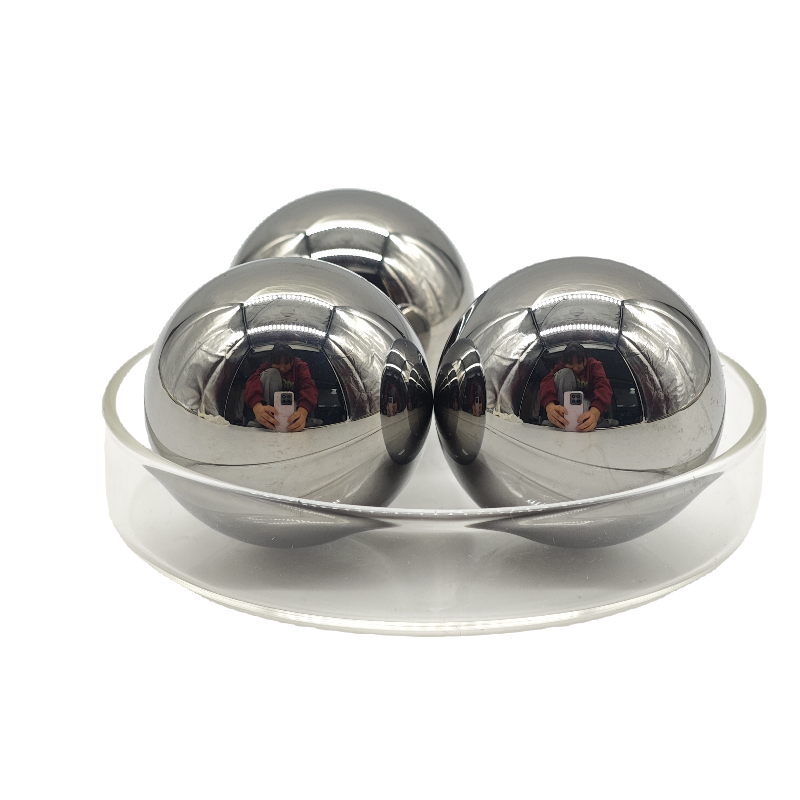
In industrial manufacturing, mechanical components, precision instruments, and decorative applications, balls are widely used as key parts. Whether stainless steel balls, bearing steel balls, ceramic balls, tungsten carbide balls, or plastic balls, the required material and precision determine the product’s performance.
For customers who need customized balls, providing complete technical parameters in advance not only speeds up quotation but also ensures that the produced balls fully meet usage requirements.
Below are the main technical parameters you should provide when placing a custom ball order:
1. Material
Material directly determines the ball’s wear resistance, hardness, corrosion resistance, and cost. Common options include:
-
Stainless Steel (e.g., 304, 316, 420, 440C) – Corrosion resistant, ideal for food, chemical, and marine environments
-
Bearing Steel (e.g., GCr15) – High hardness and wear resistance, ideal for mechanical and bearing applications
-
Carbon Steel – Cost-effective but lower corrosion resistance
-
Ceramic (e.g., Si₃N₄, ZrO₂) – Lightweight, high temperature resistance, high precision
-
Tungsten Carbide – Extremely high hardness and wear resistance
-
Plastic or Rubber – Lightweight, corrosion resistant, suitable for chemical environments
-
Copper & Alloys (e.g., Brass, Bronze) – Excellent electrical conductivity and corrosion resistance
2. Diameter & Tolerance
-
Diameter range – Specify units (mm or inch)
-
Tolerance grade – G10, G16, G100, etc. (the smaller the number, the higher the precision)
-
Sphericity – Determines smooth operation during rotation
Example: Diameter 10.000 ±0.005 mm, tolerance grade G20
3. Surface Finish
-
Mirror Finish – Good appearance, low friction
-
Matte Finish – Non-reflective, decorative effect
-
Coating (Nickel, Chrome, etc.) – Enhances corrosion resistance or aesthetics
-
Surface roughness (Ra value) – Affects friction and fitting precision
4. Hardness
Hardness impacts wear resistance and load capacity. Different materials require different hardness testing methods:
-
Rockwell Hardness (HRC)
-
Vickers Hardness (HV)
-
Brinell Hardness (HB)
5. Quantity & Packaging
-
Order quantity – Bulk order or sample quantity
-
Packaging method – Anti-rust oil, moisture-proof bags, wooden crates, plastic barrels, vacuum packaging
-
Export packaging standard – Whether packaging meets international shipping regulations (e.g., IPPC certified wooden cases)
6. Special Properties
Depending on the application, customers may need to specify:
-
Temperature resistance (high or low temperatures)
-
Corrosion resistance (salt spray test hours)
-
Electrical conductivity / Magnetism
-
Weight control (precision counterweight balls)
7. Application
Sharing the intended application with the supplier helps optimize material selection and production processes:
-
Bearings, valves, nozzles
-
Chemical mixing equipment
-
Decorative and art installations
-
Aerospace and precision instruments
-
Medical devices