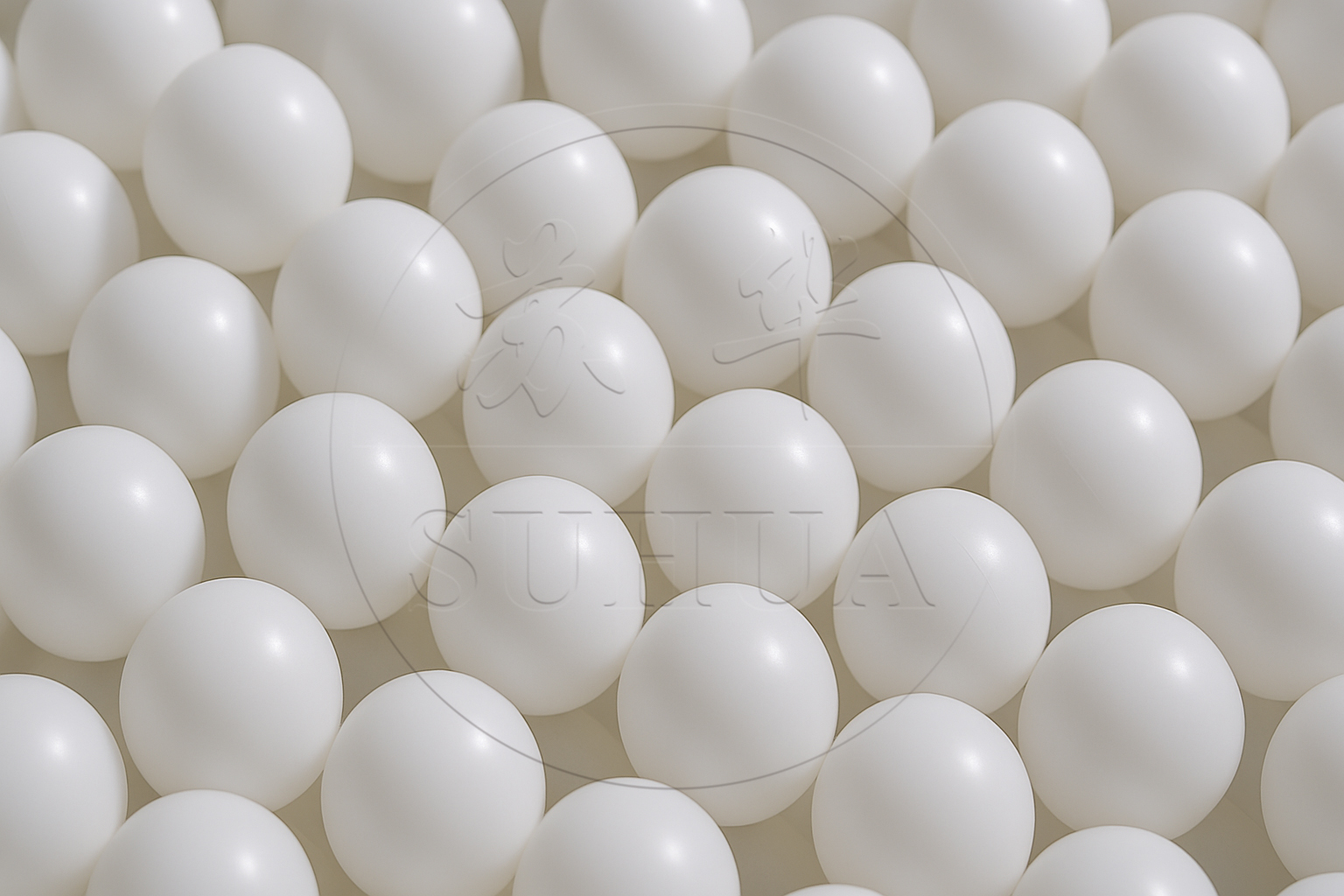
Food-grade plastic balls are widely used in industries such as food and beverage, medical, chemical, and water treatment due to their lightweight, corrosion resistance, non-toxicity, and excellent sealing properties. In these applications, the term "food-grade" is more than just a label—it is a strict commitment to safety and quality.
So, what are the exact testing standards that food-grade plastic balls must meet? Let’s explore this in detail.
1. What Are Food-Grade Plastic Balls?
Food-grade plastic balls are made from materials that are safe for direct contact with food or drinking water, without releasing harmful substances. These balls are used in various fluid control systems, float valves, beverage dispensers, and more.
Common food-grade plastic materials include:
-
PP (Polypropylene)
-
PE (Polyethylene)
-
PTFE (Teflon)
-
POM (Acetal/Delrin)
-
PA (Nylon)
These materials are chosen for their chemical resistance, durability, and temperature tolerance, and must meet relevant safety regulations.
2. Major Testing Standards and Certifications
1. FDA Certification (U.S. Food and Drug Administration)
FDA compliance is a must for plastic balls used in the U.S. food or beverage industry. The relevant standard is FDA 21 CFR, which regulates materials in contact with food.
-
Tests include: migration testing, toxicity, and heavy metal release
-
Applicable to: PP, PE, PTFE, etc.
2. EU Regulation 10/2011 (European Food Contact Materials)
For the European market, compliance with EU 10/2011 is crucial. This regulation sets out safety requirements for plastic materials in contact with food:
-
Specific Migration Limits (SML)
-
Overall Migration Limits (OML)
-
Approved monomers and additives list
3. GB 4806.7-2016 (China National Food Contact Plastic Standard)
In China, food-grade plastics must meet GB 4806.7-2016, which includes:
-
Physical and chemical property limits
-
Organoleptic (sensory) inspection
-
Heavy metals and migration testing
Also, compliance with:
-
GB 9685 (Additives usage)
-
GB 31604 series (Migration testing methods)
4. NSF Certification (For Drinking Water Systems)
The NSF/ANSI 61 certification applies to components used in drinking water systems. It ensures that the plastic balls do not leach harmful substances into the water.
5. RoHS and REACH Compliance (Environmental Safety)
Although not food-specific, RoHS (Restriction of Hazardous Substances) and REACH (EU chemical safety regulation) ensure that materials are free from hazardous substances like lead, cadmium, and phthalates.
3. Key Testing Items
Here are some standard testing procedures for food-grade plastic balls:
| Test Item | Purpose |
|---|---|
| Sensory Evaluation | Checks odor, color, and visual appearance |
| Total Migration | Measures overall substance release into food |
| Heavy Metal Test (Pb, Cd) | Ensures absence of toxic metals |
| Volatile Organic Compounds (VOC) | Checks for harmful gas release |
| Heat Resistance | Ensures shape and safety under high temperatures |
| Microbiological Test (optional) | For use in sterile environments |
4. Tips for Selecting Quality Food-Grade Plastic Balls
As a B2B manufacturer and exporter specializing in plastic ball solutions, we recommend buyers to:
-
Request third-party test reports (e.g., from SGS, TÜV)
-
Verify raw material source – only new, virgin-grade resins should be used
-
Check manufacturer certifications (FDA, EU, ISO, etc.)
-
Match materials with application needs (e.g., chemical resistance, temperature)
-
Test samples in actual working conditions
5. Our Quality Commitment
With over 10 years of experience in plastic ball manufacturing, we offer:
-
Custom mold development
-
Strict quality control
-
Full documentation for export and compliance
-
Wide application coverage: water treatment, milk tanks, beverage dispensers, float valves, lab equipment, and more
All our food-grade products come with material traceability, safety certifications, and batch testing data.
Final Thoughts
The safety standards for food-grade plastic balls are strict for good reason—they directly impact consumer health and product reliability. Choosing a trusted, compliant supplier is essential for any food-related equipment or system.
If you're looking for a reliable, certified, and experienced supplier of food-grade plastic balls, we are ready to provide a one-stop sourcing solution tailored to your needs.