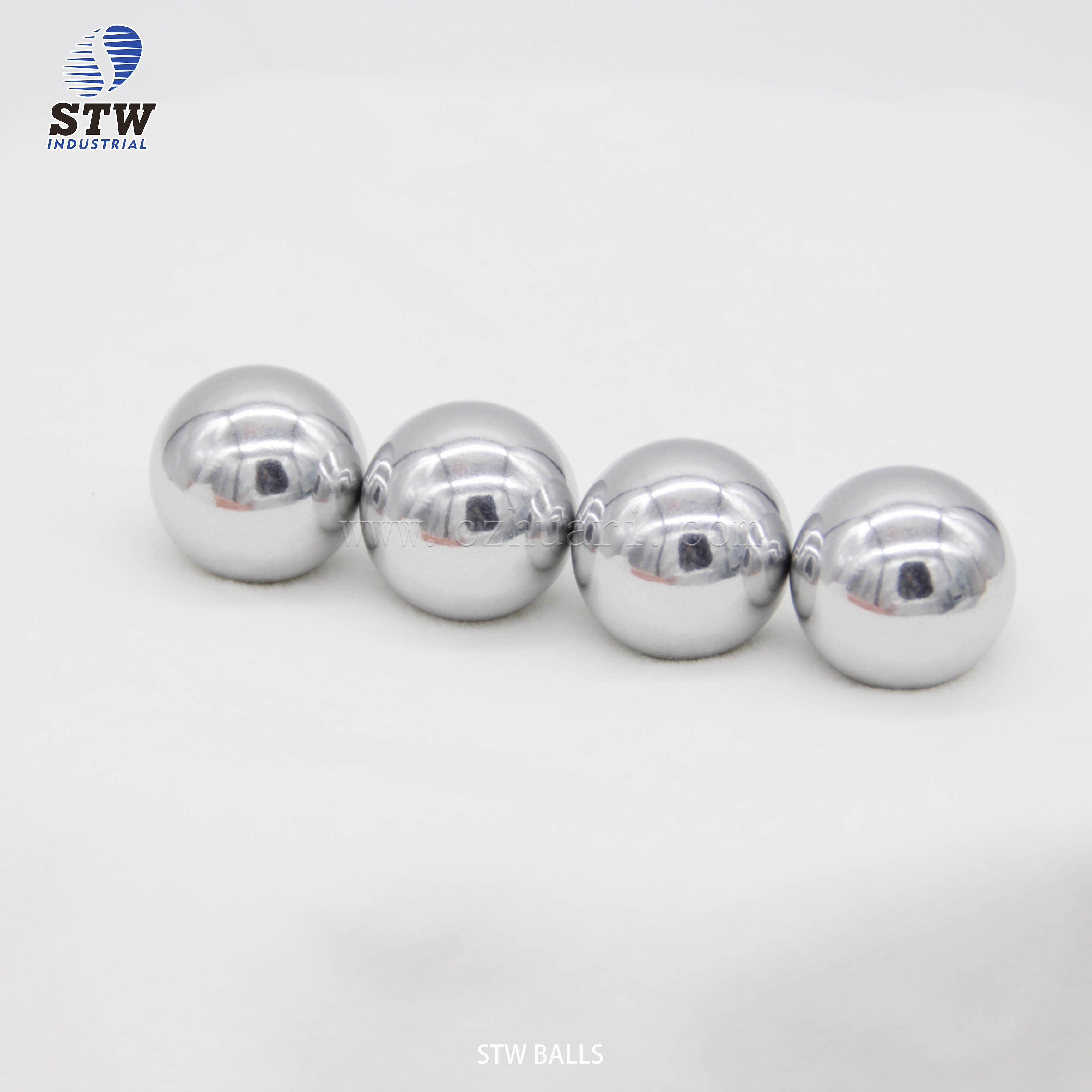
In industrial procurement, sample testing is one of the most direct and reliable ways to assess a supplier’s true capabilities. For ball products such as stainless steel balls, bearing steel balls, carbon steel balls, brass balls, copper balls, and aluminum balls, the sample reflects not only product quality but also the factory’s process control, technical level, and stability of delivery.
Below are six key dimensions to help you evaluate a supplier through sample testing.
1. Material Authenticity: The Foundation of Product Quality
Verify whether the sample’s material matches the supplier’s specification. Basic checks include:
-
Visual comparison of metal color and texture
-
Simple magnet test to distinguish steel types
-
Requesting material certificates, heat numbers, or chemical composition reports
If materials do not match the supplier’s claim, the supplier should be excluded immediately.
2. Precision Grade: A Critical Indicator of Performance
Ball precision grades (G10, G20, G100, etc.) determine dimensional accuracy, roundness, and surface finish. You can check:
-
Dimensional stability using calipers or micrometers
-
Consistent roundness
-
Surface roughness and uniformity
-
Any eccentricity or out-of-round issues
High-precision balls indicate stronger manufacturing capability, especially for bearings, valves, machinery, and medical equipment.
3. Surface Treatment Quality: Reflecting Process Level
A good supplier maintains strict standards in polishing, cleaning, and anti-rust treatment. Inspect the samples for:
-
Bright, scratch-free surfaces
-
No pores, dents, or deformation
-
Cleanliness without oil or impurities
-
Proper rust-preventive oil for carbon steel and bearing steel
A smooth and uniform surface often represents advanced polishing equipment and strict quality control.
4. Batch Consistency: The Hardest Capability to Fake
Evaluate several pieces from the sample:
-
Dimensional variation
-
Surface appearance and gloss consistency
-
Any mixing of materials or precision grades
-
Overall uniformity
Batch consistency is crucial for long-term cooperation and reflects whether the supplier has stable production control.
5. Packaging & Documentation: Details Reveal Professionalism
Packaging shows how well the supplier manages details:
-
Moisture-proof, pressure-resistant, and anti-collision packaging
-
Clear labels with material, size, quantity, and batch information
-
Supporting test reports or certificates
-
Clean and organized presentation
Professional details imply strict factory management and reliability.
6. Communication & Technical Competency: Key to Smooth Cooperation
Sample testing also reflects the supplier’s communication efficiency:
-
Ability to provide samples quickly
-
Clear explanation of materials and processes
-
Professional answers to technical questions
-
Availability of inspection records and QC reports
-
Openness to third-party inspection or factory videos
A knowledgeable supplier can clearly articulate every process parameter and provide transparent quality data.