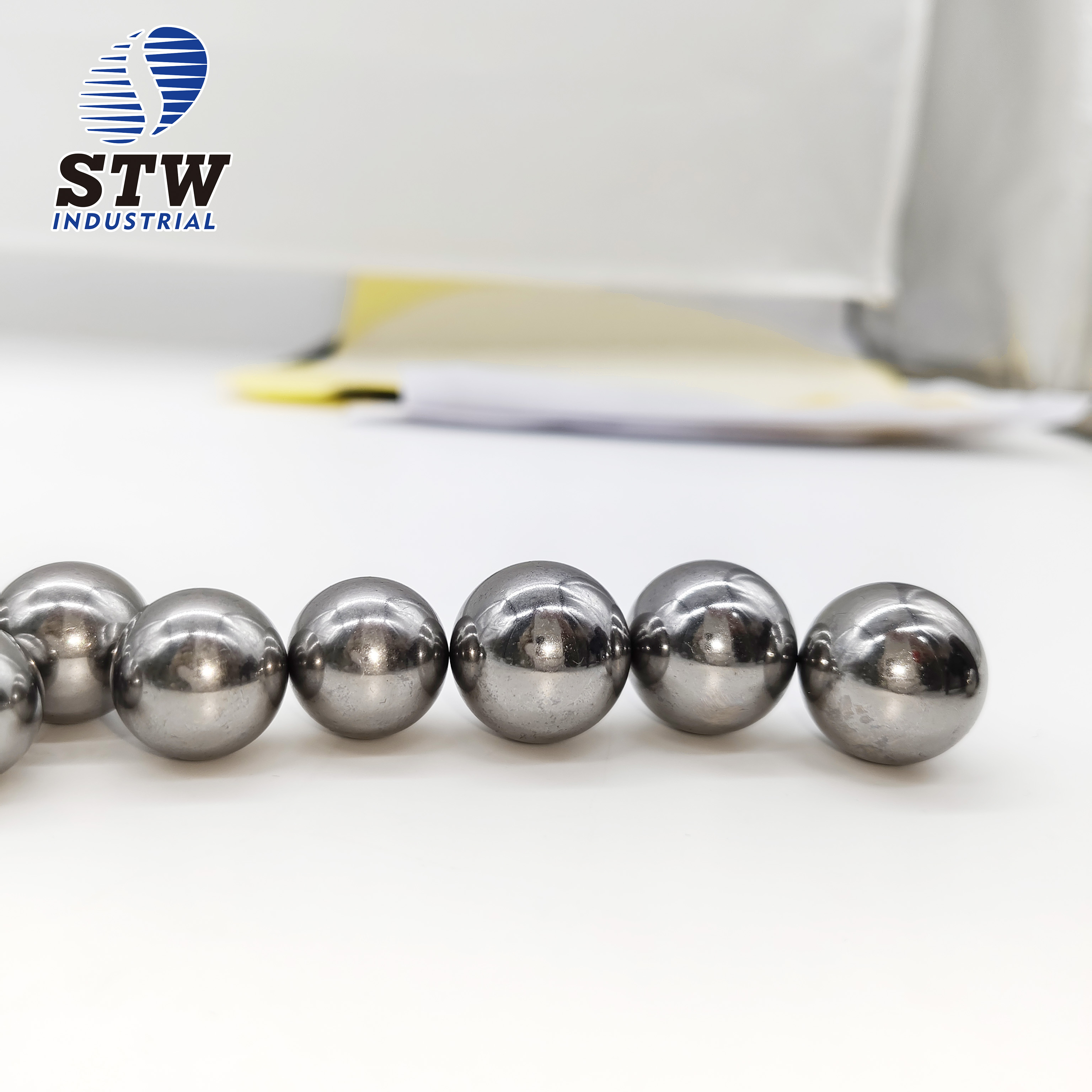
In industries such as precision machinery, automotive manufacturing, and industrial automation, steel balls play a critical role in ensuring performance, durability, and efficiency. However, many buyers focus primarily on price while overlooking essential technical specifications—leading to premature wear, system instability, or increased maintenance costs.
This guide provides a comprehensive overview of the key technical parameters you must evaluate when sourcing steel balls, helping you make informed and cost-effective purchasing decisions.
1. Material Selection (Steel Ball Material Types)
Material is the foundation of steel ball performance. Choosing the right material depends on your application environment:
- High Carbon Chrome Steel (AISI 52100 / GCr15)
- High hardness and wear resistance
- Ideal for bearings and precision components
- Stainless Steel (AISI 304 / 316)
- Excellent corrosion resistance
- Suitable for food processing, medical, and marine applications
- Carbon Steel (AISI 1010 / 1045)
- Cost-effective option
- Used in general industrial or low-precision applications
- Tungsten Carbide Balls
- Extremely high hardness and durability
- Designed for heavy-load and high-wear environments
Selection Tip: Always match material with working conditions such as humidity, load, and temperature.
2. Hardness (HRC Rating)
Hardness determines wear resistance and load-bearing capacity:
- Bearing steel balls: HRC 60–66
- Stainless steel balls: HRC 25–58
- Carbon steel balls: HRC 10–50
Key considerations:
- Higher hardness = better wear resistance
- Core hardness affects impact resistance and fatigue life
Best Practice: Balance surface hardness with core toughness for optimal performance.
3. Size Accuracy and Tolerance (Precision Grades)
Steel ball precision is defined by grade levels such as:
- G10 / G16 / G25 / G40 / G100
The lower the number, the higher the precision.
- G10: Ultra-precision applications
- G100: General industrial use
Important metrics include:
- Diameter deviation
- Batch consistency
Tip: High-speed or precision systems require high-grade steel balls.
4. Sphericity (Roundness)
Sphericity measures how close a ball is to a perfect sphere.
- High precision balls: ≤ 0.25 μm deviation
Benefits:
- Reduced vibration and noise
- Improved rotational stability
- Longer service life
5. Surface Roughness (Ra Value)
Surface finish directly affects friction and wear:
- High precision balls: Ra ≤ 0.02 μm
- Standard balls: Ra ≤ 0.1 μm
Smoother surfaces provide:
- Lower friction coefficient
- Reduced wear
- Better performance in high-speed applications
6. Heat Treatment Process
Heat treatment determines the internal structure and overall durability:
Common processes:
- Quenching and tempering
- Carburizing (hard surface + tough core)
- Vacuum heat treatment (high-end applications)
High-quality steel balls feature:
- Uniform hardness distribution
- No decarburization layer
- Dense microstructure
7. Load Capacity and Fatigue Resistance
For dynamic and heavy-load applications, these properties are critical:
- Compressive strength: Prevents deformation
- Contact fatigue life: Determines service lifespan
Typical applications:
- Bearings
- Automotive components
- Industrial transmission systems
8. Surface Quality and Defect Inspection
Premium steel balls must be free from defects such as:
- Cracks
- Porosity
- Scratches
Inspection methods include:
- Magnetic particle testing
- Metallographic analysis
- Optical surface inspection
9. Application-Based Selection
Different industries require different specifications:
| Application | Recommended Features |
|---|---|
| Precision Bearings | High hardness, high precision, excellent roundness |
| Food Industry | Stainless steel, corrosion-resistant, polished surface |
| Automotive | High fatigue resistance |
| Chemical Industry | Strong corrosion resistance |
10. Common Purchasing Mistakes to Avoid
Mistakes:
- Choosing based on price alone
- Ignoring material differences
- Overlooking precision grades
Recommendations:
- Clearly define operating conditions
- Request material and inspection reports
- Conduct sample testing before bulk orders
Conclusion
Although small in size, steel balls are critical components that directly influence system performance and longevity. Understanding key technical parameters—such as material, hardness, precision, and surface quality—enables you to select the right product and reduce long-term operational costs.
For reliable performance and consistent quality, it is essential to work with a professional steel ball manufacturer that offers strict quality control and stable production capabilities.