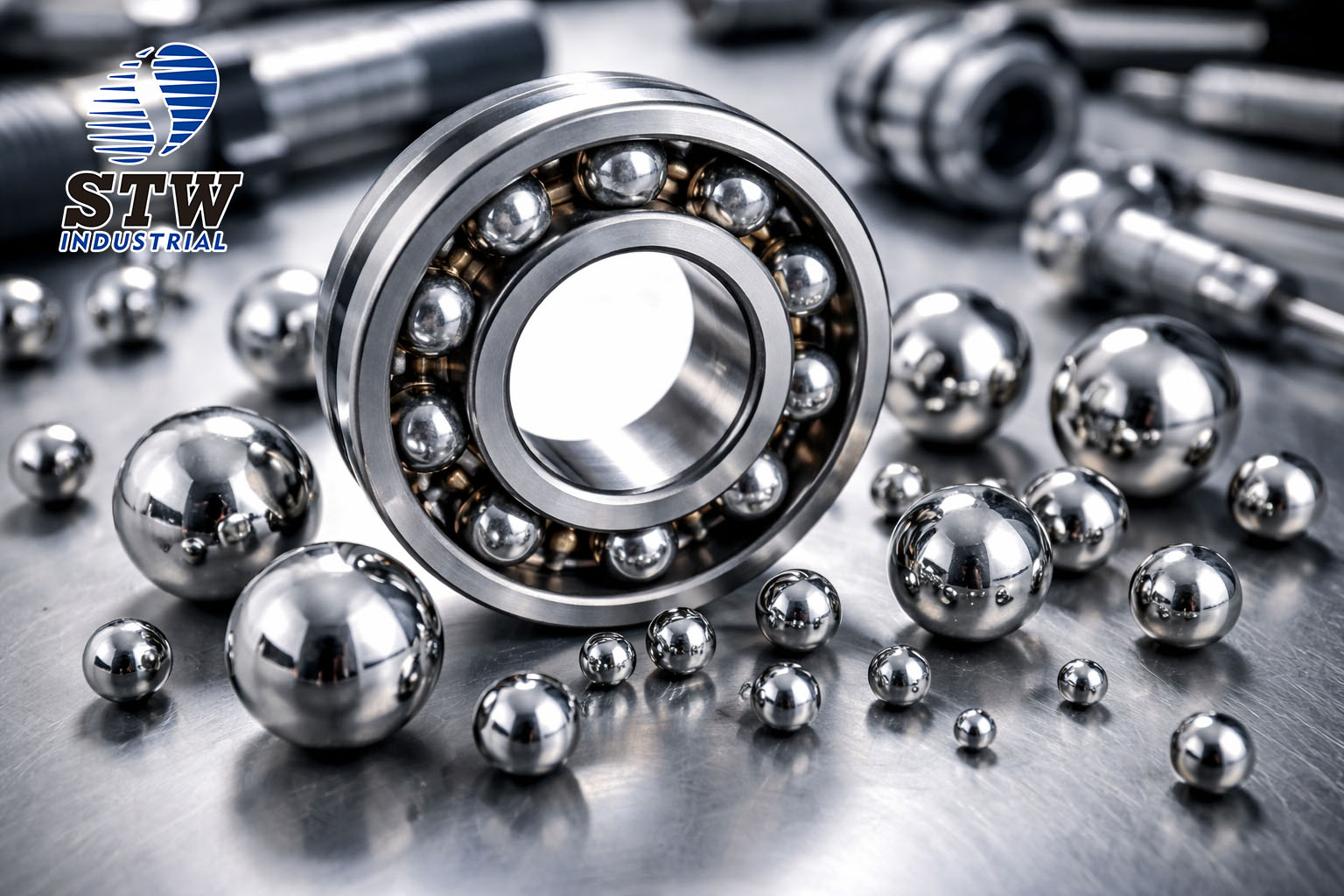
In modern industrial manufacturing, the performance, efficiency, and reliability of equipment are critical to operational success and competitiveness. As automation, smart manufacturing, and high-precision machinery advance, high-precision steel balls have become indispensable components in industrial devices. This article explores why industrial equipment increasingly depends on high-precision steel balls, highlighting their technical advantages, applications, and impact on equipment performance.
What Are High-Precision Steel Balls?
High-precision steel balls are manufactured to exacting standards in terms of diameter, sphericity, hardness, and surface finish. Key characteristics include:
- Ultra-High Roundness and Size Accuracy: Micron-level tolerances ensure smooth mechanical transmission and minimize friction and vibration.
- Superior Hardness and Wear Resistance: Heat-treated for durability under heavy loads and continuous operation.
- Excellent Surface Finish: Reduces friction, lowers energy consumption, and improves operational efficiency.
- Material Stability: Maintains performance in high-temperature, high-pressure, and high-speed environments.
These qualities make high-precision steel balls essential for industries requiring consistent reliability, high efficiency, and long-lasting components.
Benefits of High-Precision Steel Balls in Industrial Equipment
1. Improved Mechanical Efficiency
High-precision steel balls in bearings, gears, rolling guides, and linear rails significantly reduce friction, allowing smoother and faster operations. This translates into higher production efficiency and lower energy consumption.
2. Enhanced Equipment Accuracy
In CNC machines, robotics, and precision instruments, these steel balls ensure precise motion and positioning, directly affecting product quality and consistency. High-precision components are particularly critical in aerospace, automotive, and medical industries.
3. Longer Lifespan and Reduced Maintenance Costs
Durable steel balls reduce wear on critical components, minimizing downtime and maintenance expenses. For instance, automotive transmissions and suspension systems using high-precision steel balls experience fewer replacements and repairs.
4. Performance in Harsh Environments
High-precision steel balls retain their properties under extreme conditions such as high temperatures, heavy loads, or corrosive environments. They are widely used in aerospace, marine engineering, chemical plants, and advanced automated production lines.
Typical Industrial Applications
- Machinery Manufacturing: Bearings, rollers, gears, reducers, and precision linear guides.
- Automotive Industry: Engines, transmissions, steering systems, suspension components, and braking systems.
- Aerospace: Landing gears, control systems, and engine components requiring extreme reliability.
- Precision Instruments: Medical devices, robotics, laboratory automation, and optical instruments.
- Renewable Energy & Automation: Wind turbines, assembly lines, and high-precision drive systems.
Strategic Importance of High-Precision Steel Balls
- Boost Production Efficiency: Reduce friction and vibration for high-speed, stable operation.
- Ensure Product Accuracy: Maintain precision in manufacturing critical parts.
- Lower Long-Term Costs: Extend equipment lifespan and reduce downtime.
- Support Smart Manufacturing: Provide reliable components for automation and precision machinery.
Conclusion
As industrial equipment demands higher efficiency, precision, and durability, high-precision steel balls are becoming increasingly essential. They are the cornerstone of reliable machinery, helping industries optimize performance, reduce maintenance, and enhance competitiveness. Selecting high-quality high-precision steel balls ensures long-term operational excellence and supports the transition toward smarter, more efficient manufacturing processes.