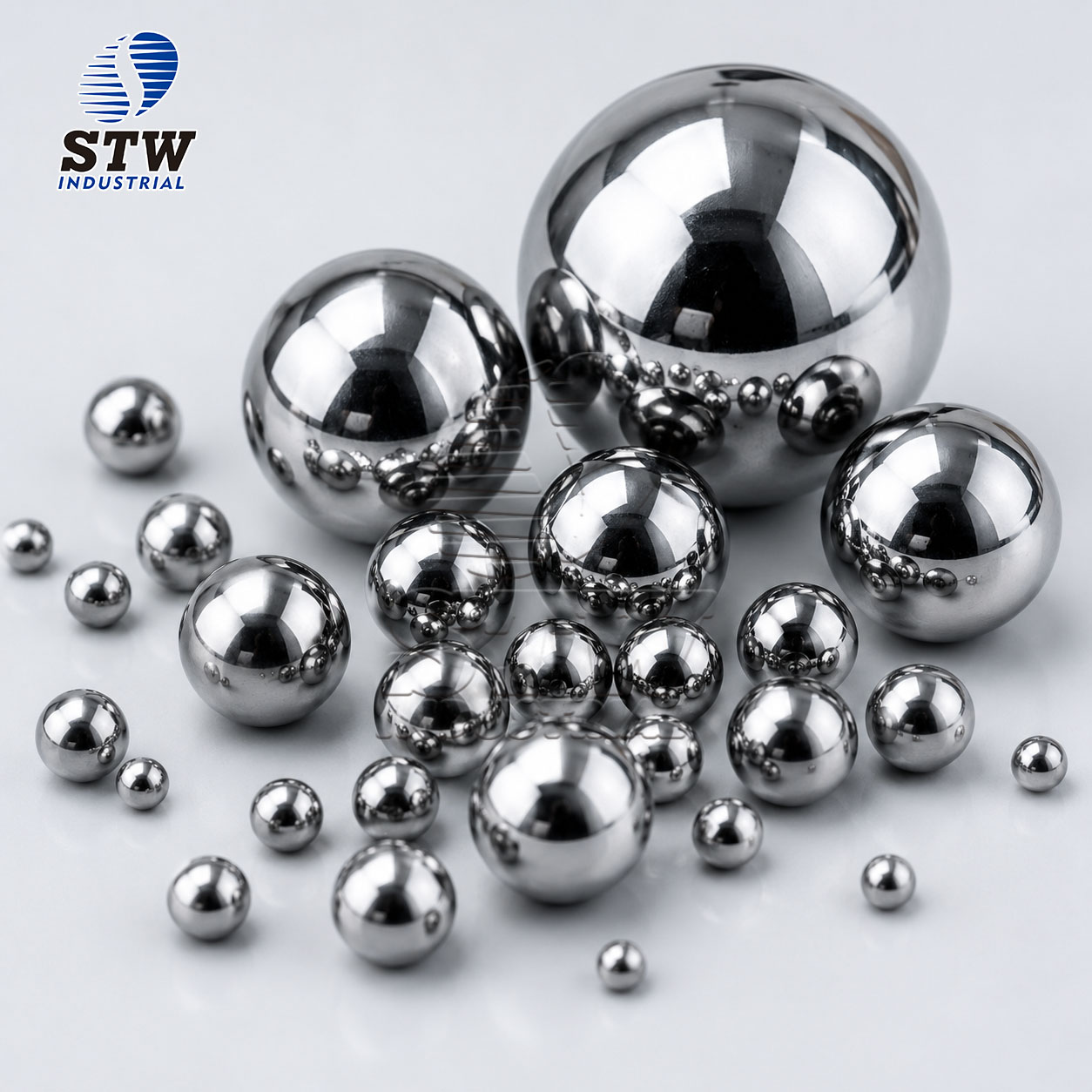
What Is Steel Ball Size Tolerance?
Steel ball size tolerance refers to the allowable deviation between the actual diameter of a steel ball and its nominal size.
For example:
- Nominal Diameter: 10.000 mm
- Tolerance: ±0.001 mm
This means the actual steel ball diameter must remain between 9.999 mm and 10.001 mm.
In precision applications, even micron-level deviations can significantly affect machine performance.
Why Precision Steel Ball Tolerance Matters
1. Improves Bearing Performance
Bearings require steel balls with extremely consistent diameters to ensure smooth rotation and even load distribution.
Poor tolerance control can cause:
- Increased vibration
- Higher operating noise
- Uneven rotation
- Premature wear
- Reduced bearing lifespan
High precision steel balls help bearings operate more smoothly and efficiently, especially in:
- Electric motors
- CNC machinery
- Automotive bearings
- High-speed spindles
2. Extends Equipment Service Life
Oversized or undersized steel balls create uneven pressure inside mechanical systems.
This may lead to:
- Surface fatigue
- Localized stress concentration
- Lubrication failure
- Faster component wear
Precision steel balls minimize friction and improve the durability of high-speed mechanical equipment.
3. Enhances High-Speed Stability
In high-speed applications, even tiny dimensional differences can create imbalance during rotation.
This is especially critical for:
- Aerospace bearings
- Turbine systems
- Precision pumps
- Medical equipment
- Semiconductor machinery
Tighter steel ball tolerances reduce heat generation, vibration, and energy loss during operation.
4. Improves Sealing Performance
Steel balls are widely used in valve sealing systems.
If the diameter tolerance is inconsistent, sealing surfaces may not contact properly, resulting in:
- Leakage
- Pressure instability
- Reduced sealing efficiency
High precision stainless steel balls are commonly used in:
- Hydraulic valves
- Oil & gas equipment
- Chemical processing systems
- Food-grade machinery
Common Precision Grades for Steel Balls
Steel ball precision is typically classified according to international grading systems such as:
- G10 Steel Balls
- G16 Steel Balls
- G25 Steel Balls
- G100 Steel Balls
The smaller the grade number, the higher the precision.
For example:
- G10 steel balls offer extremely tight dimensional control
- G100 steel balls are suitable for general industrial applications
Key Factors Beyond Diameter Tolerance
High-quality precision steel balls also require strict control of:
| Parameter | Importance |
|---|---|
| Roundness | Ensures true spherical shape |
| Surface Roughness | Reduces friction and wear |
| Hardness Consistency | Improves durability |
| Material Purity | Prevents internal defects |
| Batch Consistency | Maintains stable machine performance |
Industries That Require High Precision Steel Balls
Automotive Industry
Electric vehicles and high-speed motors require ultra-precise bearing steel balls for efficiency and durability.
Aerospace Industry
Aircraft systems operate under extreme conditions, making precision steel ball quality essential for safety and stability.
Medical Equipment
Medical instruments require low-noise, high-precision miniature steel balls for smooth operation.
Semiconductor Industry
Semiconductor manufacturing equipment demands extremely low vibration and micron-level accuracy.
How Precision Steel Balls Are Manufactured
Professional steel ball manufacturers use advanced production technologies such as:
- Cold heading
- Heat treatment
- Precision grinding
- Lapping and polishing
- Automatic sorting systems
- Laser inspection equipment
Strict quality inspection ensures every steel ball meets international standards such as:
- ISO 3290
- ASTM Standards
- DIN Standards
Why Choosing the Right Steel Ball Supplier Matters
A reliable precision steel ball manufacturer can help improve:
- Product reliability
- Machine efficiency
- Bearing lifespan
- Production stability
- Long-term operating costs
When sourcing steel balls for industrial applications, consistency and precision are just as important as material quality.