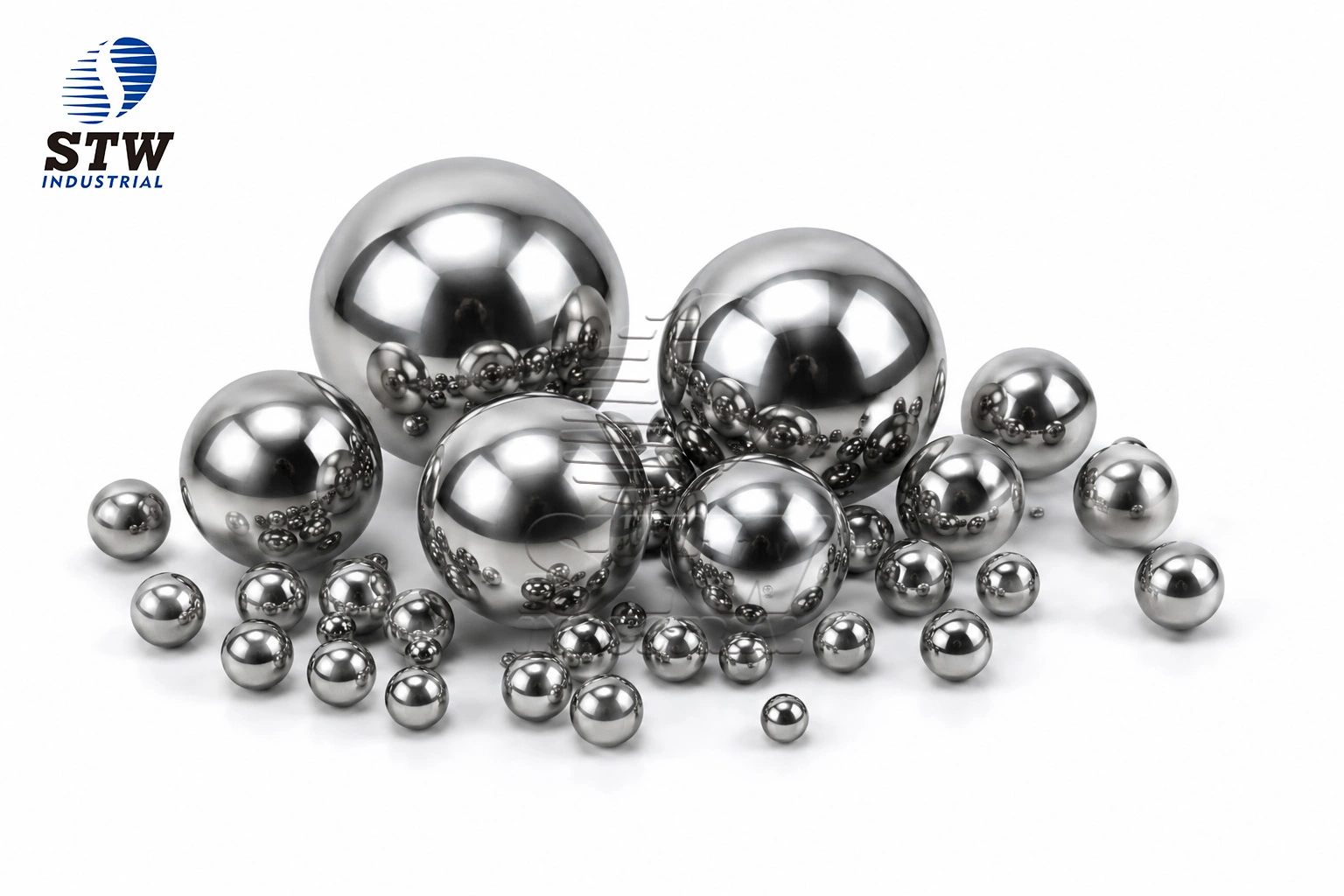
Key Challenges for Steel Balls in High-Frequency Vibration Equipment
High-frequency vibration machinery typically operates under:
- Continuous high-speed movement
- Repeated cyclic loading
- Constant vibration impact
- High rotational friction
- Strict precision requirements
In these environments, low-quality steel balls may experience:
- Surface fatigue spalling
- Micro-cracking
- Excessive wear
- Roundness deviation
- Increased operating noise
- Early bearing failure
Therefore, industrial buyers increasingly prioritize steel balls with:
- High hardness consistency
- Excellent wear resistance
- Superior fatigue strength
- Ultra-precision surface finish
- Stable dimensional accuracy
- High material purity
Best Steel Ball Materials for High-Frequency Applications
1. Chrome Steel Balls (AISI 52100 / GCr15)
Chrome steel balls are among the most commonly used precision balls in industrial applications.
Advantages:
- High hardness
- Excellent wear resistance
- Long fatigue life
- Cost-effective performance
- Suitable for high-speed operation
Chrome steel balls are widely used in:
- Vibrating motors
- Precision bearings
- Industrial automation systems
- High-speed rotating machinery
For most standard high-frequency vibration applications, chrome steel provides an excellent balance between durability and cost.
2. Stainless Steel Balls
In humid or corrosive environments, stainless steel balls offer superior corrosion resistance.
Common Materials:
- 440C Stainless Steel Balls
- 304 Stainless Steel Balls
- 316 Stainless Steel Balls
Application Characteristics:
- 440C: High hardness with corrosion resistance
- 316: Excellent chemical resistance
- 304: Economical anti-rust solution
These stainless steel balls are commonly used in:
- Food processing equipment
- Medical vibration systems
- Chemical machinery
- Marine applications
3. Ceramic Balls
For ultra-high-speed and extreme operating environments, ceramic balls provide exceptional performance advantages.
Common Ceramic Materials:
- Silicon Nitride Balls (Si3N4)
- Zirconia Ceramic Balls
Benefits:
- Lightweight construction
- Lower centrifugal force
- Extremely high hardness
- Excellent corrosion resistance
- Reduced friction
- Lower thermal expansion
Ceramic balls are ideal for:
- High-speed precision bearings
- Aerospace equipment
- Advanced automation systems
- Ultra-low vibration machinery
Factors That Affect Steel Ball Durability
Surface Finish Precision
A smoother steel ball surface significantly reduces friction and vibration during operation.
High-precision steel balls offer:
- Lower surface roughness
- Better roundness
- More uniform stress distribution
This helps reduce:
- Noise
- Heat generation
- Uneven wear
- Bearing damage
For high-frequency equipment, precision surface finishing is essential for long-term stability.
Heat Treatment Process
Professional heat treatment improves the internal structure and fatigue resistance of steel balls.
Advanced processes include:
- Vacuum heat treatment
- Deep cryogenic treatment
- Precision tempering
- Controlled quenching
These processes enhance:
- Hardness consistency
- Toughness
- Crack resistance
- Service life
Material Purity
Steel purity has a major impact on fatigue life.
High-purity bearing steel reduces:
- Internal inclusions
- Stress concentration points
- Crack formation risks
Premium vibration equipment manufacturers often choose vacuum-degassed bearing steel balls for maximum reliability.
Common Failure Modes in High-Frequency Vibration Equipment
Poor-quality steel balls operating under high-frequency conditions may develop:
| Failure Type | Main Cause |
|---|---|
| Fatigue Spalling | Repeated cyclic stress |
| Surface Wear | Excessive friction |
| Micro Cracks | Material fatigue |
| Corrosion Damage | Moisture or chemicals |
| Roundness Deformation | Continuous impact |
| Overheating | Insufficient lubrication |
Selecting high-quality precision steel balls can greatly reduce these risks.
How to Choose the Right Steel Balls for Vibration Equipment
Choose Material Based on Operating Conditions
| Application Environment | Recommended Material |
|---|---|
| Standard High-Speed Equipment | Chrome Steel Balls |
| Corrosive Environment | Stainless Steel Balls |
| Ultra-High-Speed Systems | Ceramic Balls |
Select the Appropriate Precision Grade
Common precision grades include:
- G10
- G16
- G25
- G100
For high-frequency vibration systems, G10 or higher precision is generally recommended to minimize vibration deviation and improve operating stability.
Benefits of High-Quality Steel Balls
Premium precision steel balls help manufacturers:
- Extend bearing life
- Reduce maintenance frequency
- Lower operational downtime
- Improve equipment efficiency
- Reduce lubrication consumption
- Enhance machine reliability
Although higher-grade steel balls may have a higher initial cost, they often provide significant long-term savings through improved durability and reduced equipment failure.
Future Trends in Precision Steel Ball Technology
As industrial automation and intelligent manufacturing continue to evolve, high-frequency vibration equipment demands:
- Higher rotational speeds
- Lower noise levels
- Greater precision
- Longer service life
- Better energy efficiency
This drives ongoing innovation in:
- Steel purity technology
- Precision grinding
- Surface strengthening
- Advanced heat treatment
- Ceramic hybrid solutions