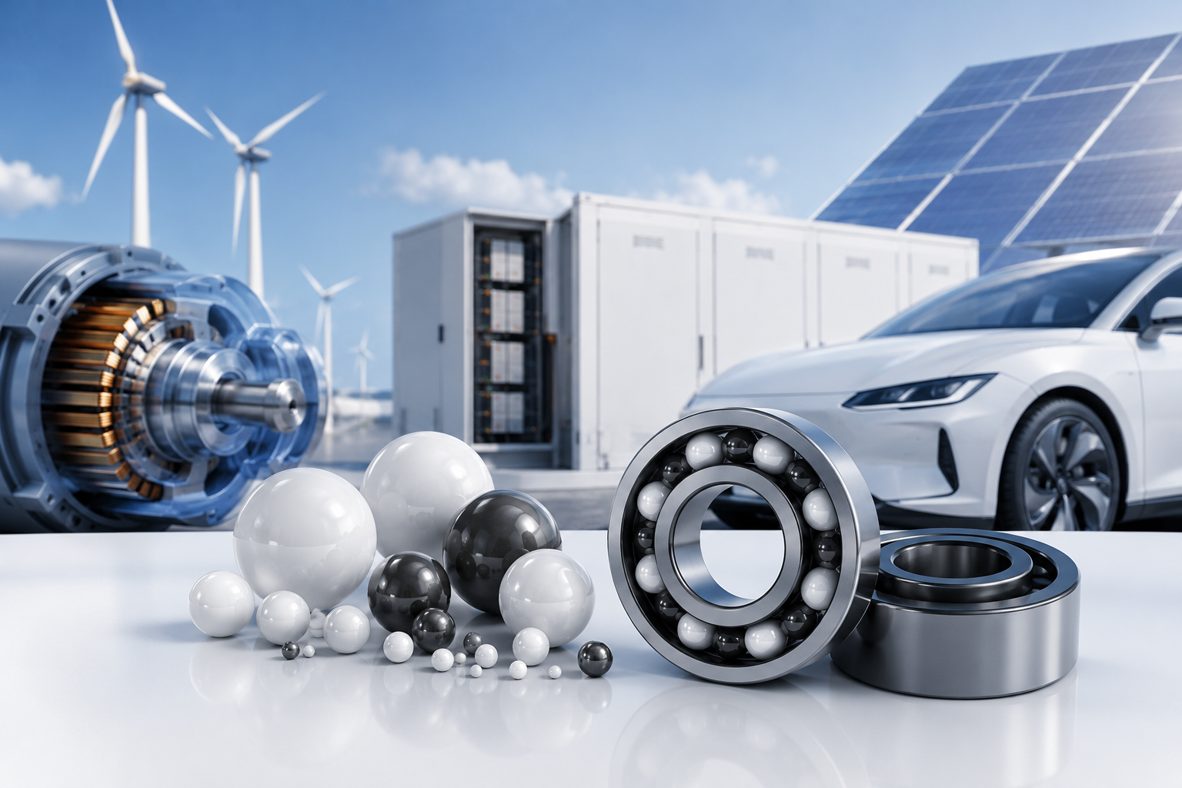
As the global transition toward clean energy accelerates, industries such as electric vehicles (EVs), wind power, energy storage systems, solar manufacturing, and high-efficiency motors are demanding higher-performance components than ever before. Among these critical components, bearing rolling elements play a vital role in determining equipment efficiency, reliability, and service life.
In recent years, ceramic balls have become an increasingly popular alternative to traditional steel balls in new energy applications. Thanks to their lightweight structure, electrical insulation, superior wear resistance, and high-speed performance, ceramic balls are helping manufacturers improve equipment performance while reducing maintenance costs.
What Challenges Do New Energy Equipment Face?
Modern new energy systems often operate under demanding conditions, including:
- High rotational speeds
- Continuous operation cycles
- Elevated temperatures
- Electrical current exposure
- Low-maintenance requirements
- Long service life expectations
Traditional steel balls perform well in many industrial environments, but their limitations become more apparent under these extreme operating conditions. Ceramic balls offer a solution that addresses many of these challenges simultaneously.
Lightweight Design Improves Efficiency
One of the most significant advantages of ceramic balls, particularly silicon nitride (Si₃N₄) balls, is their low density.
Ceramic balls weigh approximately 40% less than conventional bearing steel balls. This reduction in weight helps:
- Reduce centrifugal forces at high speeds
- Lower rotational friction
- Minimize heat generation
- Increase bearing speed capability
- Improve energy efficiency
For EV motors, high-speed generators, and advanced transmission systems, lighter rolling elements contribute directly to improved performance and reduced energy consumption.
Superior Wear Resistance Extends Service Life
Ceramic materials are significantly harder than bearing steel.
Key benefits include:
- Lower wear rates
- Better dimensional stability
- Reduced surface fatigue
- Longer bearing lifespan
- Lower replacement frequency
Because ceramic balls maintain their precision over extended periods, they help equipment operate more reliably while reducing maintenance and downtime costs.
For wind turbines and energy storage systems, where maintenance can be expensive and difficult, extended component life provides substantial economic value.
Electrical Insulation Prevents Bearing Current Damage
One of the primary reasons ceramic balls are increasingly used in new energy equipment is their electrical insulation capability.
Electric motors, variable-frequency drives, generators, and EV propulsion systems often experience stray electrical currents. When these currents pass through conventional steel bearings, they can cause:
- Electrical erosion
- Fluting damage
- Surface pitting
- Increased vibration
- Premature bearing failure
Ceramic balls are naturally non-conductive, effectively interrupting the electrical path within the bearing assembly.
As a result, hybrid ceramic bearings help eliminate electrical damage and significantly improve motor reliability and operating life.
Excellent High-Temperature Performance
New energy equipment frequently operates under elevated temperatures and varying environmental conditions.
Compared with steel balls, ceramic balls offer:
- Lower thermal expansion
- Higher temperature resistance
- Better dimensional stability
- Consistent performance under thermal stress
Even in demanding applications, ceramic balls maintain their shape, roundness, and precision, ensuring smooth and reliable operation.
Reduced Lubrication Requirements
The exceptionally smooth surface finish and lower friction coefficient of ceramic balls contribute to improved bearing efficiency.
Advantages include:
- Lower lubricant consumption
- Reduced maintenance intervals
- Lower operating temperatures
- Improved energy efficiency
For applications such as wind turbines, where servicing equipment can be costly and time-consuming, reduced lubrication requirements provide a significant operational advantage.
Typical Applications of Ceramic Balls in New Energy Industries
Electric Vehicles (EVs)
Ceramic balls are widely used in:
- Drive motor bearings
- Electric compressor bearings
- High-speed transmission systems
- Auxiliary electric motor assemblies
Their ability to withstand high speeds and electrical currents makes them ideal for next-generation EV platforms.
Wind Energy Systems
In wind power generation, ceramic balls are commonly found in:
- Generator bearings
- High-speed shaft systems
- Pitch control mechanisms
- Auxiliary motor assemblies
Their durability helps maximize turbine uptime and reduce maintenance costs.
Energy Storage Equipment
Energy storage systems utilize ceramic balls in:
- Cooling fan motors
- High-speed rotating components
- Precision electrical equipment
Their reliability supports long-term system performance.
Solar Manufacturing Equipment
Ceramic balls are increasingly used in:
- Solar panel production machinery
- Tracking systems
- Precision automation equipment
Their wear resistance ensures consistent operation in high-volume manufacturing environments.
Hydrogen Energy Applications
Hydrogen-related equipment often requires:
- High-speed compressors
- Precision pumps
- Specialized motor systems
Ceramic balls provide the reliability and durability needed for these demanding applications.
Future Trends: Growing Demand for Ceramic Ball Technology
As the global new energy market continues to expand, manufacturers are seeking components that improve efficiency, reliability, and sustainability.
Compared with traditional steel balls, ceramic balls provide advantages in:
- High-speed operation
- Electrical insulation
- Wear resistance
- Energy efficiency
- Extended service life
These benefits are making ceramic balls an increasingly important component in advanced energy systems worldwide.
Industry analysts expect demand for ceramic rolling elements to continue growing as electric vehicles, renewable energy infrastructure, and industrial electrification accelerate.
Why Choose Huarui Ceramic Balls?
At Huarui, we specialize in manufacturing high-precision ceramic balls for demanding industrial applications.
Our capabilities include:
- Silicon Nitride (Si₃N₄) Ceramic Balls
- Zirconia (ZrO₂) Ceramic Balls
- Precision Grade Ceramic Balls
- Custom Sizes and Specifications
- Strict Quality Control and Inspection
- Global Export Experience
Whether you serve the EV, wind power, energy storage, solar, or industrial automation sectors, our ceramic ball solutions help improve equipment performance, reliability, and long-term value.