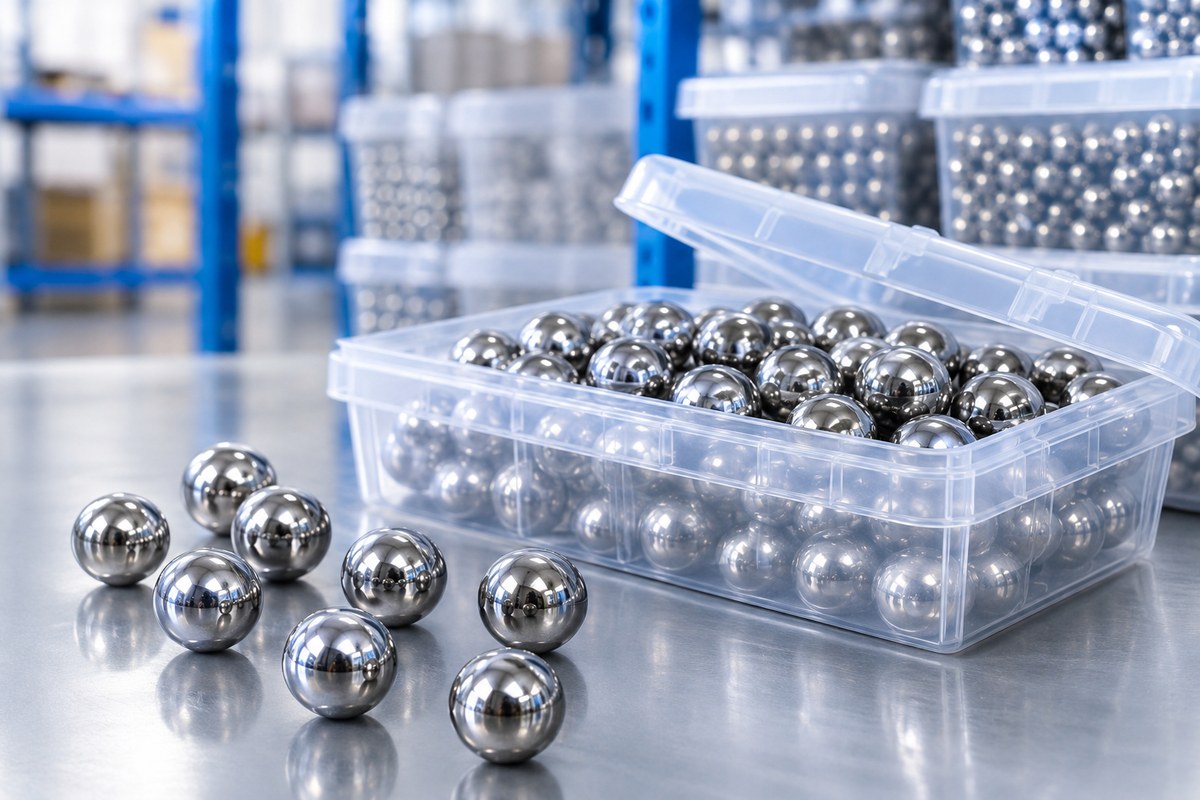
1. Why Do Stainless Steel Balls Need Protection During Long-Term Storage?
The corrosion resistance of stainless steel mainly comes from a thin, chromium-rich passive oxide film formed naturally on its surface. This protective layer helps prevent direct reactions between the metal and its surrounding environment.
However, certain environmental conditions can damage or compromise this passive layer, increasing the possibility of surface corrosion.
Common risks during long-term storage include:
-
High Humidity: Excessive moisture may cause condensation on metal surfaces and increase the risk of localized corrosion.
-
Chloride Contamination: Salt, seawater, and chloride-containing cleaning agents can damage the passive film and promote pitting corrosion.
-
Iron Contamination: Contact with carbon steel particles or rusty metal surfaces may introduce free iron onto stainless steel balls.
-
Dust and Oil Contamination: Industrial dust, grease, and other contaminants may affect surface cleanliness.
-
Improper Packaging: Damaged, wet, or unsuitable packaging may allow moisture and contaminants to reach the products.
Understanding these potential risks is the first step toward establishing an effective stainless steel ball storage system.
2. Control Storage Conditions to Minimize Moisture Exposure
A clean and dry storage environment is essential for preserving stainless steel ball quality.
Stainless steel balls should preferably be stored indoors, away from rainwater, direct moisture, and corrosive substances. Warehouses should have adequate ventilation and appropriate humidity control to reduce the possibility of condensation.
Temperature fluctuations also require attention. When warm, humid air comes into contact with colder metal surfaces, condensation may occur, particularly inside poorly managed packaging.
To maintain suitable storage conditions, consider the following measures:
-
Keep the warehouse clean, dry, and well ventilated.
-
Store stainless steel balls on pallets or shelves instead of directly on the floor.
-
Use dehumidifiers or suitable moisture-control materials when necessary.
-
Avoid storage areas near water sources, chemical processing zones, or corrosive materials.
-
Regularly monitor warehouse humidity and inspect packaging for signs of condensation.
For precision stainless steel balls intended for demanding industrial applications, maintaining stable storage conditions is particularly important.
3. Choose Suitable Packaging for Long-Term Stainless Steel Ball Storage
Proper packaging plays a major role in protecting stainless steel balls during warehousing, transportation, and distribution.
Since precision stainless steel balls often require smooth surfaces and consistent dimensional accuracy, packaging should prevent moisture exposure, dust contamination, and mechanical damage.
Moisture-Resistant Plastic Packaging
Clean, suitable plastic bags or sealed packaging can help reduce exposure to external moisture, dust, and other contaminants.
For extended storage periods, appropriate desiccants may be used depending on the packaging design and storage environment. However, the packaging materials should be compatible with the product and suitable for long-term storage.
Separate Packaging by Size and Material
Different stainless steel ball diameters, material grades, and precision classes should be packaged separately.
This helps prevent unnecessary friction, surface scratches, and product identification errors. Clear labeling also makes warehouse inventory management more efficient.
Use Appropriate Storage Containers
Plastic containers, protective trays, and other clean packaging solutions can help reduce collisions and surface damage during handling.
For high-precision stainless steel balls, packaging should be designed to minimize direct contact and unnecessary movement.
Maintain Packaging Integrity
Avoid opening sealed packages unnecessarily during long-term storage.
If inspection is required, the products should be handled with clean equipment and properly repackaged afterward to minimize exposure to moisture and contaminants.
4. Prevent Cross-Contamination from Carbon Steel and Other Metals
Cross-contamination is an important but sometimes overlooked factor in stainless steel ball storage.
In industrial warehouses, stainless steel balls are often stored alongside carbon steel balls, bearing steel balls, and other metal components.
However, ordinary carbon steel can produce rust and loose iron particles. These particles may transfer to stainless steel surfaces through direct contact, handling equipment, or airborne dust.
Once deposited on stainless steel balls, free iron particles may oxidize in humid environments and produce visible rust spots.
To minimize contamination risks:
-
Store stainless steel balls separately from carbon steel and bearing steel products.
-
Use clean plastic containers or non-metallic protective separators.
-
Avoid rusty shelves, contaminated tools, and dirty handling equipment.
-
Wear clean gloves when handling precision stainless steel balls.
-
Keep products away from salt, chloride-containing substances, and corrosive chemicals.
For high-precision stainless steel balls, maintaining a clean storage environment is essential for preserving surface quality and reducing the risk of contamination.
5. Conduct Regular Inventory Inspections
Long-term storage requires more than simply placing products in a warehouse.
Regular inspections help identify potential problems before they affect product quality or customer deliveries.
A practical inspection program should include the following areas:
| Inspection Item | Key Points to Check |
|---|---|
| Packaging Condition | Damaged bags, loose seals, or moisture exposure |
| Surface Appearance | Rust spots, discoloration, scratches, or water stains |
| Storage Environment | Humidity, condensation, and dust accumulation |
| Product Identification | Material grade, diameter, and batch information |
| Inventory Records | Storage date, inspection date, and delivery records |
For products stored over extended periods, the First-In, First-Out (FIFO) inventory management principle is recommended.
This approach prioritizes earlier inventory for shipment and helps reduce unnecessary storage time.
Inspection frequency should be determined according to material grade, packaging conditions, warehouse environment, and customer requirements.
6. Storage Considerations for Different Stainless Steel Ball Grades
Different stainless steel grades have different chemical compositions and corrosion resistance characteristics. Therefore, their long-term storage requirements may vary.
304 Stainless Steel Balls
304 stainless steel balls offer good general corrosion resistance and are widely used in industrial equipment, hardware accessories, mechanical components, and general-purpose applications.
During storage, particular attention should be paid to moisture exposure, chloride contamination, and contact with free iron particles.
Keeping the products clean and dry helps maintain their original surface condition.
316 Stainless Steel Balls
316 stainless steel balls contain molybdenum, which generally provides better resistance to chloride-induced pitting corrosion than 304 stainless steel.
They are commonly selected for applications requiring enhanced corrosion resistance.
However, 316 stainless steel is not completely immune to corrosion. Prolonged exposure to aggressive chloride environments or surface contamination can still cause localized corrosion.
Proper packaging and storage conditions remain important.
420 Stainless Steel Balls
420 stainless steel balls are martensitic stainless steel products known for their relatively high hardness and wear resistance.
They are commonly used in valves, mechanical components, and applications requiring good hardness and wear performance.
Compared with austenitic grades such as 304 and 316, 420 stainless steel generally has lower corrosion resistance.
Therefore, moisture control, protective packaging, and regular inspection are particularly important during long-term storage.
Choosing the right storage method should always take material grade, surface condition, product precision, and intended application into account.
7. Perform Quality Inspections Before Shipment
Before long-stored stainless steel balls are delivered to customers, appropriate quality inspections should be carried out to confirm that the products meet the required specifications.
Important inspection procedures include:
Visual Inspection
Check for visible rust spots, scratches, stains, discoloration, and other surface defects.
Dimensional Inspection
Measure ball diameters according to the required specifications and customer tolerances.
Surface Quality Inspection
For precision applications, evaluate surface finish, roughness, and other relevant quality requirements.
Packaging Inspection
Confirm that packaging is intact and that product labels, material grades, batch numbers, and quantities are accurate.
Depending on customer requirements, suppliers may also provide material certificates, dimensional inspection reports, and other relevant quality documentation.
A reliable pre-shipment inspection process helps reduce quality disputes and ensures that products are delivered in suitable condition.
8. How Does a Reliable Stainless Steel Ball Supplier Maintain Product Quality?
For B2B buyers, selecting a reliable stainless steel ball supplier is just as important as choosing the correct material and specifications.
A professional supplier should pay attention to every stage of the supply process, including raw material selection, manufacturing, grinding, polishing, packaging, inventory management, and final inspection.
Different stainless steel ball grades, diameters, and precision classes require appropriate product identification and storage procedures.
For international buyers, consistent quality, professional packaging, and reliable delivery are important factors when evaluating a long-term supply partner.
As a professional industrial ball supplier, we focus on product quality, specification consistency, and practical packaging solutions.
We offer stainless steel balls in various materials, sizes, and specifications to meet the needs of different industrial applications. Customized solutions are also available according to customer requirements.
Whether you are sourcing standard stainless steel balls or precision products for specialized applications, proper quality control and inventory management help ensure reliable products from production to delivery.
Proper Storage Is Essential for Maintaining Stainless Steel Ball Quality
Stainless steel balls offer excellent corrosion resistance, durability, and reliable performance across a wide range of industrial applications. However, their quality during long-term storage still depends on proper environmental control, suitable packaging, contamination prevention, and regular inspection.
By maintaining a clean and dry warehouse, avoiding contact with carbon steel contaminants, selecting appropriate packaging materials, and implementing effective inventory management, manufacturers and distributors can significantly reduce the risks of surface contamination and corrosion.
For industrial buyers, working with an experienced stainless steel ball supplier also helps ensure consistent product quality, reliable packaging, and professional service.
Looking for a reliable stainless steel ball manufacturer and supplier? Contact us today to discuss your requirements for stainless steel ball grades, diameters, precision levels, and customized industrial solutions.