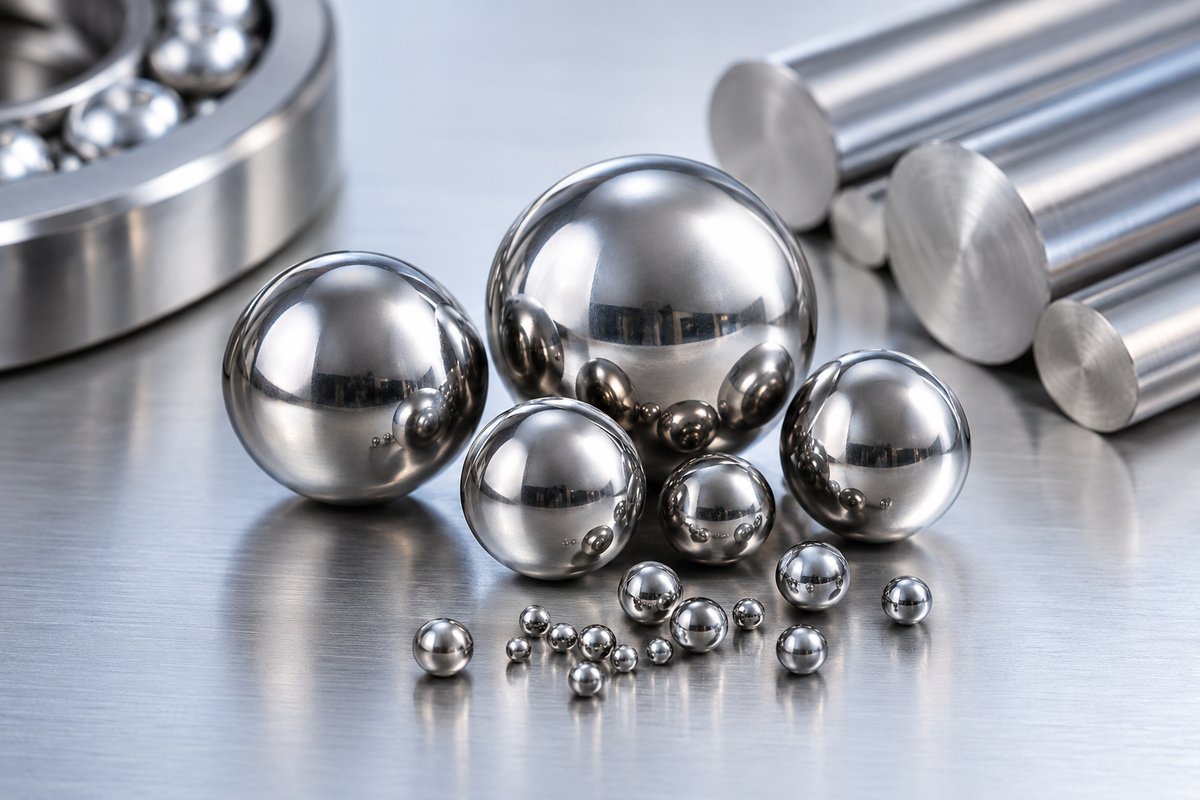
1. What Determines the Hardness of Stainless Steel?
Stainless steel hardness is influenced by several factors, including chemical composition, metallurgical structure, heat treatment, and manufacturing processes.
Understanding these factors is essential when selecting stainless steel materials for industrial applications.
1.1 Chemical Composition
The chemical composition of stainless steel plays an important role in determining its mechanical properties.
Elements such as chromium, nickel, carbon, and molybdenum influence hardness, corrosion resistance, strength, and metallurgical structure.
For example:
-
Carbon: Higher carbon content generally increases the hardening potential of martensitic stainless steels.
-
Chromium: Improves corrosion resistance and contributes to the formation of hard chromium carbides in high-carbon grades.
-
Nickel: Helps stabilize the austenitic structure and improves toughness and ductility.
-
Molybdenum: Enhances resistance to pitting and crevice corrosion, particularly in chloride-containing environments.
440C stainless steel, with its relatively high carbon content, can achieve excellent hardness after heat treatment. In comparison, 304 and 316 stainless steels are primarily designed for corrosion resistance and cannot be hardened by conventional quenching in the same way.
1.2 Heat Treatment
Heat treatment is one of the most important factors affecting stainless steel hardness.
Different stainless steel families require different treatment methods:
-
Martensitic stainless steel: Quenching and tempering can significantly increase hardness and wear resistance.
-
Austenitic stainless steel: Cannot be hardened through conventional quenching, but cold working can increase hardness.
-
Precipitation-hardening stainless steel: Aging treatment increases strength and hardness through the formation of fine precipitates.
Proper heat treatment is particularly important for stainless steel balls used in precision bearings, valves, and mechanical transmission systems.
1.3 Manufacturing and Processing Conditions
Manufacturing processes can also influence the final hardness of stainless steel products.
Cold rolling, drawing, forging, machining, and other forming operations may change the material's microstructure and mechanical properties.
For austenitic grades such as 304 and 316, cold working can cause significant work hardening.
Therefore, when comparing stainless steel hardness, it is important to consider not only the material grade but also its delivery condition, processing history, and heat treatment requirements.
2. Hardness Ranges and Performance Characteristics of Common Stainless Steel Grades
Different stainless steel grades are designed for different industrial requirements. Below is an overview of six commonly used grades and their typical mechanical characteristics.
2.1 201 Stainless Steel
AISI 201 is an austenitic stainless steel developed as a relatively economical alternative to certain nickel-containing stainless steel grades.
It contains chromium and manganese, with a lower nickel content than 304 stainless steel.
Typical Hardness: Approximately 150–200 HB in the annealed condition.
Key Performance Characteristics:
-
Relatively economical material cost.
-
Good formability and general mechanical properties.
-
Moderate corrosion resistance in suitable environments.
-
Work hardening during cold forming.
Common Applications:
-
Decorative metal components.
-
Hardware accessories.
-
General industrial parts.
-
Household equipment.
201 stainless steel is suitable for applications where cost efficiency is important and the operating environment is not highly corrosive.
However, its corrosion resistance is generally lower than that of 304 and 316 stainless steel. Careful material evaluation is recommended for humid, marine, or chemically aggressive environments.
2.2 304 Stainless Steel
AISI 304 is one of the most widely used austenitic stainless steel grades in industrial manufacturing.
It offers a balanced combination of corrosion resistance, formability, weldability, and mechanical performance.
Typical Hardness: Approximately 150–200 HB in the annealed condition.
Key Performance Characteristics:
-
Good general corrosion resistance.
-
Excellent formability and weldability.
-
Good toughness and ductility.
-
Suitable for various industrial environments.
-
Work hardening during cold processing.
Common Applications:
-
Food processing equipment.
-
Industrial hardware.
-
Mechanical components.
-
Fluid handling equipment.
-
General-purpose stainless steel balls.
304 stainless steel is a practical choice for applications requiring a combination of corrosion resistance and manufacturing flexibility.
However, it may be susceptible to pitting and crevice corrosion in environments containing high concentrations of chloride ions.
2.3 316 Stainless Steel
AISI 316 stainless steel is an austenitic stainless steel containing molybdenum, which improves its resistance to pitting and crevice corrosion.
Compared with 304, 316 is generally more suitable for environments involving moisture, chlorides, and certain chemical substances.
Typical Hardness: Approximately 150–200 HB in the annealed condition.
Key Performance Characteristics:
-
Improved resistance to pitting corrosion.
-
Better performance in many chloride-containing environments.
-
Good ductility and toughness.
-
Excellent weldability and formability.
-
Suitable for demanding industrial environments.
Common Applications:
-
Marine equipment.
-
Chemical processing machinery.
-
Food processing systems.
-
Medical equipment.
-
Corrosion-resistant industrial components.
The primary advantage of 316 stainless steel is its improved corrosion resistance rather than higher hardness.
For industrial buyers, 316 is often worth considering when components are exposed to moisture, salt-containing environments, or corrosive substances.
Nevertheless, it is not immune to corrosion under all chloride concentrations and operating temperatures.
2.4 420 Stainless Steel
AISI 420 is a martensitic stainless steel that contains a higher carbon content than many common stainless steel grades.
It can be hardened through quenching and tempering, making it suitable for applications requiring improved hardness, strength, and wear resistance.
Typical Hardness:
-
Annealed condition: Approximately 180–250 HB.
-
Heat-treated condition: Approximately 45–55 HRC, depending on composition and heat treatment.
Key Performance Characteristics:
-
Can achieve relatively high hardness through heat treatment.
-
Good wear resistance in the hardened condition.
-
Higher strength than annealed austenitic stainless steel.
-
Moderate corrosion resistance.
-
Magnetic properties.
Common Applications:
-
Industrial mechanical components.
-
Cutting tools.
-
Valve components.
-
Wear-resistant parts.
-
Certain industrial stainless steel balls.
420 stainless steel is a suitable option for applications requiring a combination of hardness, wear resistance, and moderate corrosion resistance.
However, its corrosion resistance is generally lower than that of 304 and 316. Proper surface finishing and maintenance are important in corrosive environments.
2.5 440C Stainless Steel
AISI 440C is a high-carbon martensitic stainless steel widely recognized for its excellent hardness and wear resistance.
It is particularly important in precision bearing applications and the manufacturing of industrial stainless steel balls.
With its relatively high carbon and chromium content, 440C can achieve high hardness after appropriate quenching and tempering.
Typical Hardness:
-
Annealed condition: Approximately 240–270 HB.
-
Heat-treated condition: Approximately 58–62 HRC, depending on the material specification and heat treatment process.
Key Performance Characteristics:
-
High hardness after heat treatment.
-
Excellent wear resistance.
-
Good strength and load-bearing capability.
-
Suitable for rolling contact applications.
-
Moderate corrosion resistance compared with austenitic grades.
Common Applications:
-
Precision stainless steel bearing balls.
-
Ball bearings.
-
Valve balls.
-
Precision mechanical components.
-
Wear-resistant industrial parts.
440C stainless steel is particularly suitable for applications involving repeated rolling contact, friction, and relatively high contact stresses.
For stainless steel ball manufacturers and industrial buyers, 440C is an important material choice when hardness, dimensional stability, and wear resistance are major requirements.
However, 440C should not be considered equivalent to 316 in terms of corrosion resistance. Applications involving saltwater, high humidity, or aggressive chemicals require additional evaluation.
2.6 17-4PH Stainless Steel (630 Stainless Steel)
17-4PH is a precipitation-hardening stainless steel that combines high strength, good mechanical properties, and useful corrosion resistance.
Unlike conventional austenitic stainless steel, 17-4PH can achieve different strength and hardness levels through controlled aging treatments.
Typical Hardness: Approximately 28–47 HRC, depending on the heat treatment condition.
Key Performance Characteristics:
-
High mechanical strength.
-
Good hardness after precipitation hardening.
-
Good dimensional stability under appropriate processing conditions.
-
Useful corrosion resistance.
-
Multiple aging conditions available for different performance requirements.
Common Applications:
-
Aerospace components.
-
Precision machinery.
-
Pump and valve components.
-
High-strength mechanical parts.
-
Industrial equipment components.
17-4PH is suitable for applications requiring a combination of high strength, corrosion resistance, and controlled mechanical properties.
The actual hardness and corrosion performance depend on the selected aging condition and operating environment.
3. Stainless Steel Hardness Comparison Chart
The following table summarizes the typical hardness ranges and major characteristics of commonly used stainless steel grades.
| Stainless Steel Grade | Material Type | Typical Hardness | Main Advantages |
|---|---|---|---|
| 201 | Austenitic | 150–200 HB | Cost-effective, good formability |
| 304 | Austenitic | 150–200 HB | General corrosion resistance, versatile |
| 316 | Austenitic | 150–200 HB | Improved pitting corrosion resistance |
| 420 | Martensitic | 180–250 HB annealed; 45–55 HRC heat-treated | Hardenable, good wear resistance |
| 440C | Martensitic | 240–270 HB annealed; 58–62 HRC heat-treated | High hardness, excellent wear resistance |
| 17-4PH | Precipitation-hardening | Approximately 28–47 HRC | High strength, aging-hardenable |
Technical Note: These figures are indicative reference ranges, not universal acceptance limits. Actual hardness depends on the applicable material standard, chemical composition, product form, heat treatment, and testing method. HB and HRC are different hardness scales and should not be compared numerically without an appropriate conversion method.
4. Relationship Between Stainless Steel Hardness and Wear Resistance
Hardness is an important factor in determining a material's resistance to localized plastic deformation. However, it is not the only factor affecting wear resistance.
For industrial stainless steel balls and precision components, several additional factors should be considered.
4.1 Surface Finish
Surface roughness, scratches, dents, and other surface imperfections can influence contact conditions and friction.
Precision stainless steel balls generally require controlled grinding and polishing processes to achieve the required surface finish and dimensional accuracy.
A smoother surface can help reduce friction and improve contact performance under suitable operating conditions.
4.2 Material Microstructure Uniformity
Material microstructure plays an important role in mechanical performance.
Uneven microstructures or internal defects may lead to inconsistent mechanical properties and affect product reliability.
For precision stainless steel bearing balls, consistent hardness throughout the product is especially important.
4.3 Heat Treatment Quality
Proper heat treatment improves the hardness and wear resistance of hardenable stainless steel grades.
At the same time, manufacturers need to control:
-
Heat treatment temperature.
-
Holding time and cooling conditions.
-
Hardness consistency.
-
Residual stress.
-
Heat treatment deformation.
-
Microstructural stability.
These factors contribute to the dimensional accuracy and long-term performance of precision stainless steel balls.
4.4 Operating Load and Lubrication Conditions
Actual wear performance is also affected by operating conditions, including:
-
Contact stress and applied load.
-
Rotational speed.
-
Lubrication quality.
-
Operating temperature.
-
Working environment.
-
Maintenance conditions.
Therefore, selecting industrial stainless steel balls should involve a comprehensive evaluation of hardness, toughness, corrosion resistance, dimensional accuracy, and operating requirements rather than simply choosing the material with the highest hardness.
5. How to Select the Right Stainless Steel Grade for Different Applications
Different industrial applications require different material characteristics.
Choosing the correct stainless steel grade helps improve equipment reliability and reduce unnecessary maintenance costs.
Here are some general material selection recommendations.
Food Processing and General Industrial Equipment
304 stainless steel is a practical option for many general-purpose applications because of its good corrosion resistance, formability, and balanced mechanical properties.
Marine and Chemical Environments
316 stainless steel is often preferred because its molybdenum content improves resistance to pitting and crevice corrosion.
However, the actual operating conditions, chemical concentration, and temperature should always be considered.
Precision Bearings and High-Wear Applications
440C stainless steel is a common choice for precision bearing balls and other wear-resistant components.
Its high hardness after heat treatment makes it suitable for applications involving repeated rolling contact and mechanical wear.
High-Strength Mechanical Components
17-4PH stainless steel is worth considering when high strength, controlled hardness, and corrosion resistance are required.
Different aging conditions can be selected according to the required mechanical properties.
Cost-Sensitive Industrial Components
201 stainless steel may be suitable for general industrial applications where the corrosion environment is relatively mild and cost efficiency is a major consideration.
For industrial stainless steel ball procurement, buyers should provide the following information when requesting a quotation:
-
Stainless steel grade.
-
Ball diameter and size tolerance.
-
Required hardness.
-
Surface finish requirements.
-
Application environment.
-
Quantity and packaging requirements.
Providing these specifications helps suppliers evaluate material suitability and recommend the appropriate product.
6. Why Is Hardness Testing Important for Stainless Steel Balls?
For precision stainless steel balls, hardness is an important quality parameter that influences wear resistance and long-term operating stability.
If a ball has insufficient hardness, it may experience excessive plastic deformation under continuous contact stress. This can affect its dimensional accuracy, roundness, and operating performance.
Similarly, inconsistent hardness may lead to uneven wear and reduced service reliability.
Professional stainless steel ball manufacturing therefore requires attention to several quality control procedures.
Key Quality Inspection Processes:
-
Raw material grade and chemical composition verification.
-
Heat treatment process control.
-
Finished product hardness testing.
-
Hardness uniformity evaluation.
-
Ball diameter and dimensional tolerance inspection.
-
Roundness and surface roughness measurement.
-
Visual inspection for surface defects.
For customers with special technical requirements, additional inspection procedures and customized acceptance criteria can be established according to the intended application.
Consistent quality control helps ensure that stainless steel balls meet the required mechanical and dimensional specifications.
7.Choosing the Right Stainless Steel Grade for Better Industrial Performance
Different stainless steel grades offer different combinations of hardness, wear resistance, corrosion resistance, and mechanical strength.
304 and 316 stainless steel are widely used for applications requiring good corrosion resistance. Grades such as 420 and 440C can achieve higher hardness through heat treatment, while 17-4PH is suitable for applications requiring high strength and controlled mechanical properties.
For industrial stainless steel balls and precision components, the best material choice depends on the actual operating environment, required hardness, dimensional accuracy, load conditions, and expected service life.
As an industrial ball supplier offering integrated manufacturing and trading services, we focus on providing ball products for different industrial requirements.
Whether you need 304, 316, 420, or 440C stainless steel balls, we can help evaluate material options according to your specifications and application requirements.
Contact us today to discuss your stainless steel ball requirements, request product specifications, or explore customized supply solutions for your business.
Frequently Asked Questions (FAQ)
Q1: Which stainless steel grade has the highest hardness?
Among the grades discussed in this article, 440C stainless steel can achieve particularly high hardness after appropriate heat treatment, typically around 58–62 HRC.
Q2: Is 316 stainless steel harder than 304?
Not necessarily. Both 304 and 316 are austenitic stainless steels with similar typical hardness levels in the annealed condition. The main advantage of 316 is its improved resistance to pitting and crevice corrosion.
Q3: Can 304 stainless steel be hardened through heat treatment?
304 stainless steel cannot be hardened through conventional quenching and tempering. However, cold working can increase its hardness and strength through work hardening.
Q4: Why is 440C stainless steel used for bearing balls?
440C offers high hardness, good wear resistance, and suitable rolling contact performance after appropriate heat treatment. These properties make it a common material for precision stainless steel bearing balls.
Q5: Is 440C stainless steel corrosion-resistant?
Yes. 440C provides a degree of corrosion resistance due to its chromium content. However, its corrosion resistance is generally lower than that of 304 and 316 stainless steel, particularly in aggressive chloride environments.
Q6: What is the difference between 420 and 440C stainless steel?
Both are martensitic stainless steels that can be hardened through heat treatment. However, 440C has a higher carbon and chromium content, allowing it to achieve higher hardness and generally better wear resistance. 420 is often selected for applications requiring moderate hardness and corrosion resistance.
Q7: Which stainless steel is best for industrial stainless steel balls?
The best grade depends on the application. 304 and 316 are suitable when corrosion resistance is a priority, while 420 and 440C are more appropriate when higher hardness and wear resistance are required. 440C is particularly common in precision bearing ball applications.