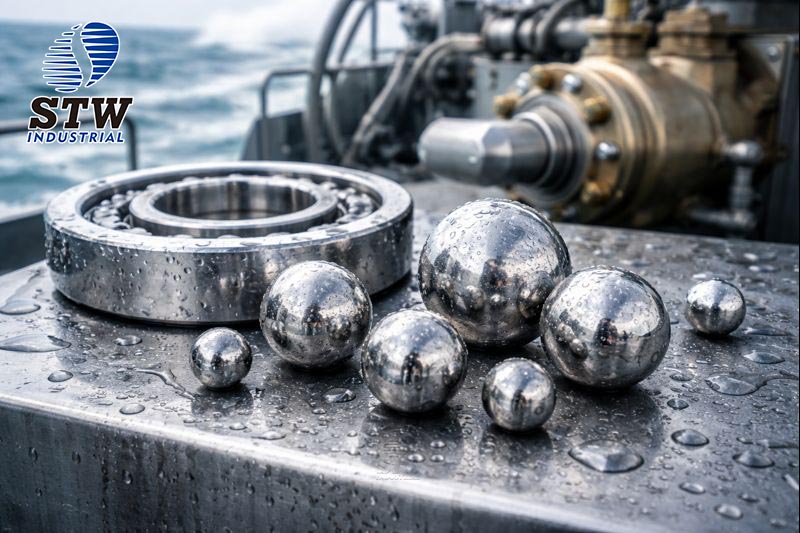
Marine mechanical systems operate in some of the most demanding environments, characterized by high humidity, salt spray, seawater exposure, and continuous mechanical load. In these conditions, material corrosion is a major factor affecting equipment reliability. Steel balls, although small in size, play a critical role in marine bearings, pumps, valves, hydraulic systems, and transmission assemblies. Their corrosion resistance directly impacts system performance and service life.
Challenges of Marine Environments for Steel Balls
Marine equipment is constantly exposed to harsh operating conditions, including:
-
Seawater and salt-laden atmospheres
-
High humidity and frequent temperature fluctuations
-
Mixed exposure to oils, water, and chemical media
-
Continuous or heavy-duty operation cycles
Standard carbon steel balls are prone to rust, pitting, and surface degradation under these conditions, which may lead to bearing failure, leakage, or unstable system operation. Therefore, corrosion-resistant steel balls are essential for marine applications.
Common Materials for Corrosion-Resistant Steel Balls
To meet marine industry requirements, several steel ball materials are widely used:
Stainless Steel Balls (304 / 316 / 440C)
-
304 stainless steel balls offer reliable corrosion resistance in humid and mildly corrosive environments
-
316 stainless steel balls provide enhanced resistance to chloride and seawater corrosion
-
440C stainless steel balls combine good corrosion resistance with high hardness for load-bearing applications
Surface-Treated Steel Balls
Advanced surface finishing, passivation, and polishing processes improve corrosion resistance while reducing friction and wear in marine systems.
Customized Material Solutions
For specialized vessels or offshore equipment, steel balls can be customized based on operating media, load conditions, and corrosion requirements.
Typical Applications in Marine Mechanical Systems
Corrosion-resistant steel balls are widely used in various marine components, including:
-
Marine bearings, ensuring smooth rotation and extended service life
-
Pumps and valve assemblies, supporting reliable sealing and precise flow control
-
Hydraulic and control systems, maintaining operational stability under high moisture conditions
-
Transmission and positioning mechanisms, where dimensional stability is critical
Selecting the appropriate steel ball material helps reduce maintenance frequency and improves overall system reliability.
Key Benefits of Corrosion-Resistant Steel Balls
From a vessel operation and maintenance perspective, high-quality corrosion-resistant steel balls provide:
-
Reduced downtime and maintenance costs
-
Extended component and system lifespan
-
Improved operational safety and reliability
-
Compliance with marine industry standards and classification requirements
These advantages make corrosion-resistant steel balls a cost-effective long-term solution for marine equipment manufacturers and service providers.
Conclusion
In marine mechanical systems, steel balls are essential precision components that must withstand corrosive environments without compromising performance. Through proper material selection and controlled manufacturing processes, corrosion-resistant steel balls deliver stable, long-lasting performance in demanding marine applications. Partnering with an experienced steel ball manufacturer ensures consistent quality and dependable supply for marine engineering projects.