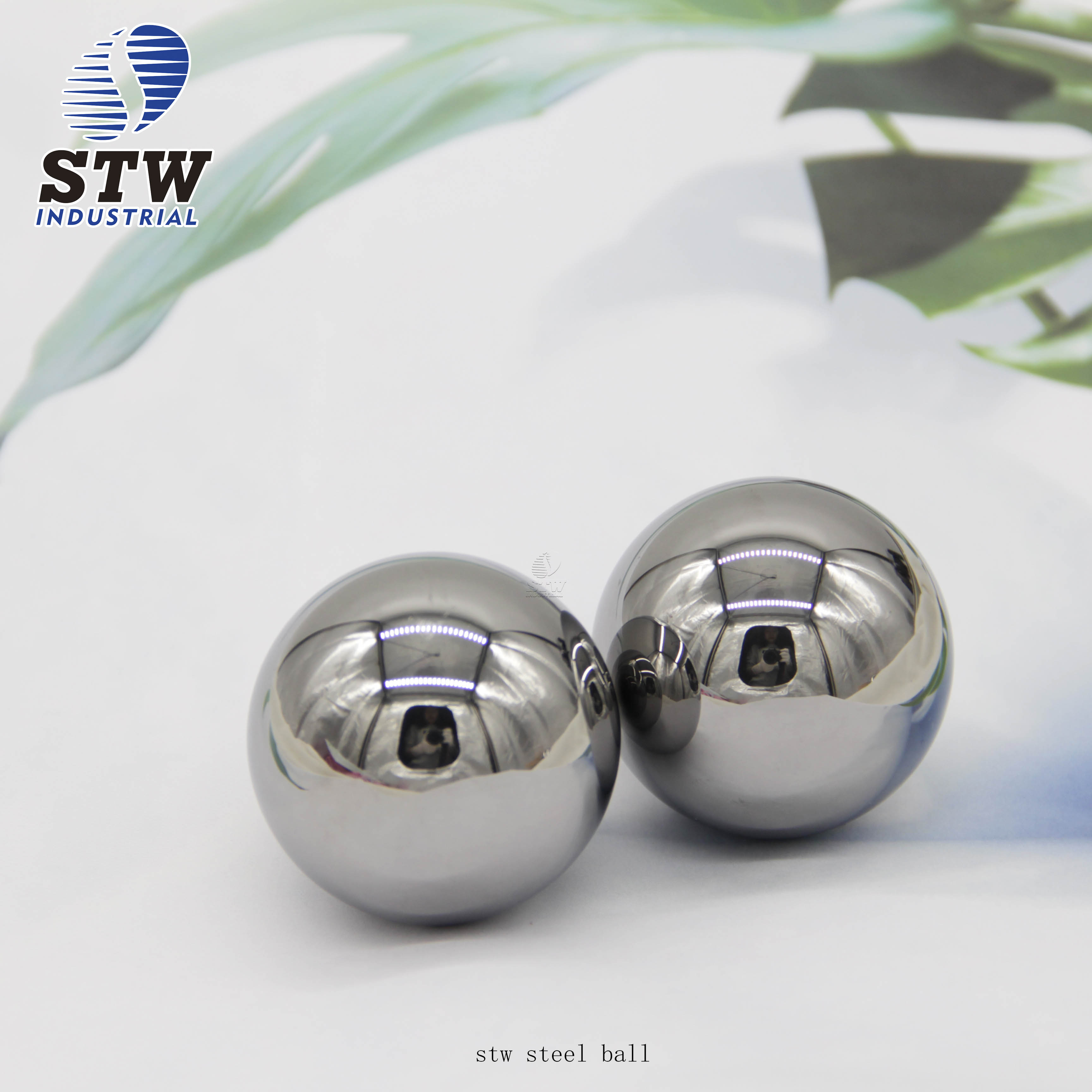
Why Steel Ball Quality Matters in High-Speed Applications
High-speed systems operate under extreme conditions:
- High rotational speed
- Continuous friction
- Elevated temperatures
- Heavy cyclic loads
- Long operating hours
Under these conditions, steel balls must maintain excellent roundness, hardness, and wear resistance. Poor-quality balls can quickly damage bearings and reduce equipment lifespan.
Common problems caused by low-quality steel balls include:
- Increased machine vibration
- Excessive operating noise
- Lubrication failure
- Bearing overheating
- Surface fatigue and cracking
- Reduced rotational accuracy
This is why high-end industries always choose precision-grade steel balls for critical mechanical applications.
Key Quality Requirements for Steel Balls in High-Speed Mechanical Systems
1. High Dimensional Accuracy
Diameter precision is one of the most critical factors in high-speed bearing performance.
Even tiny size deviations can create uneven load distribution during rotation, resulting in:
- Mechanical vibration
- Rotational instability
- Accelerated wear
- Reduced bearing life
High-speed systems commonly require precision grades such as:
- G10 Steel Balls
- G5 Steel Balls
- G3 Steel Balls
The higher the precision grade, the tighter the tolerance and the smoother the operation.
Precision steel balls improve rotational balance and significantly reduce friction and vibration in high-speed machinery.
2. Excellent Surface Finish and Roundness
Surface smoothness directly affects rolling performance.
Steel balls with poor roundness or rough surfaces can cause:
- Increased friction
- Heat generation
- Lubricant film damage
- Higher noise levels
Premium steel balls undergo multiple processing stages, including:
- Fine grinding
- Precision lapping
- Super finishing
- Polishing
High-quality steel balls can achieve extremely low surface roughness values, improving lubrication performance and minimizing wear during high-speed operation.
3. Stable Hardness and Wear Resistance
High-speed mechanical systems place continuous stress on steel balls. Therefore, hardness consistency is extremely important.
If hardness is too low:
- Deformation may occur
- Wear resistance decreases
- Service life shortens
If hardness distribution is uneven:
- Surface spalling may develop
- Fatigue cracks increase
- Bearing failure risk rises
Most precision bearing steel balls are manufactured from high-carbon chromium bearing steel, including:
- GCr15 Steel Balls
- AISI 52100 Steel Balls
After professional heat treatment, hardness is typically controlled between HRC60-66 for optimal wear resistance and fatigue strength.
4. High Material Purity
Material purity is critical for high-speed applications.
Internal inclusions, gas pores, or impurities can become fatigue crack sources under continuous high-speed rotation.
High-purity steel balls offer:
- Better fatigue resistance
- Longer service life
- Higher operational stability
- Lower failure rates
Professional manufacturers usually use:
- Vacuum degassed steel
- Electroslag remelting materials
- High-purity bearing steel
to ensure consistent steel ball performance.
5. Heat Resistance for High-Speed Operation
Friction at high speeds generates substantial heat.
If steel balls cannot maintain stability at elevated temperatures, problems may include:
- Hardness reduction
- Thermal expansion
- Lubrication breakdown
- Surface burn damage
For demanding applications such as aerospace bearings, electric spindles, and high-speed motors, heat resistance becomes especially important.
Some advanced industries also use:
- Stainless Steel Balls
- Ceramic Balls
- Hybrid Ceramic Bearing Balls
for higher speed and temperature resistance.
6. Superior Dynamic Balance Performance
Weight consistency is another essential factor in high-speed systems.
Even small weight variations may cause:
- Rotational imbalance
- Increased vibration
- Reduced speed stability
- Equipment noise
Professional steel ball manufacturers strictly control:
- Material density
- Internal structure uniformity
- Precision machining
- Batch consistency
to ensure stable dynamic performance during high-speed rotation.
Common Applications of High-Precision Steel Balls
Precision Bearings
Widely used in:
- CNC machine tools
- Electric spindles
- Industrial motors
- Robotics equipment
These applications require low noise, high speed, and long service life.
Automotive Industry
Steel balls are essential for:
- Electric vehicle motors
- Gearboxes
- Steering systems
- Turbocharger assemblies
High wear resistance and durability are critical in automotive environments.
Aerospace Industry
Aerospace applications demand:
- Ultra-high precision
- Excellent fatigue resistance
- High-temperature stability
- Maximum reliability
Even minor defects can affect operational safety.
Medical Equipment
Precision steel balls are also used in:
- Dental handpieces
- Medical motors
- Surgical instruments
- Precision medical devices
These applications require extremely smooth and quiet operation.
How to Choose the Right Steel Balls for High-Speed Systems
When purchasing steel balls for high-speed applications, buyers should evaluate the following factors:
| Specification | Recommended Standard |
|---|---|
| Precision Grade | G10 / G5 / G3 |
| Material | GCr15 / AISI 52100 |
| Hardness | HRC60-66 |
| Surface Roughness | Ra ≤ 0.02μm |
| Heat Treatment | Vacuum Heat Treatment |
| Quality Standard | ISO 3290 |
In addition, reliable suppliers should provide:
- Strict quality inspection
- Stable production capacity
- Precision manufacturing equipment
- Export experience
- Custom size support
- Consistent batch quality
The Growing Demand for High-Quality Steel Balls
As global manufacturing continues evolving toward high-speed automation and intelligent machinery, demand for precision steel balls continues to rise.
Modern industrial equipment requires steel balls that deliver:
- Higher rotational speed
- Longer service life
- Lower vibration
- Reduced noise
- Improved energy efficiency
- Greater operational reliability
High-quality steel balls have become a critical foundation for advanced mechanical systems worldwide.
Why Choose Our Steel Balls?
As a professional steel ball manufacturer and exporter, we provide:
- Precision steel balls from G100 to G3 grades
- Multiple materials including carbon steel, chrome steel, stainless steel, and bearing steel
- Strict ISO quality control
- Customized sizes and specifications
- Stable global supply capability
- Competitive factory-direct pricing
Our steel balls are widely used in bearings, automotive systems, industrial machinery, valves, bicycles, medical equipment, and precision mechanical applications.