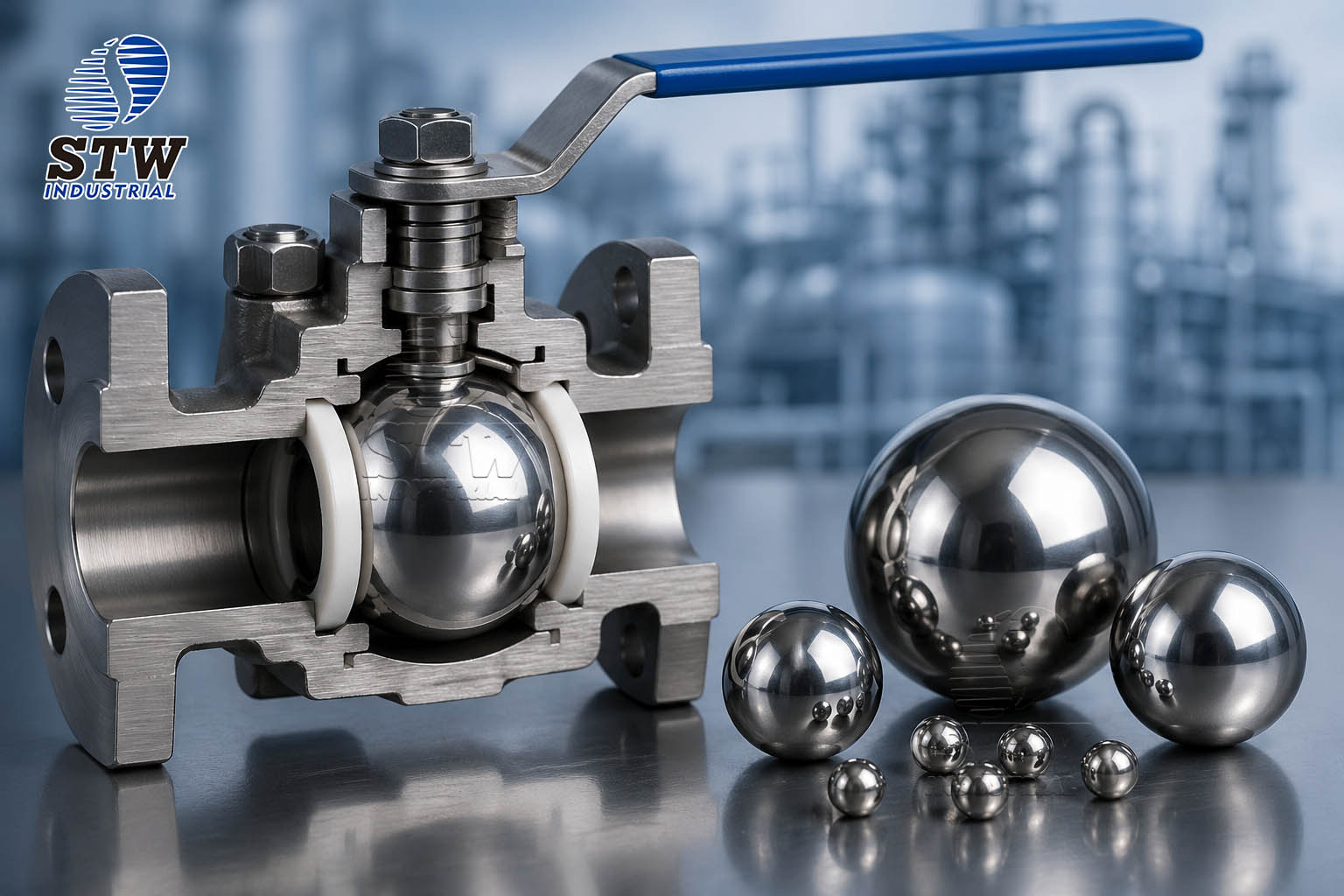
Key Functions of Steel Balls in Valve Sealing Systems
1. Excellent Sealing Performance
The spherical surface of a steel ball forms tight contact with the valve seat, allowing precise shut-off control.
High-grade steel balls with superior:
- Roundness
- Surface finish
- Dimensional accuracy
can significantly improve valve sealing efficiency and reduce fluid leakage.
This is especially important in:
- High-pressure pipelines
- Chemical transport systems
- LNG equipment
- Hydraulic control systems
2. Enhanced Wear Resistance
Industrial valves often operate under harsh conditions, including:
- High pressure
- High temperature
- Abrasive media
- Frequent switching cycles
Precision steel balls manufactured with advanced heat treatment and grinding technology provide outstanding wear resistance and mechanical strength.
This helps prevent:
- Surface wear
- Seal failure
- Valve sticking
- Reduced operational lifespan
3. Smooth and Stable Valve Operation
High-precision steel balls reduce rotational friction during valve opening and closing.
This enables:
- Smooth valve movement
- Faster response speed
- More accurate flow control
- Lower energy consumption
For automated industrial systems, stable valve performance is essential for production efficiency.
Common Steel Ball Materials for Industrial Valves
Different valve applications require different steel ball materials depending on operating environments.
Stainless Steel Balls
Stainless steel balls are commonly used in:
- Food processing equipment
- Pharmaceutical machinery
- Chemical industries
- Marine applications
Main advantages:
- Excellent corrosion resistance
- Rust prevention
- Smooth surface finish
- Hygienic performance
Popular materials include:
- 304 Stainless Steel Balls
- 316 Stainless Steel Balls
- 420 Stainless Steel Balls
Among them, 316 stainless steel balls offer superior resistance to chemicals and saltwater environments.
Chrome Steel Balls
Chrome steel balls are widely used in:
- High-pressure ball valves
- Hydraulic valves
- Heavy-duty industrial equipment
Key features:
- High hardness
- Excellent wear resistance
- Strong load-bearing capacity
GCr15 chrome steel is one of the most popular materials for industrial valve applications.
After heat treatment, hardness can typically reach HRC60+, making it suitable for demanding industrial environments.
Tungsten Carbide Balls
For extreme working conditions such as:
- Ultra-high pressure
- High-speed flow
- Severe abrasion
- High-temperature applications
tungsten carbide balls provide exceptional hardness and durability.
Although more expensive, their extended service life helps reduce overall maintenance and replacement costs.
How Steel Ball Precision Affects Valve Quality
Many buyers focus only on steel ball size while ignoring precision grade.
In reality, steel ball precision directly impacts valve performance.
Important Technical Parameters
Ball Roundness
Determines sealing contact quality.
Surface Roughness
Affects leakage prevention capability.
Hardness
Influences wear resistance and lifespan.
Diameter Tolerance
Ensures assembly consistency.
Surface Finish
Improves smooth operation and sealing reliability.
High-precision steel balls are typically manufactured through:
- Cold heading
- Heat treatment
- Precision grinding
- Fine polishing
- Strict quality inspection
to meet international industrial standards.
What Valve Manufacturers Expect from Steel Ball Suppliers
Today’s industrial valve market requires more than standard products.
Professional valve manufacturers increasingly seek steel ball suppliers with:
Stable Quality Control
Consistency is essential for mass production and long-term cooperation.
Custom Manufacturing Capability
Many customers require customized solutions such as:
- Non-standard steel ball sizes
- Hollow steel balls
- Mirror-polished steel balls
- Special alloy balls
- High precision grade balls
A reliable manufacturer should support OEM and custom production requirements.
Advanced Inspection Systems
Professional steel ball manufacturers typically provide:
- Hardness testing
- Material composition analysis
- Surface roughness testing
- Roundness inspection
- Salt spray testing
to ensure stable product quality and international compliance.
Future Trends of Steel Balls in Industrial Valve Applications
As global industries continue upgrading toward:
- Smart manufacturing
- Automation
- Energy efficiency
- High-pressure systems
- Long-life equipment
the demand for precision steel balls will continue growing.
Industries with strong future demand include:
- Oil & Gas
- LNG systems
- Chemical processing
- Water treatment
- Renewable energy
- Industrial automation
High-quality steel balls are becoming increasingly important in achieving safer and more efficient industrial valve systems.
Why Choose a Professional Steel Ball Manufacturer
An experienced steel ball manufacturer can provide:
- Stable product quality
- Competitive factory pricing
- OEM & custom solutions
- Fast delivery
- Global export experience
- Technical support
For industrial valve manufacturers, partnering with a reliable steel ball supplier helps improve product competitiveness and customer satisfaction.
Conclusion
Steel balls are critical components in industrial valve sealing structures. Their precision, hardness, and surface quality directly influence valve sealing performance, operational stability, and service life.
As industrial technology advances, high-precision steel balls will continue playing a vital role in modern valve systems worldwide.
If you are looking for a trusted precision steel ball manufacturer for industrial valve applications, choosing a supplier with strong manufacturing capability and strict quality control is the key to long-term success.