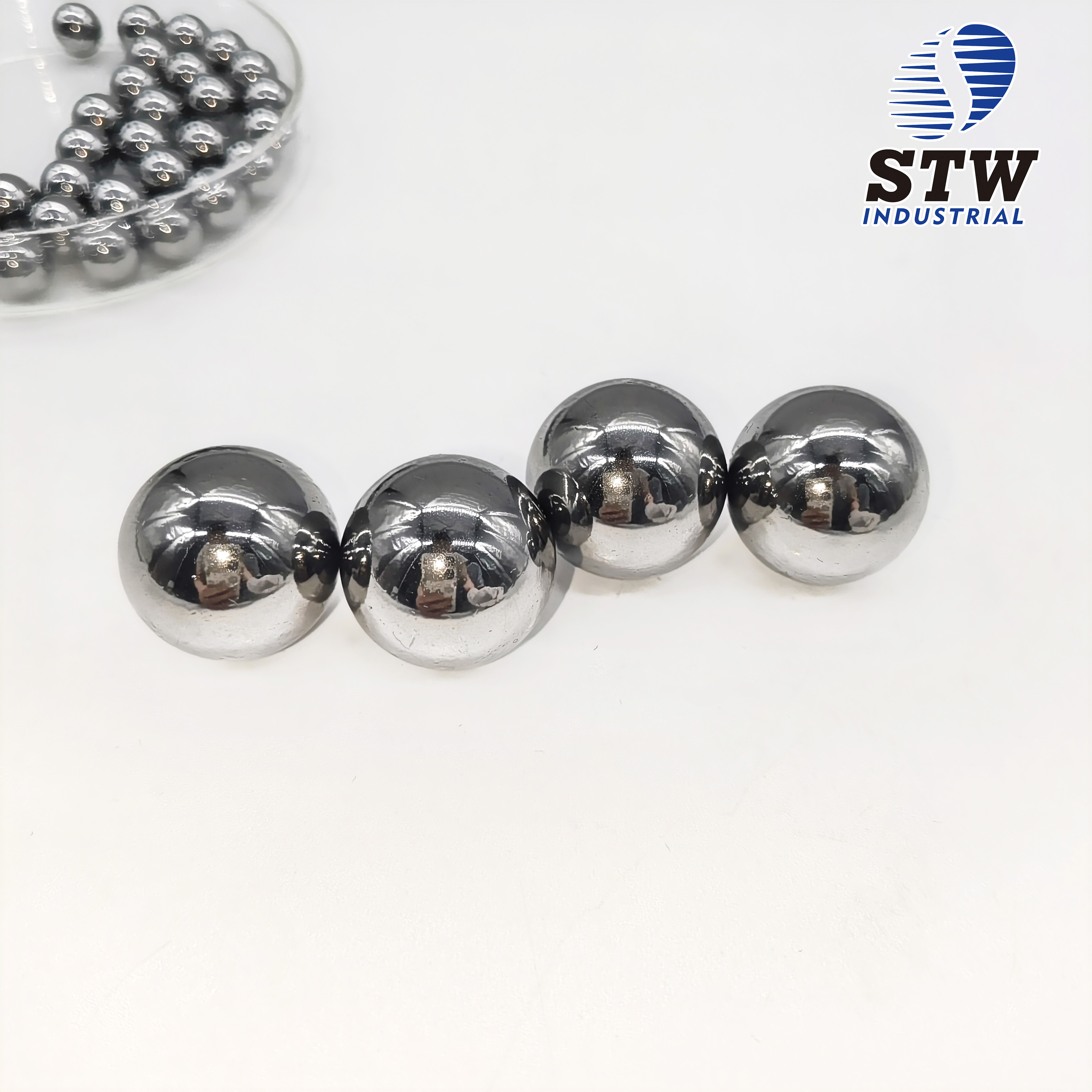
In modern manufacturing, steel balls may seem insignificant, but they are one of the most critical precision components in mechanical systems.
From bearings and automotive parts to valves, medical instruments, and electronic devices — the choice of the right steel ball directly affects performance, durability, and efficiency.
So, how can you quickly determine which type of steel ball best suits your project?
Let’s explore from five key perspectives: material, working environment, precision grade, performance requirements, and cost control.
1. Material Selection: The Foundation of Performance
The material of a steel ball defines its hardness, corrosion resistance, magnetic properties, and application scope.
Below is a comparison of commonly used types:
| Type | Characteristics | Typical Applications |
|---|---|---|
| Stainless Steel Ball | Excellent corrosion resistance, anti-rust, high brightness after polishing | Food processing equipment, medical instruments, chemical valves, spray nozzles |
| Bearing Steel Ball (GCr15 / AISI 52100) | High hardness, excellent wear resistance, dimensional stability | Bearings, motors, transmission systems |
| Carbon Steel Ball | Cost-effective, good strength, low corrosion resistance | Toys, hardware parts, conveyors, low-load mechanisms |
| Brass / Copper Ball | Good conductivity, thermal transfer, non-magnetic | Electrical components, valves, instruments, flow control |
| Aluminum Ball | Lightweight, non-magnetic, easy to machine | Aerospace, lightweight assemblies, decorations |
| Ceramic Ball | High temperature and corrosion resistance, electrically insulating | High-speed bearings, chemical pumps, medical devices |
| Plastic Ball | Lightweight, corrosion-resistant, noise reduction | Flow meters, measuring instruments, decorations |
Selection Tips:
-
For corrosion resistance → Choose Stainless Steel or Ceramic Balls
-
For high load and wear resistance → Choose Bearing Steel Balls
-
For cost-sensitive projects → Choose Carbon Steel Balls
-
For conductivity or decorative use → Choose Copper or Brass Balls
-
For lightweight or anti-magnetic needs → Choose Aluminum or Plastic Balls
2. Environmental Conditions: Matching the Right Ball to the Right Setting
The working environment determines the life expectancy and stability of a steel ball.
Each application scenario has its ideal material:
| Environment | Recommended Material | Key Feature |
|---|---|---|
| Moist or corrosive environments (chemical, outdoor use) | 316 Stainless / Ceramic | Superior corrosion resistance |
| High temperature applications (automotive, machinery) | 440C Stainless / Ceramic | Excellent heat stability |
| High load and high-speed rotation | Bearing Steel (GCr15) | Hardness and durability |
| Lightweight or non-magnetic requirements | Aluminum / Plastic | Weight reduction and anti-magnetism |
| Electrical conduction or visual appearance | Brass / Copper | Conductivity and luster |
Choosing the correct material for the environment prevents early wear and ensures long-term reliability.
3. Precision Grade & Surface Finish: The Key to Smooth Operation
Steel ball precision is measured by Grade (G10, G100, G500, etc.), which indicates roundness, surface smoothness, and tolerance level.
-
High Precision (G10–G40): Used in high-end bearings, robotics, and precision instruments.
-
Medium Precision (G100–G200): Ideal for valves, pumps, and general machinery.
-
Low Precision (G500 and above): Common for toys, decorations, and non-load applications.
The smoother the surface and the tighter the tolerance, the lower the friction — resulting in longer lifespan and quieter operation.
4. Performance Considerations: Finding the Right Balance
Each project focuses on different performance priorities.
| Property | Recommended Type | Description |
|---|---|---|
| Wear Resistance | Bearing Steel | Long-lasting and stable under load |
| Corrosion Resistance | Stainless or Ceramic | Ideal for chemical or humid environments |
| Impact Strength | Carbon or Bearing Steel | High toughness for mechanical use |
| Weight Control | Aluminum or Plastic | Lightweight design applications |
| Non-Magnetic / Insulating | Ceramic or Plastic | Suitable for special electronic or laboratory use |
The right selection achieves the perfect balance between durability, performance, and cost efficiency.
5. Cost and Supply: Choosing the Right Partner Matters
For B2B buyers, steel balls are not just standard components — they represent supply chain stability and quality consistency.
Working with an experienced manufacturing and trading-integrated supplier brings clear advantages:
-
Traceable Quality – Raw materials and production batches are fully documented.
-
Cost Transparency – Direct factory pricing with no unnecessary markups.
-
Diverse Material Options – Full range from stainless to ceramic.
-
Technical Support – Professional engineers assist in selection and testing.
A reliable supplier not only ensures consistent quality but also reduces your total procurement cost.
6. Industry Application Examples
-
Automotive Industry: Bearing steel balls (GCr15) for long-term wear resistance and high-speed rotation.
-
Food & Medical Equipment: 316L stainless steel balls for hygiene and corrosion resistance.
-
Electronics & Electrical Components: Brass or copper balls for conductivity and assembly parts.
-
Chemical Equipment: Ceramic balls resistant to acids and alkalis.
-
Aerospace & Instruments: Lightweight aluminum or high-precision stainless balls for accuracy and weight reduction.
Each industry has its unique performance standards — and the correct ball type ensures your system operates with precision and reliability.
7. Conclusion: Professional Selection Leads to Reliable Performance
Steel balls may be small, but they play a big role in every precision system.
To choose the right type, consider working environment, load, lifespan, and cost comprehensively.
Consulting an experienced manufacturer ensures a solution that perfectly matches your technical and commercial needs.