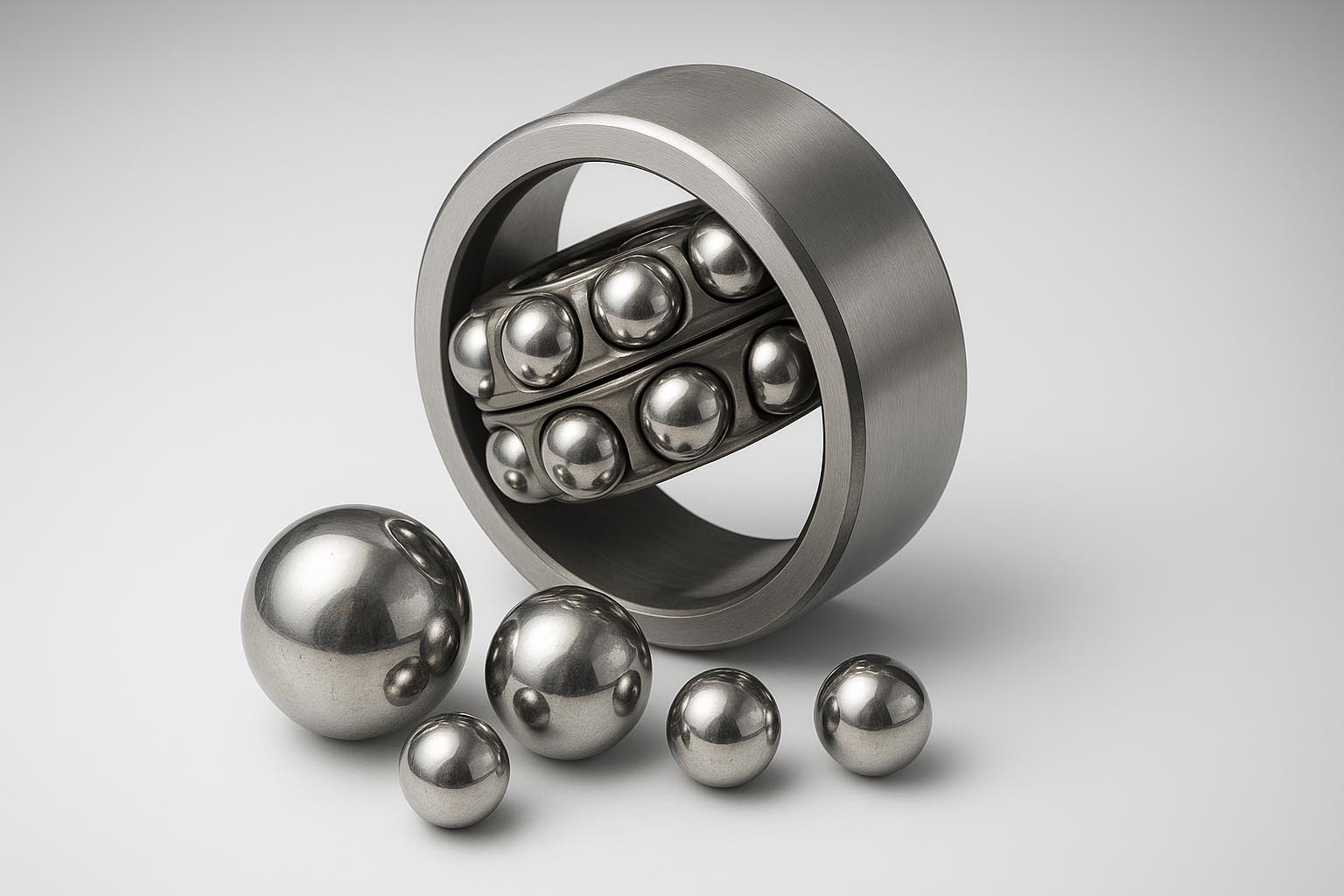
In the industrial world, steel balls play an essential role in machinery, bearings, automotive parts, and precision equipment. For global buyers and distributors, understanding the factors that drive steel ball price fluctuations is crucial for effective cost control and strategic sourcing. This article explores the main influences — raw material costs and manufacturing processes — that determine steel ball pricing trends.
1. Impact of Raw Material Prices
Raw materials account for a significant portion of steel ball production costs. Depending on the type — stainless steel balls, bearing steel balls, carbon steel balls, copper balls, or aluminum balls — the price may vary substantially due to changes in metal markets.
-
Stainless Steel Balls
Stainless steel balls are made primarily from alloys containing chromium (Cr) and nickel (Ni). The prices of these metals are highly sensitive to international supply and demand, mining output, and energy costs. In particular, rising nickel prices often lead to higher costs for 304 and 316 stainless steel balls. -
Bearing Steel Balls
Bearing steel balls, typically made from GCr15 or AISI 52100, are affected by steel industry cycles. When the price of round steel or billets increases, production costs for bearing balls rise correspondingly. -
Carbon Steel Balls
Carbon steel balls are more cost-effective but remain influenced by the general steel market. During peak industrial seasons — such as construction or machinery manufacturing booms — prices often trend upward.
2. Influence of Manufacturing and Processing Costs
Beyond raw materials, production complexity and precision requirements significantly shape pricing.
-
Precision and Accuracy Requirements
High-precision balls used in bearings, robotics, aerospace, or medical applications demand ultra-tight tolerances. Achieving this level of precision requires advanced grinding, polishing, and inspection equipment — all of which add labor time and technical costs. -
Heat Treatment and Hardness Control
To improve wear resistance and durability, steel balls undergo quenching, tempering, and vacuum heat treatment. These energy-intensive steps vary in cost depending on the treatment technology and equipment used. -
Surface Treatment and Polishing
High-gloss or mirror-finish steel balls require multiple polishing and grinding cycles using fine abrasives. The smoother the surface and the tighter the tolerance, the higher the manufacturing expense. -
Labor and Equipment Maintenance
Rising labor costs and investment in automation have increased the fixed costs of production. Modern factories invest heavily in automatic sorting and inspection systems to ensure consistency and quality, which contributes to overall pricing.
3. External Factors: Exchange Rates and Logistics
For international buyers, several external elements also influence the final price, including:
-
Exchange Rate Fluctuations: When the U.S. dollar strengthens, export quotations may appear more competitive, but import raw material costs may rise.
-
Shipping and Logistics: Ocean freight rates often increase during peak export seasons, impacting total landed costs for bulk steel ball orders.
-
Tariffs and Trade Policies: Regional duties or changes in import regulations can further affect final pricing structures.
4. Conclusion: Managing Price Volatility Through Reliable Partnerships
Steel ball price fluctuations are the result of multiple, interconnected factors — including raw material markets, processing technology, energy costs, and global trade dynamics.
For long-term stability and reliable supply, buyers are advised to work with experienced, vertically integrated manufacturers who can offer consistent quality, transparent pricing, and flexible order support.
As a professional B2B steel ball manufacturer and exporter, we are committed to providing high-quality steel balls with competitive pricing and efficient delivery to meet the diverse needs of our global partners.