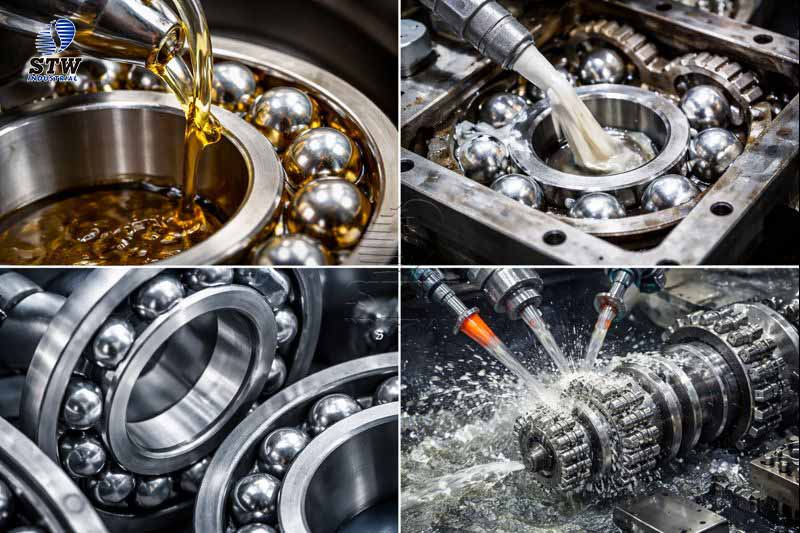
In industrial applications such as bearings, valves, transmission systems, and grinding equipment, steel balls play a critical role in ensuring smooth motion and operational reliability. Their service life directly affects equipment performance, maintenance intervals, and overall operating costs.
Among the many influencing factors, lubrication method is one of the most decisive yet often underestimated elements impacting steel ball durability.
This article explores how different lubrication methods affect steel ball service life and provides practical guidance for industrial users and equipment manufacturers.
1. The Role of Lubrication in Steel Ball Performance
During operation, steel balls are subjected to high contact stress, rolling friction, and repeated load cycles. Proper lubrication helps to:
-
Reduce friction and surface contact stress
-
Minimize abrasive and adhesive wear
-
Dissipate heat generated during operation
-
Protect steel ball surfaces from corrosion and oxidation
-
Delay fatigue spalling and surface failure
Inadequate or improper lubrication is one of the primary causes of premature steel ball failure.
2. Common Lubrication Methods and Their Effects
2.1 Oil Lubrication
Oil lubrication is widely used in high-speed and precision applications, particularly for bearing steel balls and stainless steel balls.
Advantages:
-
Excellent fluidity for uniform lubrication
-
Effective heat dissipation at high speeds
-
Helps flush away wear debris
Impact on Service Life:
When properly selected, oil lubrication significantly reduces surface fatigue and wear, extending steel ball service life in continuous or high-speed operations. However, incorrect oil viscosity may lead to lubricant film breakdown and accelerated wear.
2.2 Grease Lubrication
Grease lubrication is commonly applied in low- to medium-speed equipment, especially where sealing and long maintenance intervals are required.
Advantages:
-
Good sealing performance and low leakage
-
Longer relubrication cycles
-
Suitable for dusty or humid environments
Impact on Service Life:
Within appropriate speed and temperature ranges, grease provides a stable lubrication film that protects steel balls from direct metal contact. In high-temperature or high-speed conditions, grease degradation can shorten steel ball lifespan.
2.3 Dry or Minimal Lubrication Conditions
Certain special applications, such as vacuum environments or food-grade machinery, require dry or minimal lubrication.
Characteristics:
-
Higher demands on steel ball material and surface finish
-
Often paired with stainless steel balls or ceramic balls
Impact on Service Life:
Without adequate lubrication, steel balls are more prone to wear and fatigue failure. Surface-treated or specially engineered steel balls are essential to maintain acceptable service life under these conditions.
3. Matching Lubrication Methods with Steel Ball Materials
Different steel ball materials respond differently to lubrication methods:
-
Bearing Steel Balls (AISI 52100 / GCr15)
Highly dependent on proper lubrication; optimized lubrication can significantly extend fatigue life -
Stainless Steel Balls (304 / 316 / 420)
Offer strong corrosion resistance and stable performance under oil or grease lubrication -
Carbon Steel Balls
Commonly used in low-speed or auxiliary applications; require anti-rust lubrication for protection
Material selection should always be evaluated together with lubrication conditions and operating environment.
4. Practical Recommendations to Extend Steel Ball Service Life
To maximize steel ball longevity, industrial users should consider the following best practices:
-
Select lubrication methods based on speed, load, and operating temperature
-
Use lubricants with appropriate viscosity and performance grades
-
Implement regular lubrication inspection and replacement schedules
-
Choose high-precision or surface-enhanced steel balls for demanding applications
Effective lubrication management often delivers greater cost efficiency than simply upgrading steel ball grades.