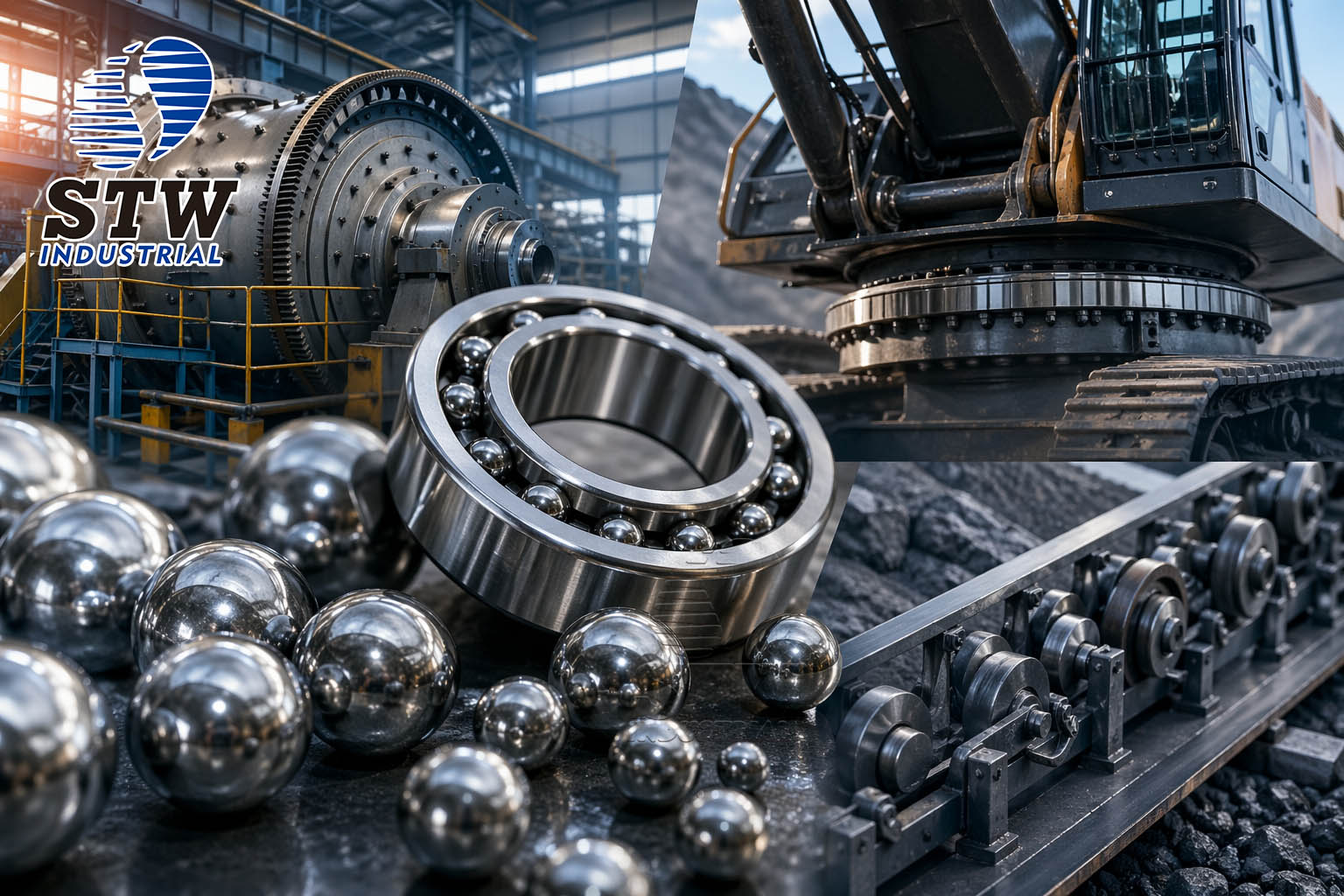
In modern industrial systems, heavy machinery operates under extreme loads and demanding conditions. From mining equipment to construction machinery and large-scale conveyor systems, component reliability directly impacts operational efficiency and service life.
Steel balls, as critical rolling elements, play a decisive role in load distribution and friction reduction. Their load capacity is a key factor in ensuring stable and long-term equipment performance.
What is the Load Capacity of Steel Balls?
The load capacity of steel balls refers to the maximum load they can withstand under working conditions, including:
- Static Load Capacity: Maximum load under stationary conditions
- Dynamic Load Capacity: Load capacity during continuous rotation or motion
In heavy-duty environments, steel balls must endure not only high pressure but also shock loads, vibration, and cyclic stress. This requires superior material properties and advanced manufacturing processes.
Key Factors Affecting Steel Ball Load Capacity
1. Material Composition
Common materials include:
- High carbon chromium steel (e.g., GCr15 / AISI 52100)
- Stainless steel
- Alloy steel
Among these, AISI 52100 steel balls are widely used due to their excellent hardness, wear resistance, and fatigue strength.
2. Heat Treatment Process
Proper heat treatment (quenching and tempering) ensures:
- High surface hardness (typically HRC 58–66)
- Tough core structure
This “hard exterior + tough interior” combination significantly enhances impact resistance and load-bearing performance.
3. Precision Grade
Steel balls are classified into grades such as G10, G25, G50, and G100.
- Higher precision = better roundness
- Lower surface roughness = improved stress distribution
- Reduced localized wear
For heavy machinery, G25 or higher precision steel balls are strongly recommended.
4. Surface Quality & Finishing
Surface defects like micro-cracks or pits can lead to stress concentration and premature failure. High-quality polishing and strict inspection processes are essential to guarantee durability.
Applications in Heavy Machinery
• Bearing Systems
Steel balls support rotational motion and load transfer in large bearings, directly affecting equipment lifespan.
• Mining Equipment
Used in ball mills and crushers, steel balls must withstand repeated impact and abrasion.
• Construction Machinery
Excavators, cranes, and rotating systems rely on high-load steel balls for stable operation.
• Conveyor Systems
Steel balls provide smooth rolling support under continuous heavy loads.
How to Choose the Right Steel Balls for Heavy Load Applications
When sourcing steel balls for industrial use, consider:
- Material selection based on load conditions
- Hardness and core toughness balance
- Precision grade (G25 or above recommended)
- Supplier quality control and consistency
Choosing the wrong steel ball can lead to premature failure, increased maintenance costs, and equipment downtime.
Why Choose a Professional Steel Ball Manufacturer?
As an integrated manufacturer and exporter, we provide:
- Custom materials for specific applications (corrosion-resistant, high-temperature resistant)
- Non-standard sizes and tolerances
- Advanced surface treatments (coating, strengthening)
- Stable quality with strict inspection standards
We help clients optimize performance while reducing long-term operational costs.