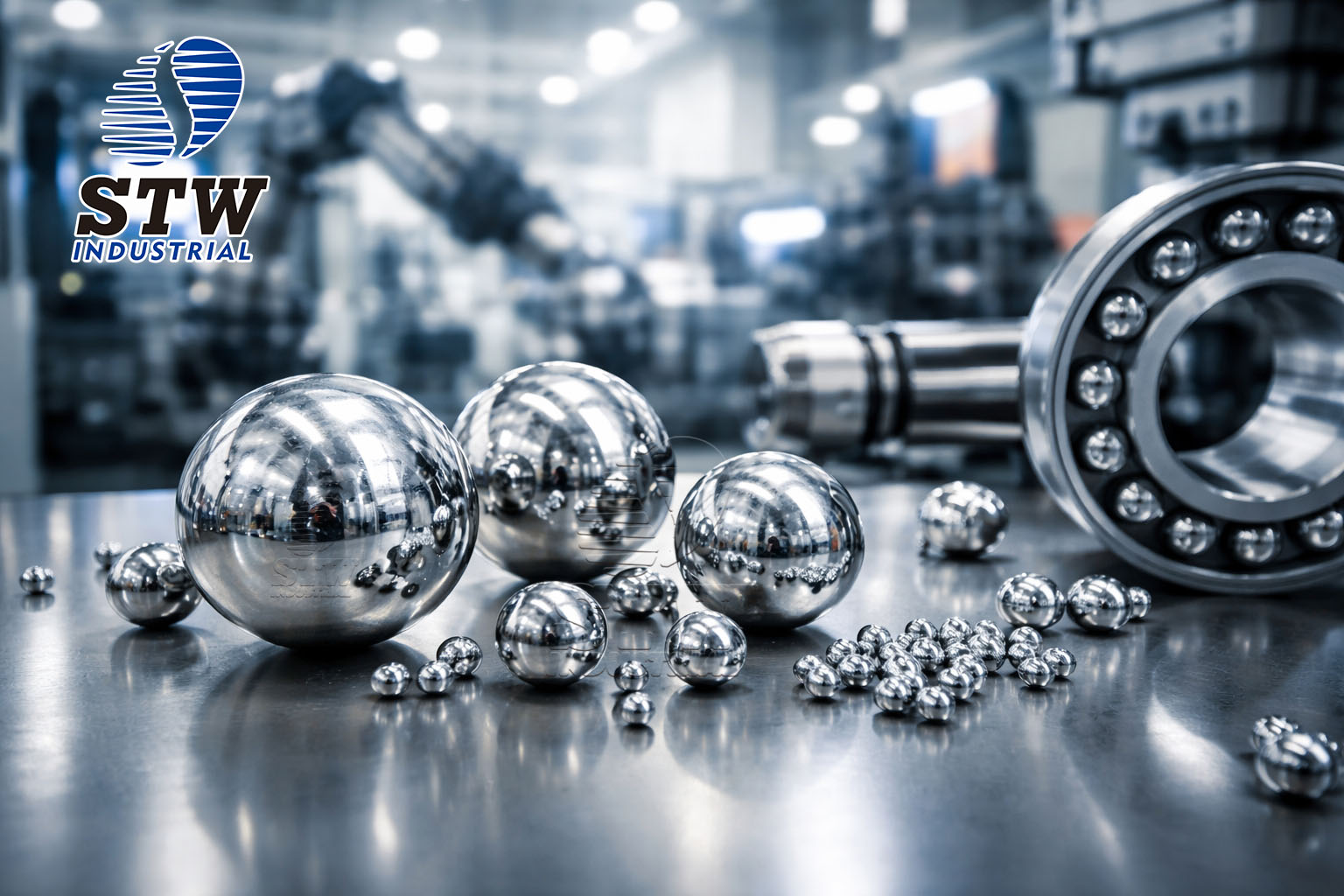
In high-speed mechanical systems—such as precision bearings, motor spindles, and automated transmission equipment—steel balls are not just components; they are performance-critical elements. As rotational speeds increase, even the smallest deviation in steel ball quality can lead to vibration, noise, premature failure, and costly downtime.
For global buyers and OEM manufacturers, selecting high precision steel balls is essential to ensure system stability, efficiency, and long service life.
1. Ultra-High Dimensional Accuracy
In high-speed applications, steel balls must maintain extremely tight tolerances, typically within micron-level deviations. Precision grades such as G10, G16, or higher are commonly required.
Why it matters:
- Ensures uniform load distribution
- Prevents irregular rolling paths
- Reduces vibration and noise
High-precision balls directly improve bearing performance and rotational stability.
2. Superior Sphericity & Surface Finish
The roundness and surface roughness of steel balls significantly influence friction and wear.
Key specifications:
- Near-perfect sphericity
- Surface roughness: Ra ≤ 0.02 μm
Benefits:
- Lower friction coefficient
- Reduced heat generation
- Extended service life
For high-speed systems, smoother surfaces mean higher efficiency and lower energy consumption.
3. High Material Purity & Uniform Microstructure
Premium steel balls are typically made from AISI 52100 (GCr15) bearing steel, known for its excellent hardness and fatigue resistance.
Critical factors:
- Low inclusion content (oxides, sulfides)
- Homogeneous martensitic structure
Impact:
- Improved rolling contact fatigue life
- Reduced risk of spalling and cracking
Material quality is a decisive factor in long-term reliability.
4. Optimized Hardness & Core Toughness
Steel balls used in high-speed environments must balance hardness and toughness.
Typical range:
- Surface hardness: HRC 60–66
- Tough core structure
Why it matters:
- High hardness = wear resistance
- Tough core = impact resistance
This combination prevents brittle fracture while maintaining durability under continuous stress.
5. Dynamic Balance & Weight Consistency
At high rotational speeds, even slight weight differences between steel balls can cause imbalance.
High-quality steel balls ensure:
- Consistent mass distribution
- Minimal centrifugal deviation
Result:
- Reduced vibration
- Lower noise levels
- Improved machine precision
Dynamic stability is critical for high-speed spindle and bearing systems.
6. Strict Surface Integrity & Defect Control
Surface defects such as scratches, pits, or decarburization layers can lead to early failure under high-speed conditions.
Quality control processes include:
- Precision grinding and polishing
- Eddy current testing
- 100% visual inspection
Only defect-free steel balls can meet the demands of high-speed applications.
7. Material Options for High-Speed Applications
Different working conditions require different material solutions:
- Chrome steel balls (AISI 52100): Standard for high-load, high-speed use
- Stainless steel balls (AISI 440C): Corrosion-resistant environments
- Ceramic balls (Si₃N₄): Ultra-high speed, low friction, lightweight
Selecting the right material improves both performance and lifespan.
Why High-Quality Steel Balls Matter
Using low-grade steel balls in high-speed systems can result in:
- Increased maintenance costs
- Unexpected equipment failure
- Reduced operational efficiency
In contrast, high precision steel balls offer:
- Longer service life
- Lower total cost of ownership (TCO)
- Stable and reliable performance
Conclusion
As industrial systems continue to evolve toward higher speeds and precision, the demand for premium-quality steel balls is growing rapidly. Every parameter—from dimensional accuracy to material purity—plays a critical role in system performance.
Choosing a reliable steel ball manufacturer is not just a sourcing decision; it is a strategic investment in quality, efficiency, and long-term success.