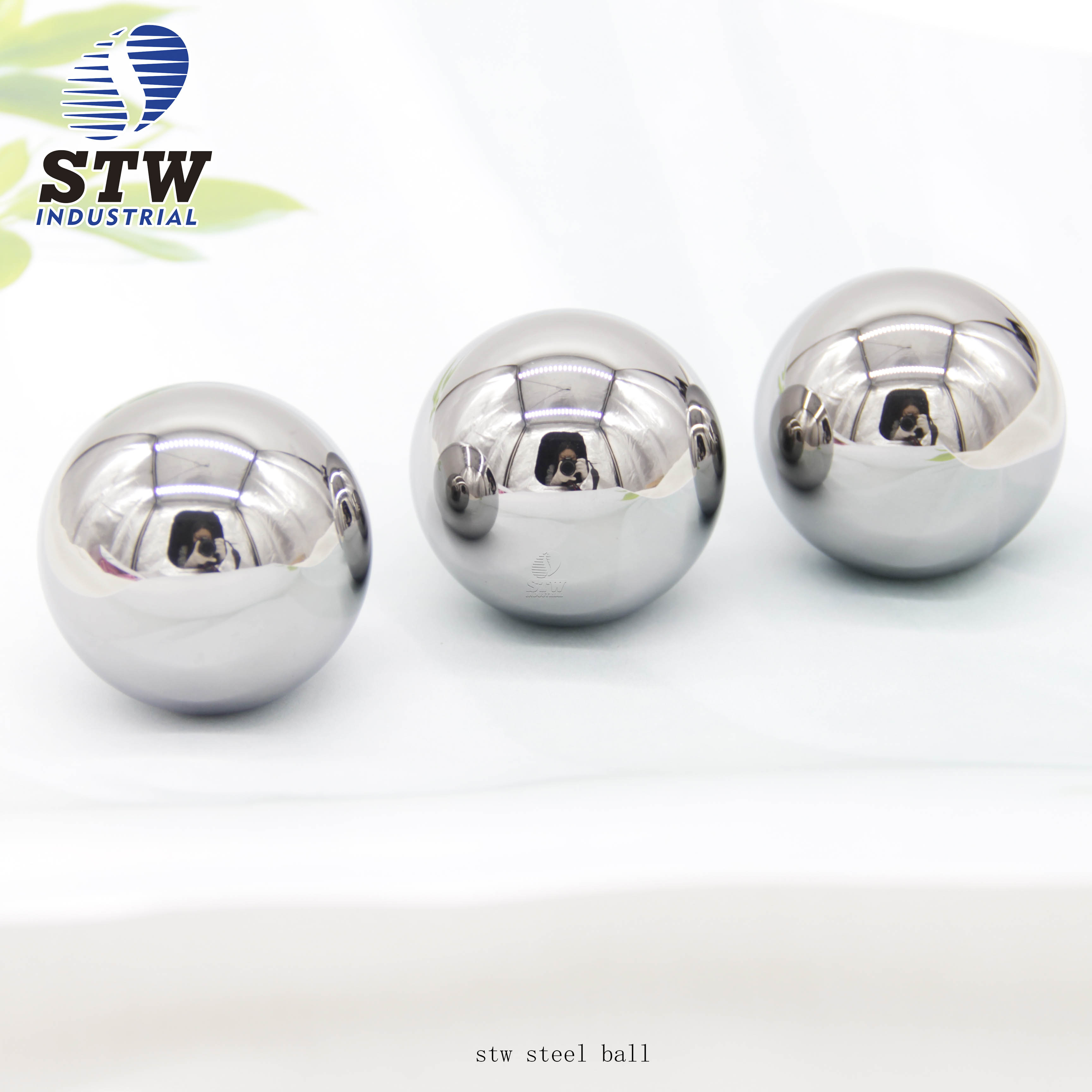
With the continuous development of industrial automation and intelligent manufacturing, robots have become an essential part of modern production systems. In these complex structures, steel balls play a crucial role. They are widely used in robot joints, bearings, and transmission systems to provide precise and smooth rolling support.
1. Function of Steel Balls in Robotic Joints
In robot joints, movements require high precision and flexible rotation. Steel balls form low-friction rolling supports within the bearing structure, making joint motion smoother and more stable.
-
Reduced Friction: Rolling motion minimizes energy loss compared to sliding friction.
-
Improved Accuracy: High-precision steel balls ensure accurate joint movement and positioning.
-
Enhanced Load Capacity: Quality steel balls can bear multidirectional loads, maintaining joint stability.
2. Common Materials and Their Performance
Different robot applications require different steel ball materials:
-
Stainless Steel Balls: Corrosion-resistant and durable, ideal for medical or food-grade robots.
-
Chrome Steel Balls: High hardness and precision, widely used in industrial robots.
-
Ceramic Balls: Lightweight with low friction, suitable for high-speed precision robotic arms.
3. Importance of Precision Grades
Robot joints demand extremely high precision in roundness, smoothness, and size tolerance.
-
High-precision balls (G10, G5 grades) ensure smooth operation and reduce vibration.
-
Surface finish affects friction and noise; smoother surfaces extend joint life.
4. Application Examples
Steel balls are key components in many robot types:
-
Six-axis industrial robots use steel ball bearings for multidirectional rotation.
-
Collaborative robots (Cobots) rely on steel balls for stable, flexible motion.
-
Miniature robots use micro stainless steel balls for lightweight and rapid response.
5. Our Advantages
As a professional B2B manufacturer and trader, we supply a wide range of steel balls in various materials and grades:
-
High-precision grinding and sorting for batch consistency;
-
Strict inspection for size, hardness, and surface quality;
-
Global export experience for robotics, automation, and precision machinery industries.
Conclusion
Though small in size, steel balls are vital to the flexibility and precision of robotic joints. As intelligent manufacturing advances, the demand for high-precision, high-durability steel balls continues to grow. We are committed to providing top-quality steel ball solutions to power the future of robotics.