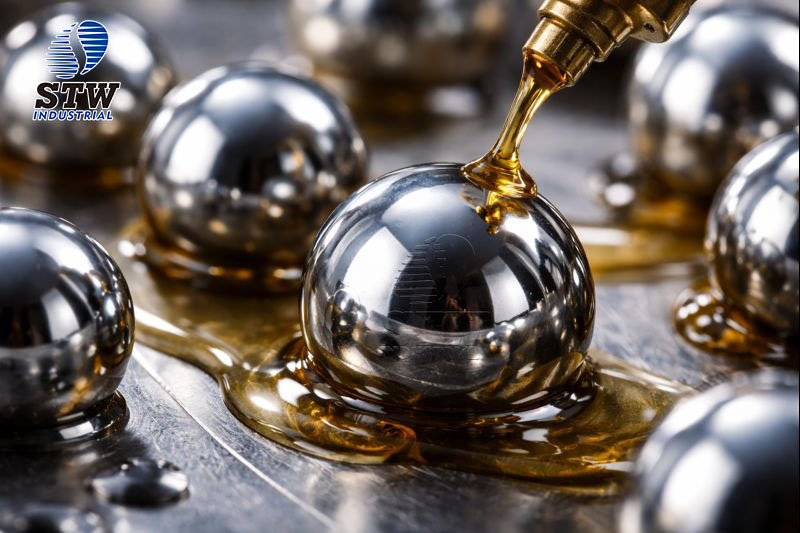
In high-temperature operating conditions, steel balls are exposed to thermal stress, oxidation, structural transformation, and lubrication degradation. Whether used in high-speed bearings, aerospace assemblies, heat-treatment systems, or petrochemical equipment, steel balls must maintain hardness, dimensional stability, fatigue strength, and corrosion resistance under continuous thermal load.
Selecting the appropriate material is therefore a critical engineering decision that directly affects equipment reliability, service life, and maintenance cost.
1. How High Temperature Affects Steel Ball Performance
High-temperature exposure can significantly alter the mechanical and metallurgical properties of steel balls:
• Hardness Reduction (Tempering Softening)
Conventional bearing steels lose hardness when operating above their tempering temperature, reducing load capacity and wear resistance.
• Dimensional Instability
Thermal expansion and microstructural changes can cause tolerance deviation, affecting bearing clearance and precision positioning systems.
• Accelerated Oxidation and Corrosion
Oxidation rates increase exponentially with temperature, especially in humid or chemically aggressive environments.
• Lubrication Failure
High temperatures degrade grease and oil viscosity, increasing friction and surface fatigue risk.
For these reasons, high-temperature steel ball selection must focus on thermal stability, oxidation resistance, and high-temperature hardness retention.
2. Comparison of Common High-Temperature Steel Ball Materials
2.1 AISI 52100 (Chrome Bearing Steel)
Characteristics:
-
High hardness (HRC 60+)
-
Excellent wear resistance
-
Cost-effective
Limitations:
-
Recommended continuous operating temperature below 150–180°C
-
Susceptible to temper softening at elevated temperatures
Typical Applications:
Standard bearings in moderate temperature environments.
2.2 AISI 440C (Martensitic Stainless Steel)
Characteristics:
-
Good corrosion resistance
-
Hardness up to HRC 58–60
-
Better high-temperature stability than standard bearing steel
Operating Temperature:
Suitable for continuous service up to approximately 250–300°C
Typical Applications:
Food processing machinery, chemical pumps, medium-to-high temperature bearing systems.
2.3 AISI M50 (High-Speed Tool Steel)
Characteristics:
-
Superior hot hardness retention
-
Excellent rolling contact fatigue resistance
-
Outstanding dimensional stability
Operating Temperature:
Can withstand continuous operation above 400°C
Typical Applications:
Aerospace bearings, high-speed turbine systems, advanced precision spindles.
2.4 Inconel 718 (Nickel-Based Superalloy)
Characteristics:
-
Exceptional oxidation resistance
-
Excellent creep resistance
-
Maintains mechanical integrity at extreme temperatures
Operating Temperature:
Up to 600°C and beyond depending on load conditions
Typical Applications:
Gas turbines, oil & gas drilling equipment, high-temperature reactors.
3. Five Engineering Principles for Material Selection
Define Continuous Operating Temperature
Peak temperature and long-term operating temperature differ significantly. Material selection must be based on sustained thermal exposure.
Evaluate Load and Rotational Speed
High temperature combined with high load and high speed requires materials with superior hot hardness and fatigue resistance.
Assess Corrosive Environment
Presence of steam, acids, alkalis, or oxidizing atmospheres may necessitate stainless steel or nickel-based alloys.
Consider Thermal Expansion Coefficient
Precision assemblies demand stable dimensional control under thermal cycling.
Balance Performance and Cost
Over-specification increases cost without added value. Material grade should match actual operating conditions.
4. The Importance of Manufacturing Control
Material selection alone is insufficient without controlled production processes. For high-temperature steel balls, critical factors include:
-
Strict heat-treatment control
-
Microstructure stability verification
-
Precision grinding and lapping
-
Surface roughness optimization
-
Consistent batch traceability
As an integrated manufacturer with in-house production capabilities, we provide engineered solutions tailored to specific temperature, load, and environmental conditions—ensuring reliability beyond standard catalog products.
Conclusion
In high-temperature applications, steel balls are not merely standard components—they are critical performance elements influencing system safety and durability.
A scientifically grounded material selection strategy, combined with precision manufacturing control, ensures optimal performance under extreme thermal conditions.
For technical consultation or customized high-temperature steel ball solutions, our engineering team is available to support your project requirements.